
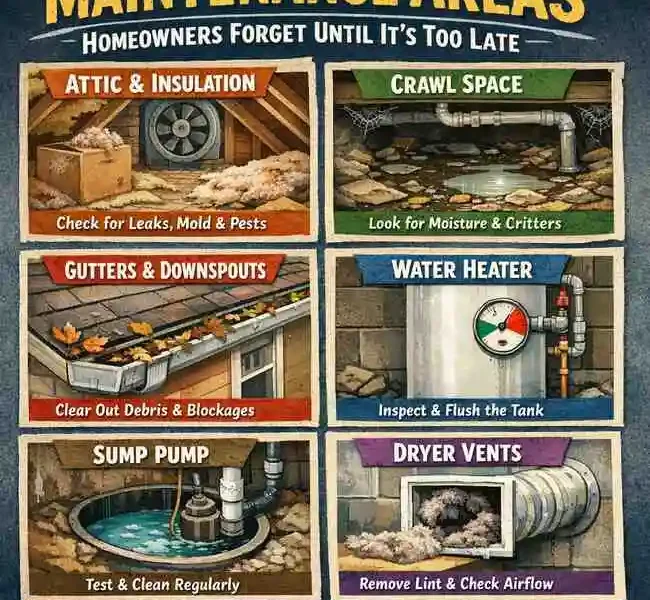
Mowing the lawn, repainting walls, fixing cracked driveways, or replacing broken windows. But some of the most expensive home repairs take place in areas that are easily ignored. Outside elements like soffits, gutters, trim lines, and roof edges are what homeowners don’t pay attention to; they are out of sight, out of mind. By the time homeowners notice something is wrong with them, the problem may have advanced into something very serious.
These silent maintenance issues are what protect a home’s structure. If left alone, they can cause moisture to get in, pests to enter, wood to rot, and, in the end, large-scale roofing problems, which in the end cost much more to fix than to pay attention to in the first place.
Soffits: The Silent Ventilation System
“Soffit” is the term used for the visible elements of a roof that are below the overhangs. Also often ignored by homeowners, these have very important functions. They are key players in attic ventilation, which in turn helps to moderate temperature and moisture in the attic space, which in the long run reduces mold growth and wood damage.
When attics fill up with dust, insulating material, or waste from animals’ nests, air flow is impaired. That which is supposed to pass through the soffits is blocked, and instead there is moisture that is trapped in the attic, which in turn weakens wood that supports the structure and also reduces the life of the roof. Also, in some cases it is seen that poor air circulation, which is a result of this, also plays a role in increasing cooldown costs in the home during the warmer months.
Cracked or loose soffit panels also serve as entry points for birds; rodents like squirrels; insects; and other pests. Once they get in, they can cause damage to insulation, wiring, and also to the interior ceilings.
Gutters: More Than Just Water Channels
When leaves, dirt, and debris clog the gutters, water spills out at the sides and seeps into the fascia boards, trim, and exterior walls. Over time this results in wood rot, paint peeling, and mold growth. Also, water that pools near the foundation causes crack development, basement leaks, and soil erosion of the property.
Loose bolts and things that have sagged out of place are also issues many homeowners ignore. A gutter that breaks away a little from the home may not seem like a big deal at the time, but in the long run it may direct thousands of gallons of rain into different areas, which in turn may cause damage.
During stormy months and between them are routine checks in which these hidden issues are caught out.
Trim Lines and Fascia Boards Need Regular Attention
Trim work, which outlines windows, doors, and roof breaks, also has fascia, which runs along the roof edge behind the gutters. As these elements serve both a decorative and a practical purpose, often what homeowners notice is peeling paint instead of the structural state that is below.
The issue mostly comes in when water gets in through small cracks in the paint or caulk. Once water is in, wood starts to swell, soften, and rot. Damaged trim also allows water to get into wall cavities, which in turn causes mold and insulation damage that goes unseen.
Fascia boards see a great deal of exposure to rain, which runs off the roof. When gutters overflow or come away from the structure, fascia is the first to suffer. At that point replacement may require the removal of gutters, roof edge materials, and, in some cases, elements of the soffit system.
A yearly check of caulk, paint condition, and wood stability will prevent large-scale repair.
Roof Edges: The First Defense Against Water Intrusion
Roof edges, which, although often ignored, are in fact very important elements of a home’s exterior. This includes flashing, drip edges, shingles that extend to the perimeter, and the points where the roof connects to the gutters and fascia.
In those areas that are hit first by wind, roof edges are very much at risk of shingle lift, flashing that comes loose, and also general wear. Even a small gap may allow water under the roofing, which may go unnoticed inside for months.
Once water gets into the roof deck, it will travel under the shingles and through the underlayment, which in turn will cause large areas of damage before the homeowner sees any signs of it in the form of ceiling stains. At that point, when damage is noticed, the repair is usually much more extensive than just putting in a few new shingles.
Routine ground checkups in the wake of heavy wind or rain help to identify the first signs of damage like curling edges, hanging debris, or detached flashing.
Why These Hidden Areas Cause Expensive Repairs
The greatest risk of ignoring external areas is that damage happens out of sight. Unlike a broken window or cracked tile, soffit rot and fascia decay usually present themselves secondarily.
Common costly outcomes include:
- Roof deck replacement
- Mold remediation
- Foundation water damage
- Interior ceiling repairs
- Pest infestation treatment
- Full gutter system replacement
- Siding and trim restoration
In that which repair costs go up so fast is due to the fact that these elements are related. A clogged gutter may cause damage to fascia, which in turn affects soffits, which in turn reduces attic ventilation, which in turn impacts the roof structure.
What begins as a small repair job can easily grow into a multi-system project.
How Seasonal Services Sometimes Reveal Problems Early
Interestingly, some seasonal services can help to identify these issues before they break out into full-scale problems. For example, teams handling outdoor holiday light installation Westfield homes often work directly along roof edges, gutters, fascia boards, as well as trim lines.
During the course of their work in areas that are out of the ordinary for homeowners to access, installers may note issues like loose gutters, cracked fascia, deteriorating trim, or the early signs of roof edge damage that the homeowner does not usually see from the ground. Although the primary aim of the service is for decorative purposes, at the same time it may bring to light maintenance issues that would otherwise go unreported until more severe damage has set in.
This is a rare opportunity for most home owners to have an indirect look at the upper exterior areas.
Final Thoughts
Homeowners usually ignore the elements that are the source of some of the most expensive repair bills. Soffits, gutters, trim lines, fascia boards, and roof edges work as a team to protect the home from moisture, pests, and structural wear.
Ignoring that doesn’t make the risk go away; it just allows for greater damage, which in turn gives bigger problems down the road. A few annual checks, which should be done after storms and before seasonal changes, can head off expensive repairs and, at the same time, extend the life of a home’s exterior systems.