Basements can contribute up to 20% of a home’s total heat loss, making ceiling insulation a smart upgrade for reducing heating costs by 10-15% on average. This thermal barrier keeps warm air upstairs during winter and helps retain cool air in summer, lowering overall energy bills.
Insulation maintains consistent temperatures in living spaces above the basement, eliminating chilly floors and drafts. Homeowners often report a more comfortable home environment year-round after this upgrade.[2][8][1]
Proper insulation manages humidity to prevent condensation, mold growth, and water damage in the basement. It also dampens sound transmission between floors for quieter living areas.
With rising energy prices, the investment pays off through reduced utility bills, especially in colder climates. Options like spray foam or fiberglass provide long-term returns while enhancing home value.
Why Basement Ceilings Leak Energy: The Science Behind Insulation
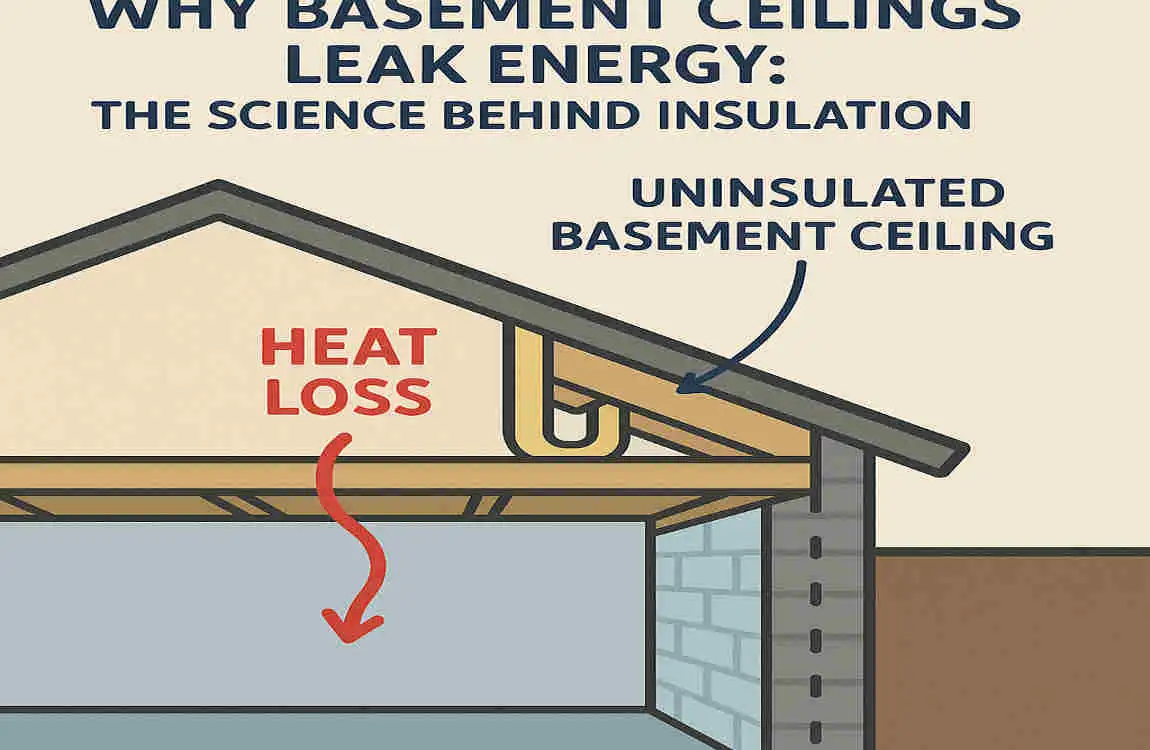
Before diving into the reasons to insulate, let’s explore why basement ceilings are a major source of energy loss.
Heat Transfer Basics
Heat naturally moves from warmer to cooler areas through three methods: conduction, convection, and radiation. In your home, warm air from heated rooms or cool air from air-conditioned spaces escapes through uninsulated surfaces. Basements are especially vulnerable to this because they often have exposed joists, unsealed gaps, and minimal insulation.
Finished vs. Unfinished Basements
If your basement is unfinished, the ceiling is likely an energy sieve. Without insulation, the heat from your living spaces seeps into the basement during winter, and cool air escapes during summer. Insulating the ceiling creates a barrier, preventing this energy loss.
For finished basements, insulation is equally important. Even though the walls may be insulated, the ceiling can still transfer heat, especially if there are leaks or insufficient coverage.
R-Value: What It Means for Your Basement Ceiling
When it comes to insulation, R-value measures how well a material resists heat flow. The higher the R-value, the better the insulation. For basement ceilings, experts recommend targeting an insulation level of R-30 or higher, depending on your climate.
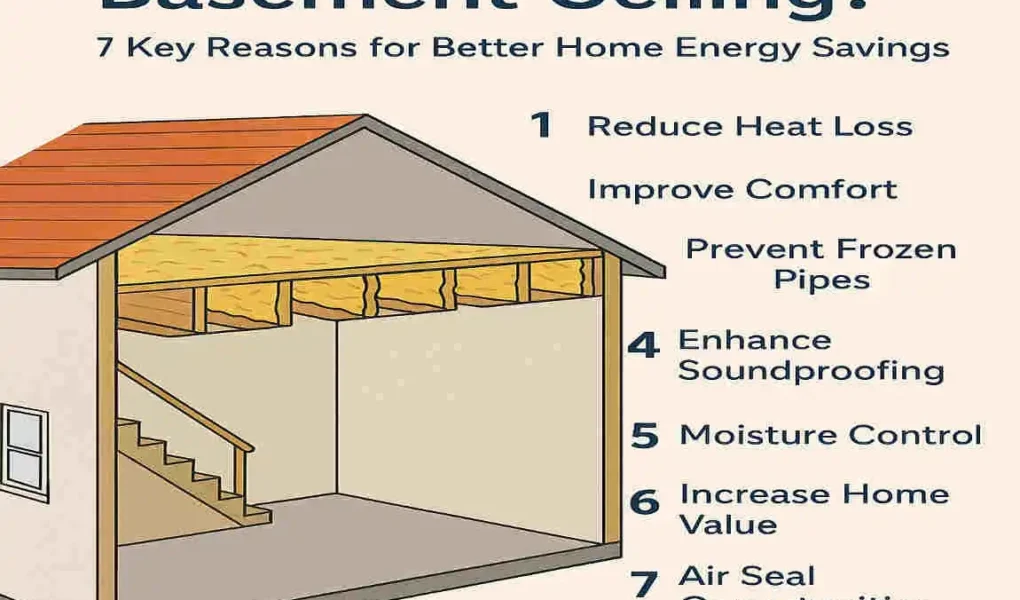
7 Key Reasons to Insulate Your Basement Ceiling
Massive Energy Savings on Heating and Cooling Bills
If you’re tired of high utility bills, basement insulation is a game-changer. By sealing gaps in your basement ceiling, you can prevent heat from escaping in winter and reduce air conditioning demand in summer.
- The Numbers: According to the EPA, properly insulating your basement can cut your heating and cooling costs by 10-30%.
- How It Works: Insulation traps heat in your living areas, preventing it from leaking into the basement and being wasted.
- Example: A family in Minnesota installed R-30 fiberglass batts in the ceiling of their 1,000 sq. ft. basement. They reported saving $200 annually on heating costs after the upgrade.
Year-Round Temperature Control and Comfort
Ever noticed chilly floors or uneven temperatures in different parts of your home? That’s likely due to heat loss through the basement ceiling.
- Winter Benefits: Insulation keeps the basement cold (where it belongs) and prevents that chill from creeping up into your living areas.
- Summer Benefits: A well-insulated ceiling reduces the strain on your AC, keeping the upstairs cooler.
Case Study: A homeowner in Texas noticed a 5-degree drop in upstairs temperatures after insulating their basement ceiling, leading to a more comfortable home during summer heatwaves.
Noise Reduction for a Quieter Home
Do you hear every footstep echoing from the basement? Insulating your basement ceiling also provides soundproofing benefits.
- How It Works: Fiberglass and spray foam insulation absorb sound vibrations, reducing noise transfer between floors.
- Ideal For: Homes with media rooms, home offices, or noisy HVAC equipment in the basement.
Moisture Control and Mold Prevention
Basements are notorious for being humid and prone to condensation. Without insulation, moisture from the basement can seep into the ceiling, leading to mold growth.
- Vapor Barriers: Installing insulation with a vapor barrier prevents moisture from infiltrating your ceiling.
- Health Benefits: Mold spores can trigger allergies and respiratory issues, so insulation protects both your home and your health.
Boosted Home Value and Resale Appeal
Thinking about selling your home? Insulating your basement ceiling increases its resale value by making it more energy-efficient and comfortable.
- ROI Potential: According to Remodeling Magazine, insulation upgrades offer a 50-70% return on investment.
- Eco-Buyers: Today’s buyers prioritize energy efficiency, and a well-insulated basement ceiling is a significant selling point.
Eco-Friendly: Lower Carbon Footprint
Insulating your basement isn’t just good for your wallet—it’s good for the planet. By reducing energy waste, you’re also cutting down on your home’s carbon footprint.
- Environmental Impact: The average homeowner can reduce their CO2 emissions by 1-2 tons annually with proper insulation.
- Net-Zero Goals: Insulation is a key step toward creating a more sustainable, energy-efficient home.
Fire Safety and Code Compliance
Many local building codes require specific types of insulation to improve fire safety. For example, spray foam insulation provides thermal barriers that can slow down the spread of flames.
- Check Local Codes: Always consult your local building code requirements before starting a project.
- Added Safety: Insulation can add an extra layer of protection, giving you peace of mind.
Cost Breakdown: Is Basement Ceiling Insulation Worth It?
Here’s a breakdown of standard insulation options for basement ceilings:
Insulation Type Cost per Sq Ft R-Value DIY-Friendly? Lifespan
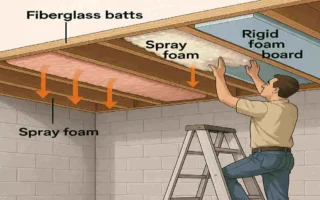
Fiberglass Batts $0.50-$1.50 R-30 Yes 20+ yrs
Spray Foam $1.50-$3.00 R-38 No 30+ yrs
Rigid Foam $0.80-$2.00 R-25 Yes 25 yrs
- Total Costs: For a 1,000 sq ft basement, expect to pay $1,000-$4,000 depending on the material.
- Payback Period: Most homeowners recoup their investment within 2-5 years through energy savings.
- Tax Credits: Check for federal tax credits or rebates—some programs offer up to $1,200 for insulation upgrades.
Step-by-Step DIY Guide: How to Insulate Your Basement Ceiling
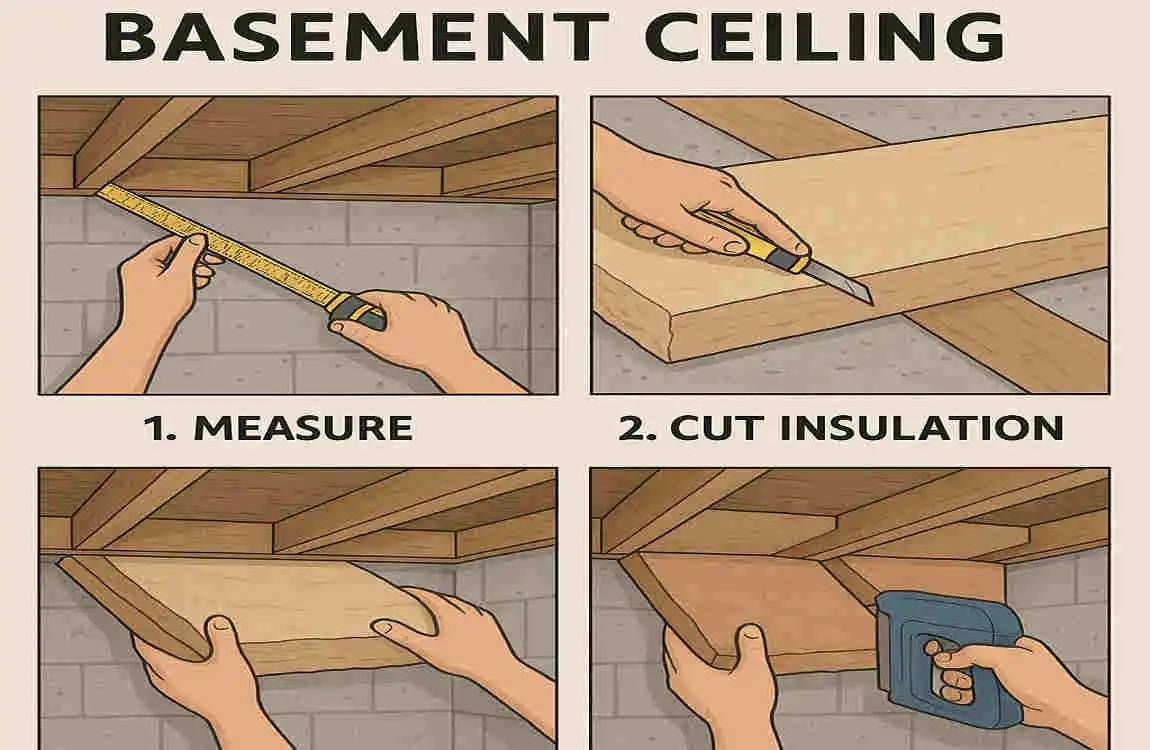
Want to tackle this project yourself? Follow these steps:
- Safety First: Wear gloves, goggles, and a mask to protect yourself from insulation fibers.
- Measure and plan: Calculate the square footage of your basement ceiling and buy the appropriate amount of insulation.
- Choose Your Material: Fiberglass batts are the most DIY-friendly option.
- Install the Insulation: Fit the batts snugly between the joists. Use staples or insulation supports to secure them in place.
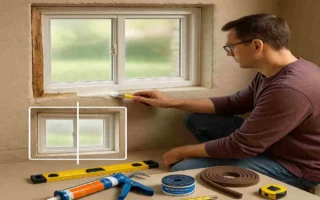
- Seal Gaps: Use spray foam or caulk to seal any air leaks.
- Final Check: Inspect your work and ensure there are no gaps or loose materials.
Common Mistakes and Pro Tips
Avoid these common pitfalls when insulating your basement ceiling:
- Skipping Air Sealing: Insulation is less effective if gaps and cracks aren’t sealed first.
- Using the Wrong R-Value: Always match the insulation level to your climate zone.
- Ignoring HVAC Ducts: Insulate around ducts to maximize energy savings.
Pro Tip: Use an infrared camera (or a free app) to identify areas where heat is escaping before starting your project.