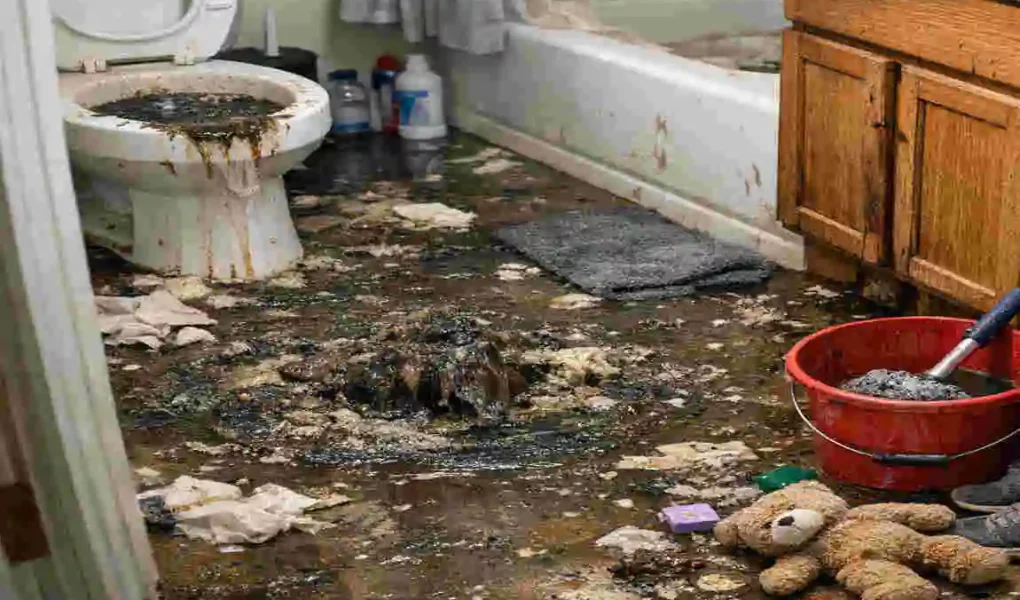
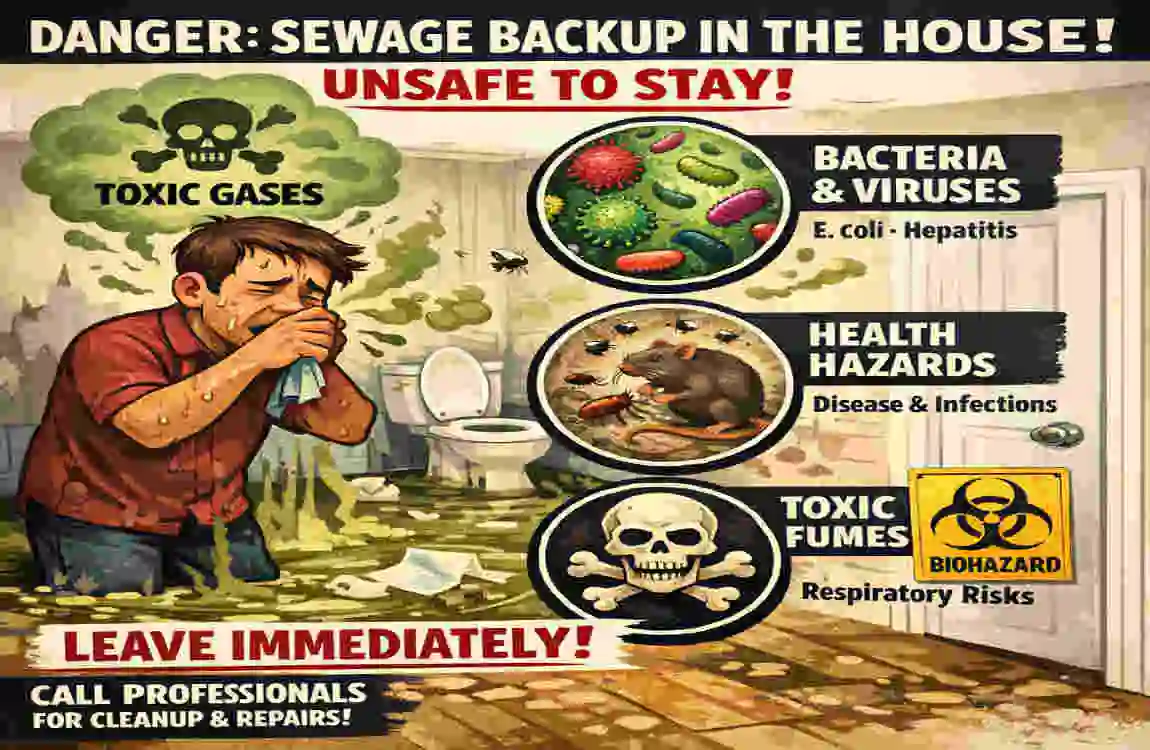
Imagine waking up in the middle of the night. You step out of bed, expecting the cold floor, but instead, your foot lands in a warm, murky puddle. A pungent, rotten-egg smell assaults your nose instantly. Panic sets in as you realize the water isn’t coming from a spilled glass—it is rising from the drains. This is the nightmare scenario of a sewage backup, and it forces homeowners to ask a terrifying question immediately: Is it safe to stay in a house with sewage backup?
It is a situation no one wants to face, yet it happens more often than we would like to admit. Whether it is a basement slowly filling with dark water or a bathtub regurgitating filth, the instinct to protect your home is strong. You might feel the urge to grab some towels, put on some old boots, and try to “tough it out” to clean up the mess yourself. You might even worry about leaving your property unattended.
Understanding Sewage Backup: What Is It and Why Does It Happen?
Before we dive deep into the health risks, it is important to understand what you are actually dealing with. Many homeowners mistake a sewage backup for a standard flood, like rainwater entering a basement. The difference is critical.
The Mechanics of the Mess
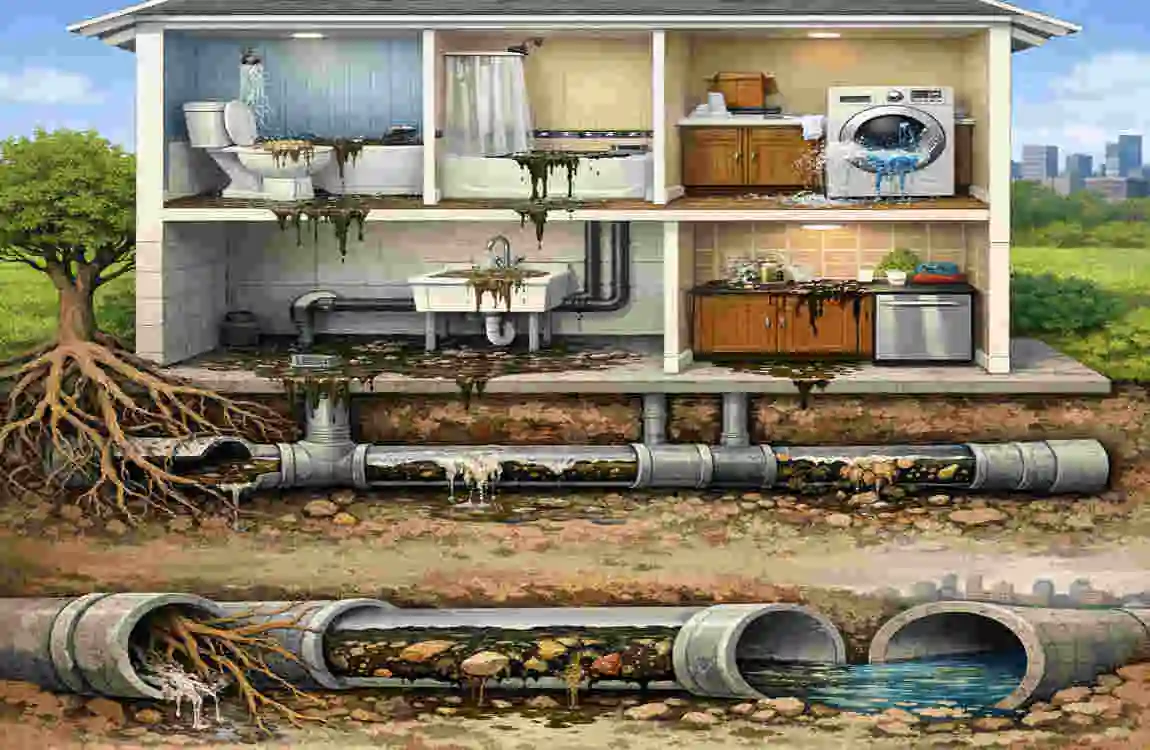
Your home’s plumbing system is essentially a tree. You have small branches (drains from sinks, toilets, showers) that all feed into a main trunk (the main sewer line). This main line carries waste out of your home to the municipal sewer system or a septic tank.
A backup occurs when that “trunk” gets blocked. When waste cannot be removed, physics dictates it must go somewhere else. It reverses course, rising through the lowest points in your home—usually basement floor drains, toilets, or bathtubs.
Common Causes of Clogs and Failures
Why does this happen? The culprits are often mundane but destructive:
- Tree Roots: This is one of the most common causes. Roots seek moisture. Even a tiny crack in an old clay pipe is an invitation. Roots grow into the pipe, creating a net that catches toilet paper and debris until the flow is completely blocked.
- Grease Buildup: We often hear “don’t pour grease down the drain,” but many still do. As grease cools, it solidifies. Over time, it coats the inside of pipes like cholesterol in an artery, eventually stopping the flow.
- Heavy Rains: Municipal sewer systems have limits. During severe storms, the public sewer system can become overwhelmed with water. If the pressure gets too high, the city-wide sewage can be forced backward into your private plumbing.
- Old Pipes: Cast iron and clay pipes eventually degrade, collapse, or corrode, leading to physical blockages.
The “Black Water” Designation
In the restoration and plumbing industry, water is categorized by its level of contamination.
- Clean Water (Category 1): Water from a broken supply line or faucet. It is safe.
- Gray Water (Category 2): Water from washing machines or dishwashers. It contains some chemicals and bacteria, but isn’t immediately toxic.
- Black Water (Category 3): This is sewage. It contains feces, urine, and other bodily fluids.
Is sewage backup contaminated? Absolutely. It is always classified as Category 3 Black Water. Even if the water looks somewhat clear, it carries millions of microscopic pathogens. This is why the question “Is it safe to stay in a house with sewage backup?” is met with such a severe warning. You are not just standing in water; you are standing in a petri dish of disease.
Health Risks of Staying: Why You Must Evacuate
Let’s get into the specifics of why staying put is a bad idea. When we analyze “is it safe to stay in a house with sewage backup?“, we have to look at the invisible enemies lurking in that water.
You do not need to drink the sewage water to get sick. Exposure happens in three ways:
- Ingestion: Accidentally touching your face or mouth after touching a contaminated surface.
- Skin Contact: Pathogens enter through tiny cuts, scratches, or mucous membranes.
- Inhalation: This is the most overlooked risk. Sewage releases endotoxins and gases into the air. Breathing this air can make you ill.
The Pathogen Parade
Raw sewage is a carrier for a massive variety of biological hazards. Here is a detailed breakdown of what might be swimming in your basement:
Risk Category, Specific Dangers, Vulnerable Groups, Common Symptoms
Bacterial Infections: E. coli, Salmonella, Shigella, Campylobacter. Children, Seniors, Pets. Severe diarrhea, abdominal cramping, vomiting, high fever, and dehydration.
Viral Threats: Hepatitis A, Norovirus, Rotavirus. Immune-compromised individuals: Jaundice (yellowing skin), liver issues, extreme nausea, rapid dehydration.
Respiratory Issues: Hydrogen’s sulfide gas, Endotoxins, and mold spores. Asthmatics, Allergy sufferers. Coughing fits, shortness of breath, dizziness, headaches, and throat irritation.
Skin/Wound Infections: Parasites like Acanthamoeba, and the Tetanus bacteria. Anyone with open cuts/scrapes. Painful rashes, infected wounds, swelling, and potential for systemic blood infection.
Long-term Effects: Chronic GI issues (IBS), Kidney damage, Neurological strain. Everyone: Chronic fatigue, organ strain, lingering respiratory weakness.
The Airborne Danger
Many people assume that if they stay on the second floor, away from the basement backup, they are safe. This is a dangerous misconception.
Your home is a system of airflow. HVAC systems, drafts, and thermal currents move air from the bottom of the house to the top. Sewage backups in house environments release gases such as Hydrogen’s sulfide (sewer gas) and methane. Hydrogen’s sulfide is toxic and can cause dizziness, headaches, and nausea at low levels. At high levels, it can be fatal.
Furthermore, as the sewage water evaporates, it aerosolizes bacteria and endotoxins. You end up breathing in fecal matter particles even if you are two floors up.
The Mold Clock is Ticking
One of the biggest secondary threats is mold. Mold spores are everywhere, but they need moisture and organic food to grow. Sewage provides both in abundance.
Mold growth can begin within 24 to 48 hours of a backup. We aren’t just talking about a little mildew. Toxic black mold (Stachybotrys chartarum) thrives on cellulose materials like drywall, carpet backing, and insulation that have been soaked in sewage.
If you choose to stay in the home, you are likely breathing in a rapidly increasing count of mold spores. For anyone with asthma or allergies, this can trigger severe attacks. The longer you stay, the more established the mold becomes, turning a water problem into a major air quality disaster.
Real-World Consequences
Hospitals frequently treat homeowners who attempted to clean up sewage themselves or stayed in the home during the drying process. The stories are often the same: “I thought I just had a stomach bug,” or “I didn’t realize the headache was from the fumes.”
These aren’t minor inconveniences. Infections from sewage can lead to kidney failure (from E. coli) or liver damage (from Hepatitis). The risk is not worth the convenience of sleeping in your own bed.
Other Dangers Beyond Health: Structural and Electrical Risks
While your health is the primary reason, the answer to “Is it safe to stay in a house with sewage backup?” is no; the house itself poses physical dangers during a backup.
Structural Integrity
Water is heavy, and it quickly destroys building materials.
- Drywall: Drywall acts like a sponge. It wicks water upward. When contaminated with sewage, the drywall loses its structural integrity and becomes a breeding ground for mold inside the walls.
- Wood Rot: Floor joists and wall studs can begin to swell and warp. If the backup is severe and prolonged, it can weaken the structural support of your floors.
- Subfloor Damage: Sewage can seep underneath tile or hardwood, soaking the plywood subfloor. This can lead to the floor feeling “spongy” or even collapsing under weight if the rot sets in deep.
The Electrical Hazard
This is an immediate, lethal risk. In many basements, outlets are placed low to the ground. Appliances like washers, dryers, and furnaces sit directly on the floor.
Water conducts electricity. If the sewage water rises high enough to touch an outlet, a power strip, or the internal wiring of an appliance, the entire pool of water can become electrified.
Do not step into standing water if you have not confirmed that the power is off. You could be walking into a fatal electric shock. Even if the water hasn’t reached the outlets yet, the room’s humidity can cause shorts in the electrical panels.
Financial and Property Damage
Trying to stay in the house often leads to trying to “save” items that are already ruined.
- Contamination of Soft Goods: Carpets, rugs, mattresses, pillows, and stuffed animals that come into contact with sewage cannot be salvaged. They must be discarded. Trying to clean them oftenleavesn bacteria deep inside the fibers.
- Hard Surfaces: Even porous hard surfaces like unsealed concrete or wood can trap bacteria.
- Insurance Complications: If you stay and attempt to clean it yourself, you might inadvertently destroy evidence needed for your insurance claim. Or worse, you might make the damage worse (e.g., by using fans that spread mold spores), which the insurance company could use to deny coverage.
Immediate Actions: What to Do Now
If you are reading this amidst a crisis, take a deep breath. We have established that staying is unsafe. So, what is the plan? If the question “Is it safe to stay in a house with sewage backup?” has forced you to make quick decisions, follow this step-by-step protocol.
Evacuate Immediately
This is the most critical step. Get everyone out of the house.
- Prioritize Vulnerable Groups: Move children, older people, and anyone with a compromised immune system to the front. Their bodies are less able to fight off aggressive airborne pathogens.
- Don’t Forget Pets: Dogs and cats walk on the floor and then lick their paws. They can ingest lethal doses of toxins very quickly. Get them to a safe location.
Shut Off Utilities Safety First
Only do this if you can do it without stepping in water.
- Electricity: If your breaker panel is in the flooded area, do not go down there. Call the power company to have the power cut off at the outside meter. If the panel is in a dry area (like a garage), switch off the power to the affected zones or the main breaker.
- Water: Locate your main water shut-off valve and turn it off to prevent further flooding if the source is internal.
- Gas: If the flooding is deep, it could extinguish pilot lights on furnaces or water heaters, leading to gas leaks. If you smell gas, leave immediately and call the utility company.
Do Not Flush or Drain
Do not use any toilets, sinks, dishwashers, or washing machines. Any water you send down the drain will add to the backup in your basement or lower level. You are pouring water into a clogged vessel; it will overflow.
Ventilate (With Caution)
If you can safely reach windows without entering the contaminated area, open them to let fresh air in. However, do not turn on your central HVAC system. Running the AC or heat will suck the contaminated air (and mold spores) from the basement and blast it into every bedroom in the house.
Call the Professionals
This is not a DIY job. You need a professional restoration company. Look for teams that offer 24/7 emergency services. They have the training to handle “Category 3” water damage.
- Document Everything: While you wait (from a safe distance), take pictures of the damage for your insurance. But do not endanger yourself to get a “better angle.”
Temporary Stay Tips (If You Absolutely Cannot Leave)
We strongly advise against it, but if you are trapped due to weather or other emergencies:
- Seal Off the Area: Use plastic sheeting and duct tape to seal the door to the affected area completely.
- Hygiene: Wash hands constantly with antibacterial soap.
- Boil Water: If you suspect the municipal line is compromised, boil water before drinking.
- Wear PPE: If you must go near the area, wear a mask (N95), rubber boots, and gloves.
The Professional Cleanup Process
You might be wondering, “Why can’t I just bleach it?” We need to explain why professional cleanup is non-negotiable in the face of sewer backup dangers.
Professional restoration teams follow strict protocols (often based on IICRC standards) to ensure the home is safe to inhabit again.
Assessment and Containment
Pros arrive wearing full biohazard suits. They start by assessing the extent of the damage using moisture meters to see how far the water has wicked up the walls. They then set up containment barriers to stop cross-contamination in the clean areas of your home.
Water Extraction and Removal
Using industrial-grade pumps and vacuums, they remove the standing sewage. But they also remove the unsalvageable materials.
- Carpet and padding are cut out and bagged.
- Drywall is cut 2 feet above the water line.
- Insulation is removed.
Cleaning and Disinfection
Simply spraying bleach isn’t enough. Bleach is inactivated by organic matter (dirt/waste). Professionals use EPA-registered antimicrobials and biocides designed specifically for sewage. They scrub, power wash, and chemically treat the framing and concrete.
Drying and Dehumidification
This is where DIY fails. A basement might look dry but still have 30% moisture content in the studs. Pros use industrial dehumidifiers and air movers to pull moisture out of the structural elements. This prevents the mold explosion we discussed earlier.
Timeline and Cost
A professional cleanup typically takes 3 to 5 days, depending on severity. The cost varies wildly, usually between $1,000 and $10,000 or more. While expensive, compare this to the medical bills of a serious infection or the cost of gutting your house later due to mold.
Prevention Strategies: Never Again
Once the nightmare is over, you want to ensure you never have to ask “Is it safe to stay in a house with sewage backup?” again. Prevention is often cheaper than the cure.
Install a Backwater Valve
This is the single most effective defense. A backwater valve is a flap installed in your main sewer line. It allows water to flow out of your house, but if sewage tries to flow back in from the city main, the flap closes automatically. It acts as a gatekeeper for your home.
Manage Your Landscaping
If you have large trees near your sewer line, have a plumber inspect the pipes with a camera. If roots are intruding, they can be hydro-jet (blasted with high-pressure water) or the pipe can be lined to prevent future breaks.
The “Three Ps” Rule
Be strict about what goes down the toilet. Only flush the Three Ps:
- Pee
- Poop
- Paper (Toilet paper only)
Never flush:
- “Flushable” wipes (they are not actually flushable!).
- Feminine hygiene products.
- Paper towels.
- Grease or oil (put it in a jar and throw it away).
Regular Maintenance
Consider having your main line snaked or hydro-jetted every 18-24 months as preventative maintenance. It clears out the slow buildup of sludge before it becomes a full blockage.
FAQs
Q: Is it safe to stay in a house with sewage backup? A: No. The risk of exposure to harmful pathogens, such as E. coli, Salmonella, and mold, is too high. It is best to evacuate immediately until the area is professionally remediated.
Q: How long does it take for mold to grow after a backup? A: Mold can begin to grow on damp surfaces within 24 to 48 hours. This makes immediate drying crucial to preventing long-term damage and air quality issues.
Q: Can I clean up sewage backup myself? A: It is highly discouraged. Sewage is Category 3 Black Water. Without proper PPE (Personal Protective Equipment) and industrial disinfectants, you risk infection and may leave behind bacteria that continue to grow.
Q: Does homeowners’ insurance cover sewage backup? A: Standard policies often do not cover sewage backup. It is usually an optional “rider” or add-on coverage. Check your policy today—if you don’t have it, adding it is usually very affordable (often $40-$50 a year).
Q: How much does a backwater valve cost? A: Installation typically ranges from $500 to $2,000, depending on the depth of your plumbing and access. Compared to a $10,000 cleanup bill, it is a wise investment.