A vertical garden tower is a smart and simple way to grow plants when you do not have much space. It lets you grow herbs, vegetables, and even flowers upward instead of spreading them across the ground. That makes it a great choice for balconies, patios, small yards, and even bright indoor corners.
Why Choose a Vertical Garden Tower?
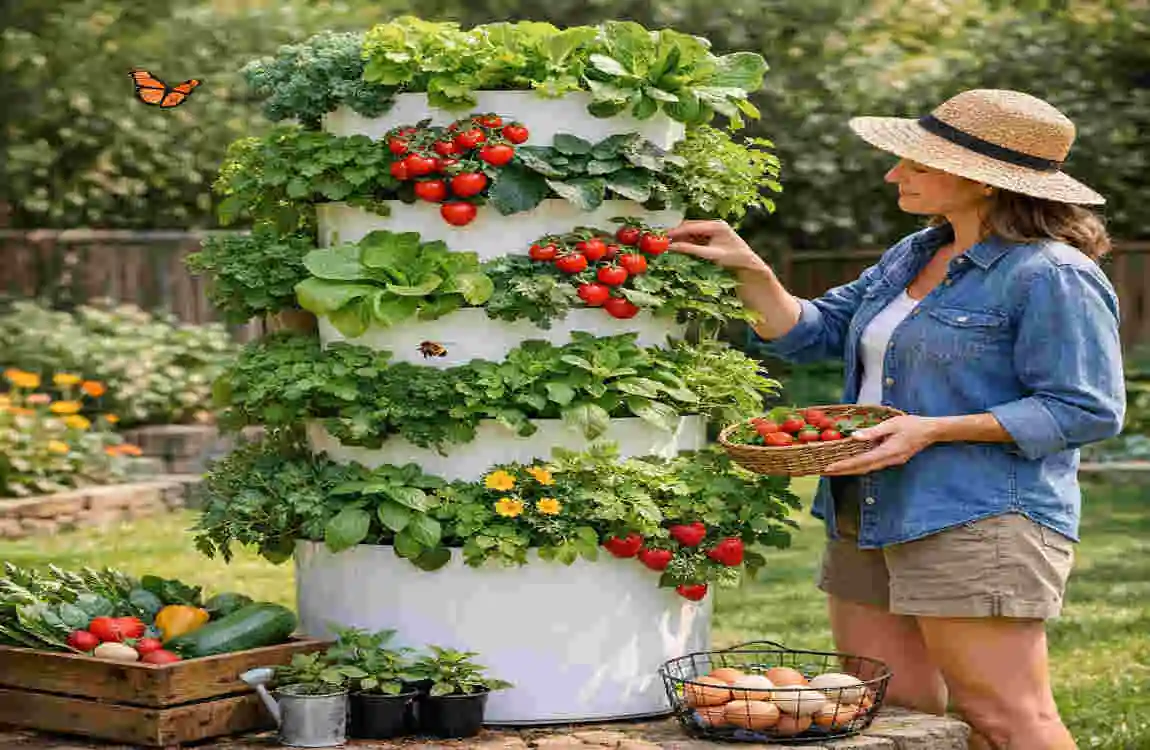
A vertical garden tower gives you more growing room in less space. That is the biggest reason many people love it.
Saves Space
Instead of using a wide garden bed, the tower grows upward. This helps you use small areas wisely.
Makes Care Easier
Watering, checking plants, and harvesting become much simpler. You can reach your plants without bending over too much.
Helps Plants Stay Healthier
Because plants are spaced apart, air moves better around them. That can help reduce mold and pest problems.
Adds Beauty to Your Space
A vertical tower does not just grow food. It also makes your home or outdoor area look fresh and lively.
Materials You’ll Need
Here is a simple list of basic supplies for a DIY garden tower.
MaterialPurpose
Large PVC pipe or stackable planter Main tower structure
Potting soil Supports plant growth
Compost Adds nutrients
Drill or utility knife Creates planting holes
Watering pipe Helps water reach all levels
Seedlings Plants you want to grow
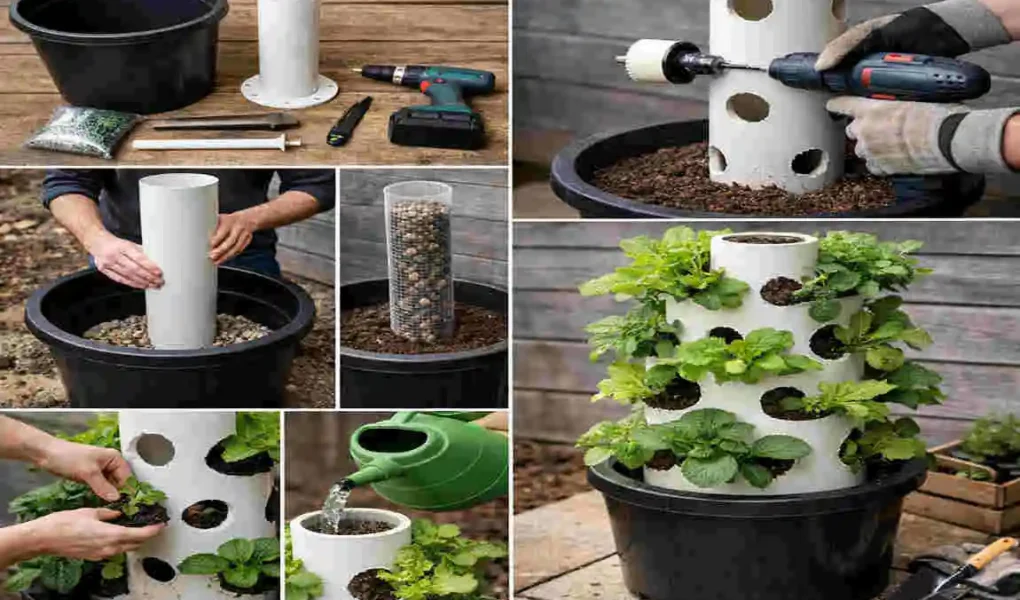
How to Build a Vertical Garden Tower
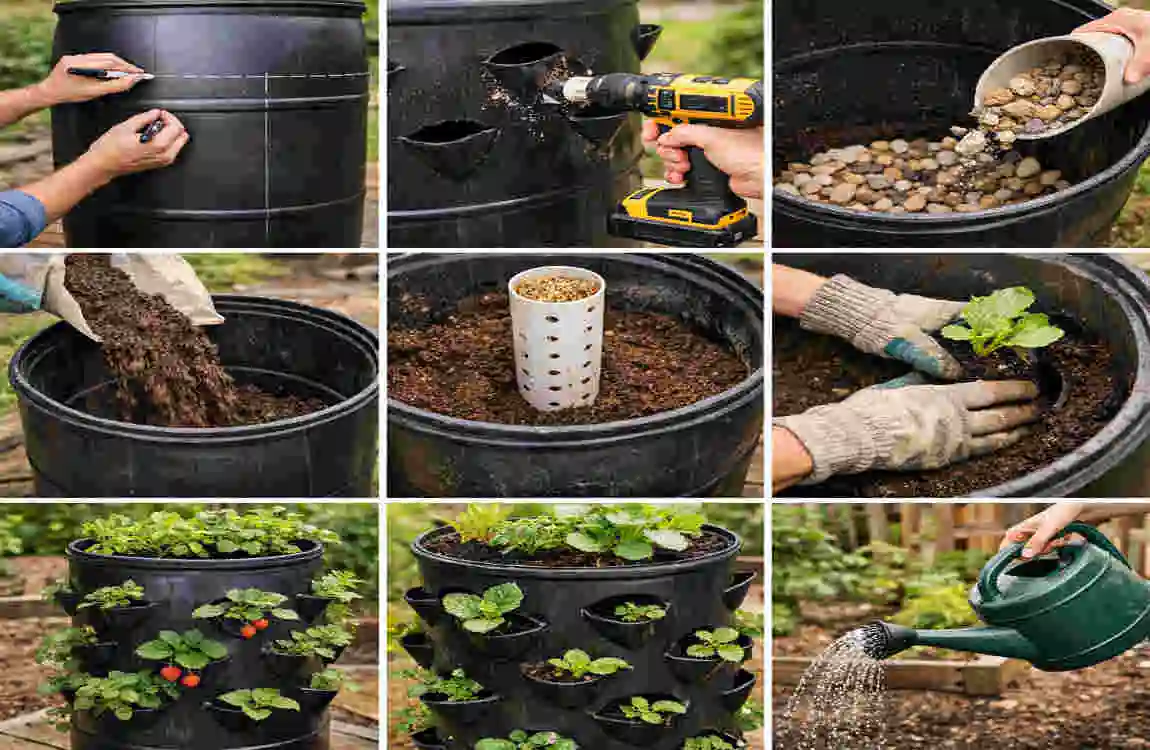
You do not need advanced skills to make one. Just follow these easy steps.
Choose the Right Spot
Pick a location that gets 6 to 8 hours of sunlight each day. Most vegetables and herbs need plenty of light to grow well.
If you live in a very hot area, a little afternoon shade can also help protect your plants.
Prepare the Tower
You can use a PVC pipe, a stackable planter, or another tall container. Then cut evenly spaced holes around the sides where your plants will grow.
Make sure the holes are large enough for the roots and small enough to hold the plant securely.
Fill It with Soil
Use a light potting mix that drains well. Mix in compost to give your plants more nutrients.
Avoid heavy garden soil because it can become compacted, making it harder for roots to grow.
Add Your Seedlings
Place each seedling into a planting hole. Good choices include herbs, leafy greens, and small vegetables.
Do not overcrowd the tower. Plants need space to grow strong and healthy.
Water It Regularly
Water from the top so moisture flows down through the whole tower. Check the soil often, especially in warm weather, because vertical gardens can dry out faster.
If the top looks dry, it is time to water.
Keep It Healthy
Remove dead leaves, check for pests, and add fertilizer every few weeks. These small steps help your tower stay productive for longer.
Best Plants for a Vertical Garden Tower
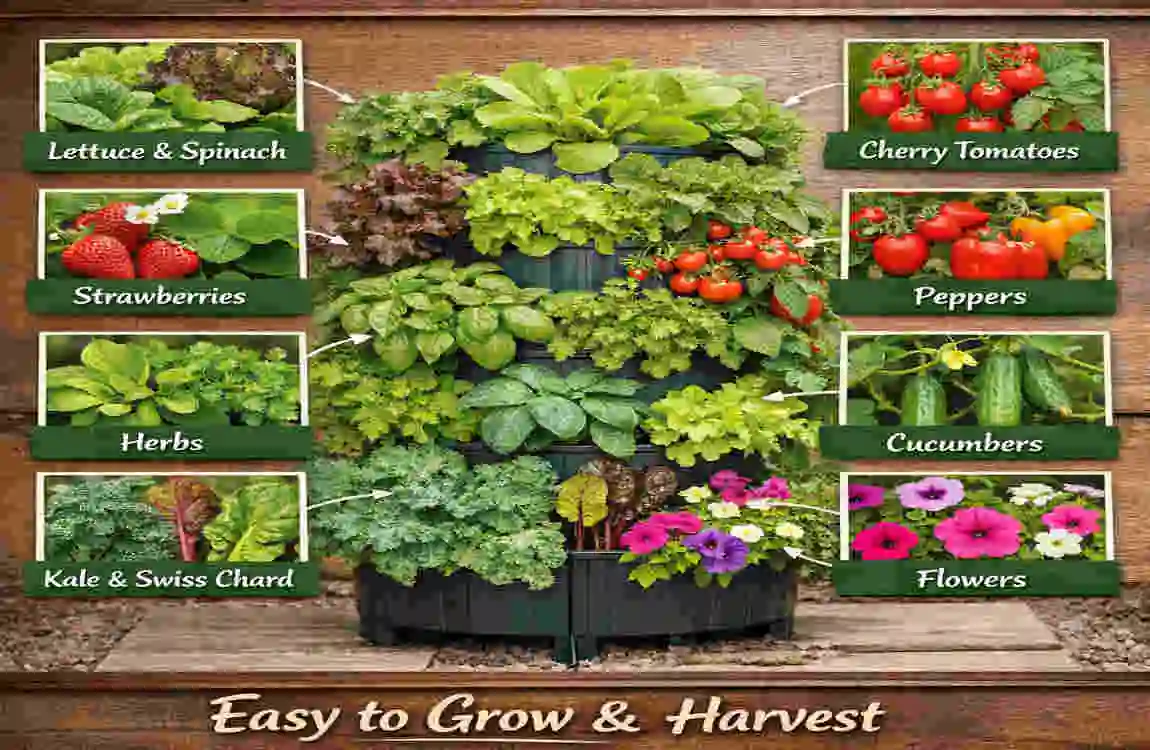
Not every plant works well in a tower. Choose compact plants that do not need too much room.
- Lettuce
- Spinach
- Basil
- Mint
- Parsley
- Strawberries
- Kale
- Green onions
- Small cherry tomato varieties
Tips for Better Results
A few smart habits can help your tower grow better.
- Use lightweight, well-draining soil
- Water consistently, but do not overwater
- Rotate the tower if sunlight is uneven
- Avoid planting too many seedlings in one tower
- Feed plants with organic fertilizer every 3 to 4 weeks
Frequently Asked Questions
What is a vertical garden tower?
It is a structure that allows plants to grow upward rather than spread across the ground. This makes it ideal for small spaces.
Which plants grow best in a garden tower?
Leafy greens, herbs, strawberries, green onions, and small tomato plants usually do very well.
How often should I water it?
In warm weather, you may need to water daily. In cooler weather, every two to three days may be enough.
Can I build one myself?
Yes, you can make one using PVC pipes, stackable planters, buckets, or recycled containers.
Does it need full sun?
Most plants need 6 to 8 hours of sunlight daily, though some herbs can grow in partial shade.
| Topic | Information |
|---|---|
| Project Name | Build a Space-Saving Vertical Garden Tower at Home |
| Purpose | Grow vegetables, herbs, flowers, or strawberries in limited space. |
| Best Locations | Balcony, patio, rooftop, backyard, or sunny indoor area. |
| Difficulty Level | Easy to Moderate |
| Estimated Cost | $30–$150 (depending on materials and size) |
| Time Required | 2–5 hours for basic assembly |
| Common Materials | PVC pipe, stacked planters, wooden pallets, buckets, or recycled bottles |
| Recommended Plants | Lettuce, spinach, basil, mint, parsley, strawberries, succulents, and small flowers |