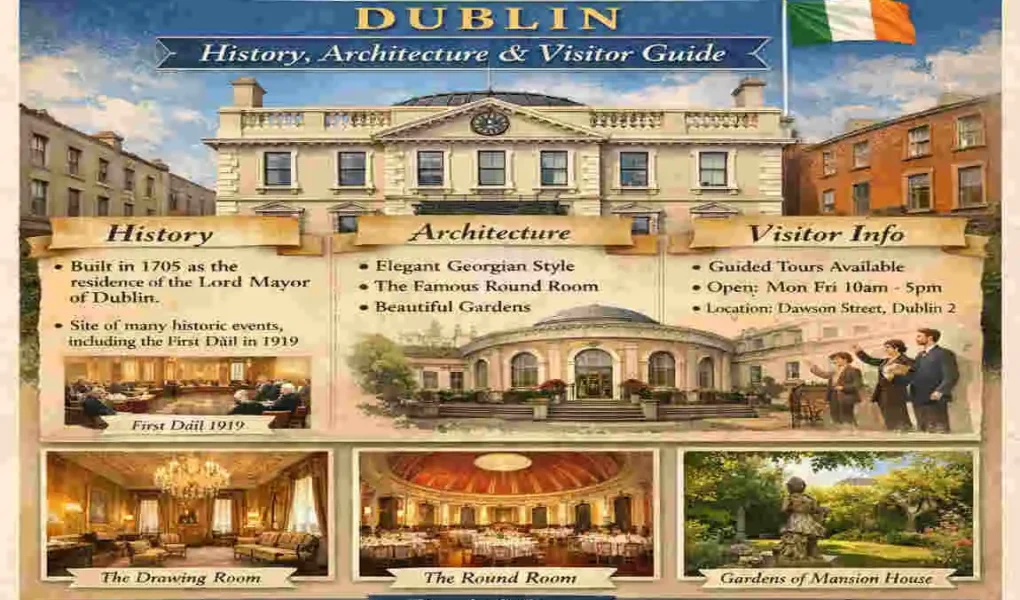
The Mansion House in Dublin is one of the city’s most important civic landmarks, and it feels both historic and alive at the same time. It has stood at the center of Dublin’s public life for generations, serving as a place for official events, ceremonies, and visiting dignitaries.
| Category | Details |
|---|---|
| Location | Dawson Street, Dublin 2, Ireland |
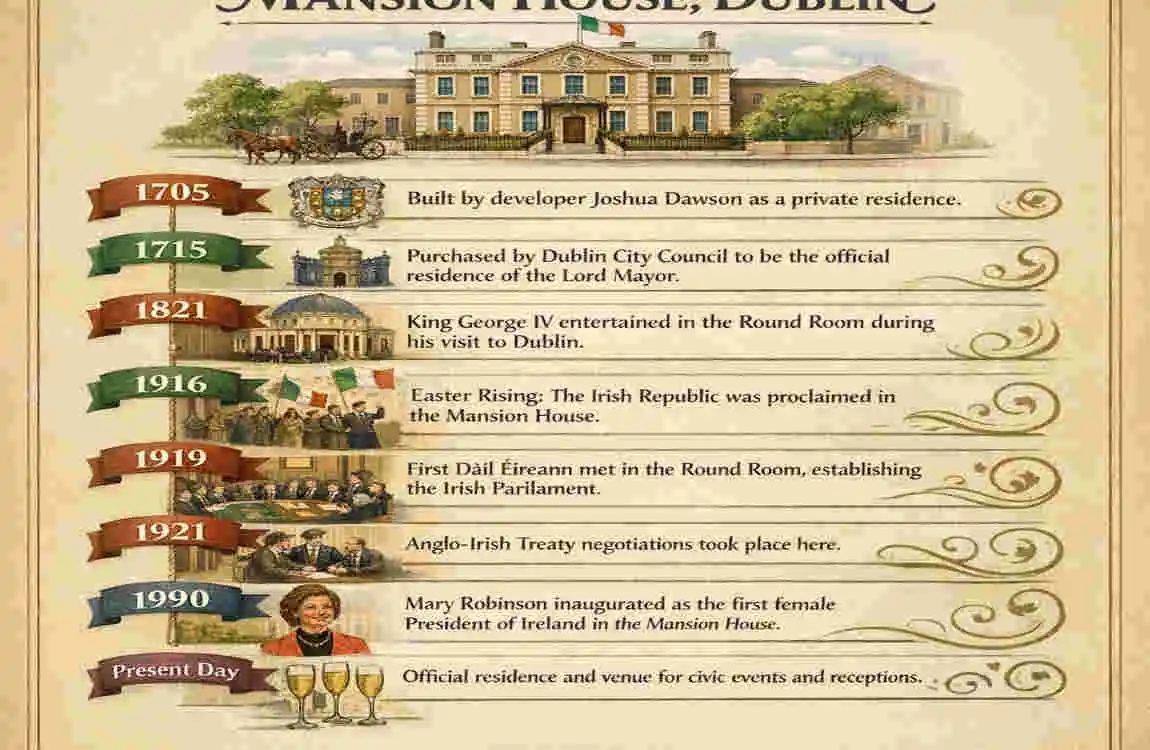
| History | Built in 1705–1710 for Joshua Dawson and became the official residence of the Lord Mayor of Dublin in 1715. It hosted the First Dáil (Irish Parliament) in 1919 and remains a key civic landmark. |
| Architecture | A Georgian-style mansion with elegant brick façades, the famous Round Room (added in 1821), grand reception halls, and the historic Oak Room. |
| Visitor Guide | Usually not open daily. Public access is available during Culture Night, Open House Dublin, and selected guided tours or special events. Located within walking distance of St. Stephen’s Green and Trinity College Dublin. |
What makes it special is the mix of history, architecture, and civic meaning. You do not just see a beautiful old building here. You also see a place that still matters to the city today.
Historical timeline
Origins and 18th-century construction
The Mansion House was built in the early 1700s as a grand private home. It was designed for a wealthy Dublin merchant, which was common for buildings of this type in that period. Its scale and style showed status, taste, and power.
19th-century changes and civic role
Over time, the building moved away from private use and became more closely tied to public life. As Dublin changed, the Mansion House took on a stronger civic role and became part of the city’s official identity.
20th-century and later events
In modern Irish history, the building has hosted important public moments, official receptions, and civic ceremonies. It has remained a respected place for the Lord Mayor of Dublin and for events that matter to the city.
Modern-day function
Today, the Mansion House still works as a living civic building. That means it is not only a historic site, but also a working part of Dublin’s public life. This gives the visit a real sense of purpose and energy.
Architectural overview
Architectural style and influences
The building reflects Georgian Dublin architecture with classical touches. Its design is graceful rather than flashy, and that is part of its charm. The proportions, balance, and symmetry all create a calm and formal look.
Exterior features to notice
When you arrive, look closely at the façade, the entrance, and the stone details. The building has the kind of presence that feels dignified without being overdone. If you enjoy historic Dublin buildings, the exterior is a strong place to start.
Interior layout and notable rooms
Inside, the layout is shaped by its civic use. You will find formal reception spaces, ceremonial rooms, and areas tied to official business. Each room helps tell the story of how the building has been used over time.
Art, decoration and symbolism
Portraits, civic symbols, and decorative details add meaning to the interior. These items are not just for display. They reflect Dublin’s public history and the people who helped shape it.
Must-see rooms and features
The Council Chamber
This is one of the most important spaces in the building. It is where civic decisions and formal meetings connect the Mansion House to Dublin’s public life.
The Ceremonial Rooms
These rooms are often the most visually impressive. They show the building at its most formal, with elegant décor and a strong sense of tradition.
Historic portraits and artifacts
Take time to look at the portraits, regalia, and older objects on display. They give the place character and help visitors connect names, events, and faces to Dublin’s history.
Plaques and stories
Small plaques and notices often carry the most interesting details. They can explain who used a room, what happened there, or why a feature matters.
If you are visiting the Mansion House in Dublin, give each main room a few quiet minutes. That is usually enough to notice the small details that make the visit memorable.
Visiting practicalities (Visitor Guide)
Opening hours & best times to visit
Opening times can change, so it is always smart to check before you go. If you prefer a calmer visit, aim for a weekday morning or early afternoon.
Admission, tours, and booking
Some visits may be free, while others may require a guided tour or a booking. If you want the best experience, a guided visit is usually the easiest way to understand the building’s history.
Accessibility
Accessibility can vary by room and event, so it is worth checking in advance. If you need step-free access or other support, ask ahead of time so your visit is smooth and comfortable.
How to get there: transport options
The Mansion House is in a central part of Dublin, so it is easy to reach by bus, tram, or on foot. Many visitors also walk from nearby city landmarks, which makes it part of a larger city day out.
Nearby attractions and suggested itinerary
You can pair your visit with nearby places like Dublin Castle, Trinity College, Christ Church, and Grafton Street. A half-day visit works well if you want to keep things relaxed. A full day gives you room to explore more of central Dublin.
Food and drink options nearby
There are plenty of cafés, pubs, and casual restaurants nearby. That makes it easy to stop for coffee, lunch, or a quiet break after your visit.
Tips for photographers and social media
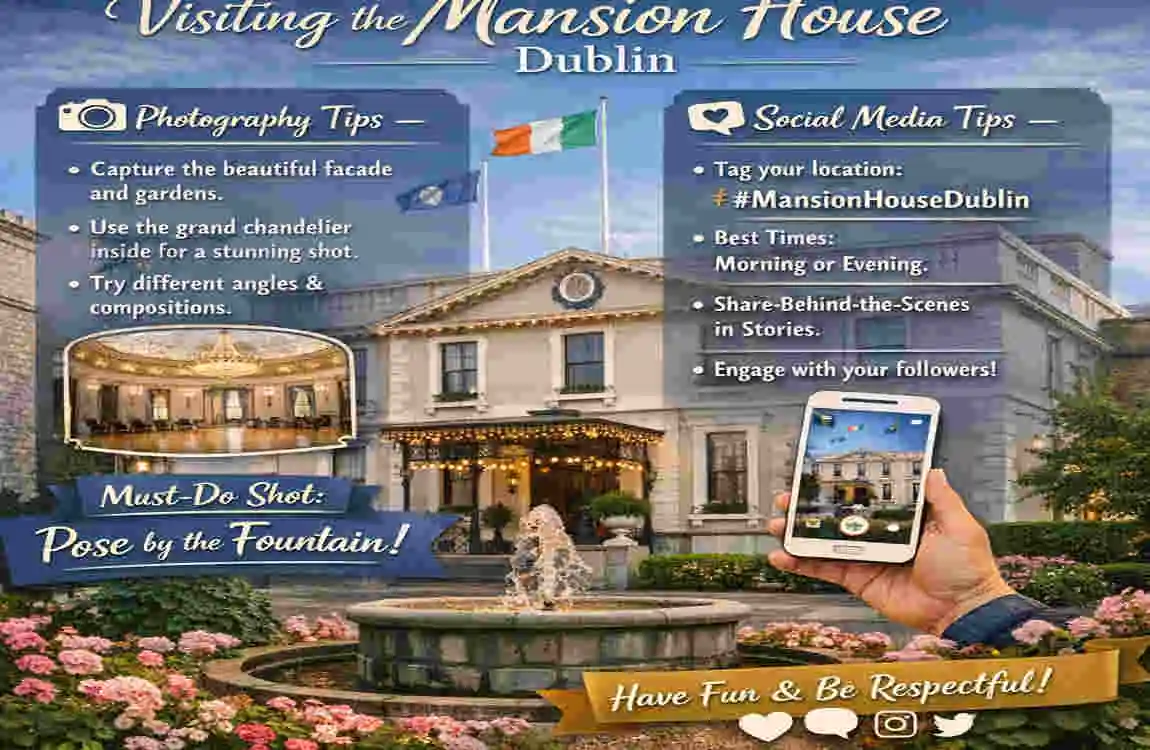
The exterior looks best in soft daylight, especially in the morning or late afternoon. If you want clean photos, stand back a little and frame the building with the street or nearby greenery.
For social media, keep your captions simple and clear. A line like “A timeless stop at the Mansion House in Dublin” works well.
Remember to check the rules for flash, tripods, and any commercial photography. The Mansion House is one of the most interesting Dublin photography spots, but respect always comes first.
Common questions visitors
Is the Mansion House open to the public?
Yes, but access can depend on events and bookings. It is best to check ahead before planning your visit.
Is there an entry fee?
That depends on the type of visit. Some tours or events may be free, while others may need a ticket or reservation.
Can I take photos inside?
Photography rules can vary by room and event. Always follow the signs and staff instructions.
How long should I allow for a visit?
A short visit may take less than an hour, while a guided visit can take longer. If you enjoy details, give yourself extra time.
Are guided tours available?
Guided tours are often the best way to see the building. Booking in advance is usually the safest option.
Safety, rules, and etiquette
Like many official civic buildings, the Mansion House may use security checks at the entrance. Keep bags simple, follow staff guidance, and stay respectful during formal events.
If you are attending a special reception, smart dress is a good idea. The Mansion House in Dublin is still an active public building, so a considerate attitude makes the visit better for everyone.
Conservation and restoration efforts
The Mansion House has been cared for over many years, and that work matters. Restoration helps protect the building’s structure, interiors, and historic features for future visitors.
These efforts also keep the building useful as a civic space. When visitors appreciate and respect the site, they help support its long-term care in a simple but important way.
Related attractions and walking route
A nice walking route starts at the Mansion House and continues to Dublin Castle, then on toward Christ Church and Trinity College. If you have more time, finish near Grafton Street for shopping or a café stop.
This route works well for both a relaxed half-day and a fuller city day. If you do not want to walk the full way, central transport options make it easy to adjust your plan.
How the Mansion House fits into Dublin’s civic identity
The Mansion House is more than a historic building. It stands for Dublin’s civic life, public ceremonies, and local pride. As the residence of the Lord Mayor of Dublin, it helps connect the city’s past with its present.
That is why the Mansion House in Dublin remains such an important symbol. It is both a heritage site and a working part of the city’s story.
Practical business-focused CTA
If you create travel content, run tours, or support local visitor services, the Mansion House can be a strong topic for your audience. It fits well into city guides, heritage content, and Dublin experience planning. Connect with readers through clear, useful local storytelling that helps them explore the city with confidence.
Suggested resources and further reading
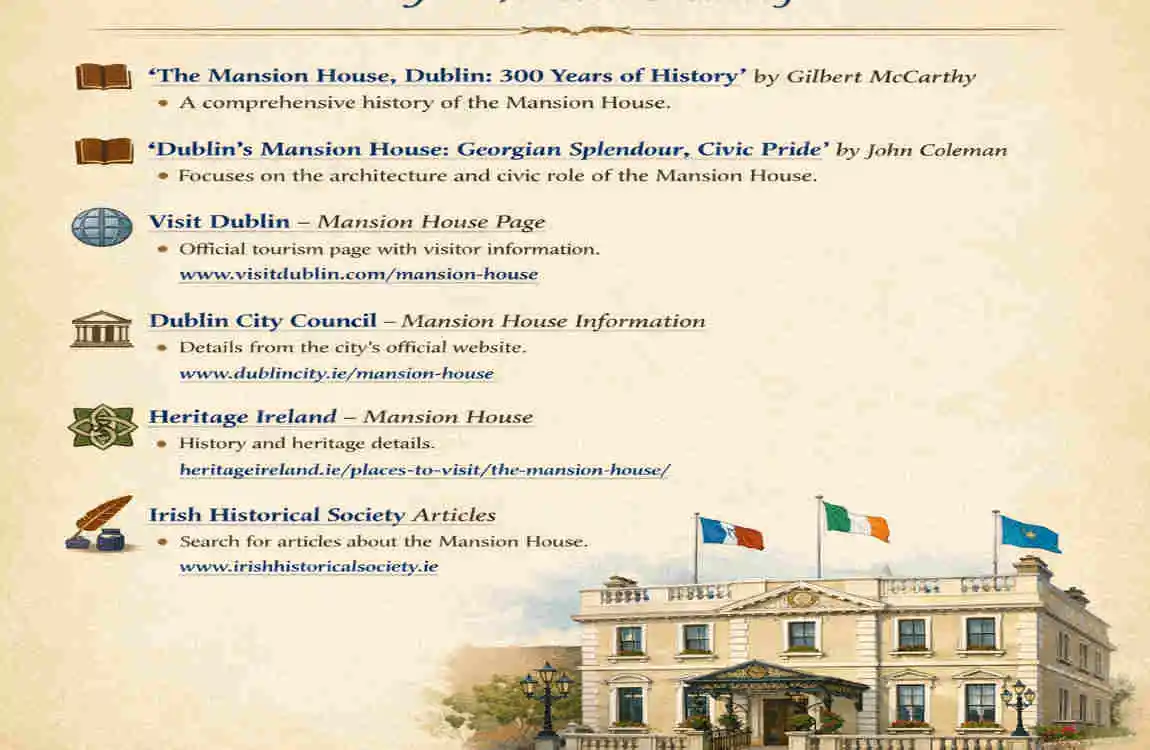
For deeper reading, look for these sources:
- Official Mansion House information
- Dublin City Council civic heritage pages
- Irish heritage and conservation organizations
- Local Dublin history books and museum guides
You can also use related internal pages on your site about Dublin travel, Georgian architecture, walking tours, and city landmarks.
Quick checklist for visitors
- Check opening times before you go
- Book a guided tour if available
- Wear comfortable shoes
- Bring a camera, but follow photo rules
- Use central transport or walk from nearby landmarks
- Allow enough time to enjoy the main rooms
- Respect official events and staff guidance
- Carry ID if your booking or event asks for it
FAQ: Mansion House in Dublin
What is the Mansion House in Dublin?
The Mansion House in Dublin is a historic civic building and the official residence of the Lord Mayor of Dublin.
Is the Mansion House open to the public?
Yes, but public access can depend on events, tours, and official use, so it is best to check before visiting.
Do I need to pay to enter?
Entry may be free for some visits, while special tours or events may need booking or a ticket.
Can I take photos inside?
Photography rules can vary by room and event, so always follow the signs and staff instructions.
How long does a visit take?
Most visitors spend less than an hour, but a guided visit may take longer if you want to explore in detail.
Where is it located?
It is on Dawson Street in central Dublin, making it easy to reach on foot or by public transport.