A dining table is more than a place to eat. It is where you gather with family, talk about your day, celebrate special moments, and make everyday memories. That is why choosing the perfect dining table for your home deserves careful thought.
You want a table that looks good, fits your space, feels comfortable, and works well for your daily life. If you rush the choice, you may end up with a table that feels too big, too small, or simply wrong for your home.
Measure Your Dining Space
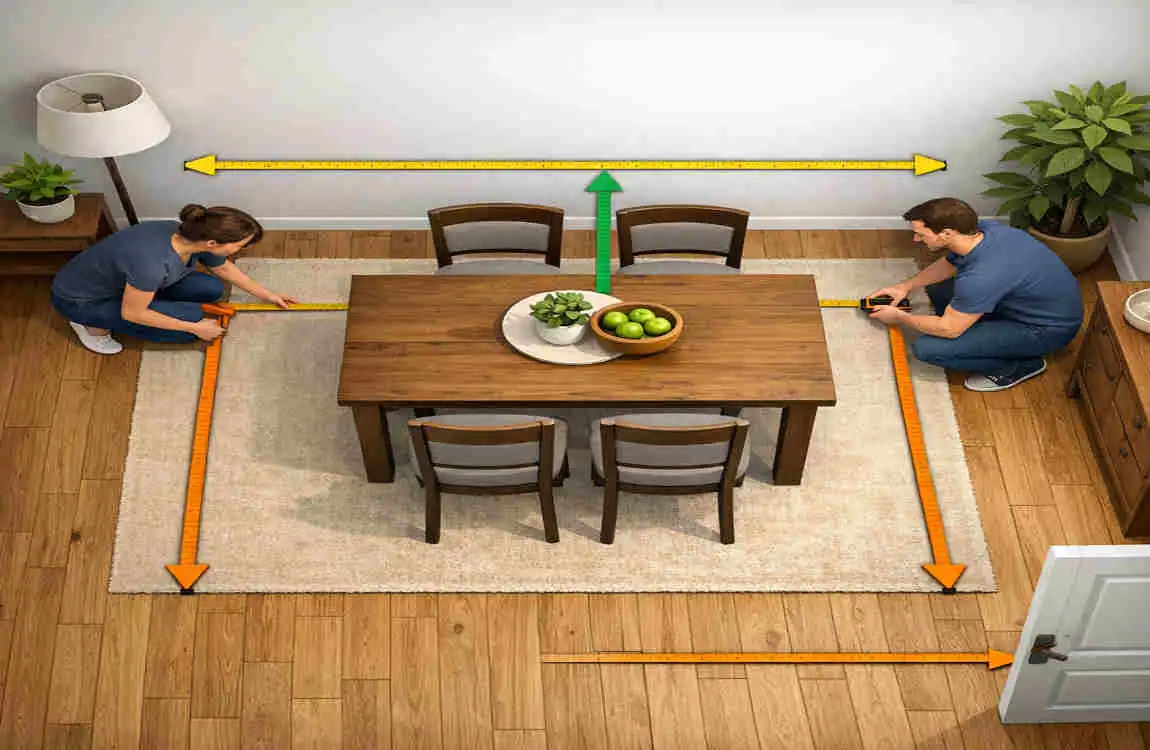
Start with the room itself.
Before you fall in love with a table design, take a good look at your dining area. The size of the room should guide your decision first.
A table that looks beautiful in a showroom may feel cramped in your home. That is why measuring the space is the first and most important step.
Leave enough room around the table.
A good rule is to leave at least 36 inches of space around the table. This gives people room to pull out chairs and walk around without bumping into walls or furniture.
If your dining area is small, this step becomes even more important. A table that is too large can make the whole room feel crowded and hard to use.
Measure more than once
Measure the length and width of the room. Then think about doors, windows, cabinets, and walkways. These details matter because they affect how the table will fit into the space.
If possible, use tape or paper on the floor to mark out the table size before buying. This helps you see how much space the table will actually take up.
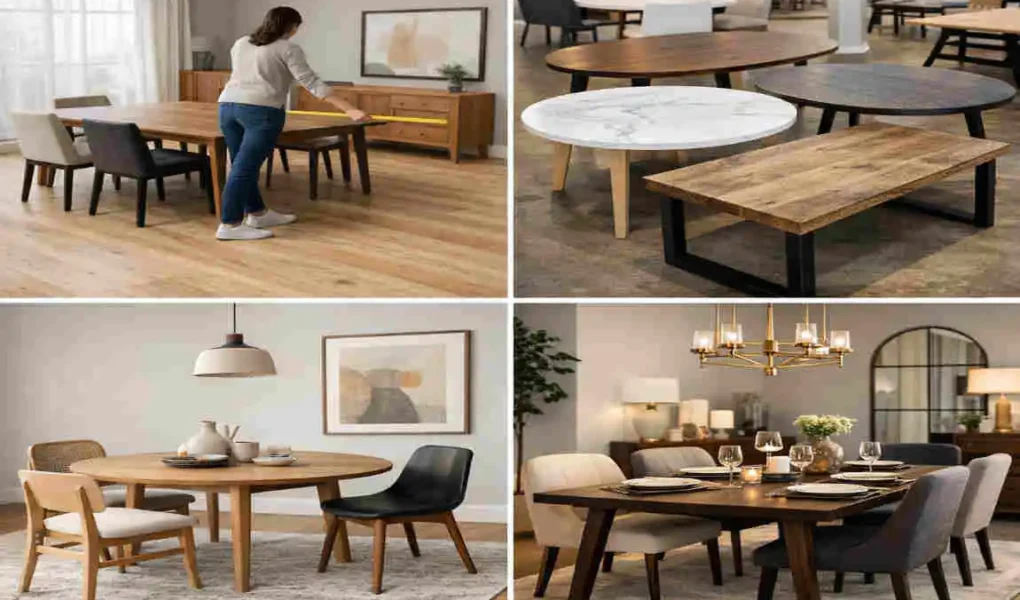
Pick the Right Table Shape
Rectangle tables
Rectangular tables are one of the most common choices. They work well in larger dining rooms and are great for families who need more seating.
They also fit nicely in long, narrow rooms. If you often host guests, this shape can give you the flexibility you need.
Round tables
A round table is ideal for smaller spaces. It softens the look of a room and makes conversation feel easier because everyone faces one another.
This shape is often a smart choice for apartments, breakfast corners, or cosy dining areas. It also helps avoid sharp corners in tight spaces.
Square tables
A square table works best in square-shaped rooms or for smaller households. It creates a balanced look and can feel very intimate.
If your family size is small, this shape may be just right. However, it may not be the best fit if you often host large groups.
Oval tables
An oval table offers a nice middle ground. It gives you the length of a rectangular table but with softer edges.
This shape can feel elegant and open at the same time. It is a good choice if you want a table that looks refined but still seats several people.
Choose the Right Size
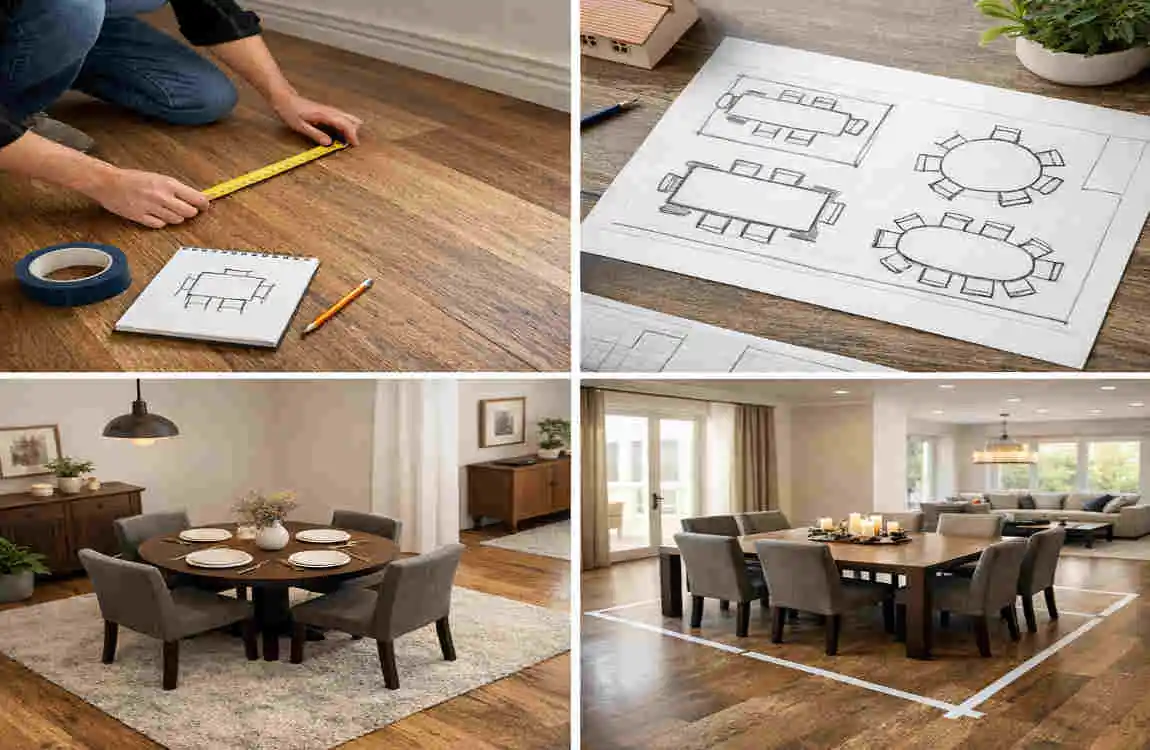
Think about how many people use it daily.
The right size depends on how many people sit at the table most of the time. You should also think about whether you entertain guests often.
A table that works for everyday meals may not be large enough for holiday dinners or family gatherings. So, it helps to plan for both regular use and special occasions.
Use the size guide below.
Family Size Recommended Table Size
2–4 people 36–48 inches round or 48-inch rectangular
4–6 people 60–72-inch rectangular
6–8 people 72–96-inch rectangular
8+ people Extendable or large rectangular table
Leave space for chairs.
A table should not only fit the room. It should also fit the chairs.
Make sure there is enough room for people to sit and move comfortably. If a table is too wide or too long for the space, the whole dining area can feel awkward.
Match size to lifestyle
If you live alone or with one other person, a smaller table may be enough. If you have a big family or love hosting, a larger table or extendable option may be smarter.
Think about your real daily use, not just special occasions. That will help you choose a table that truly works for you.
Select a Durable Material
Solid wood
Solid wood is a classic choice. It is strong and durable, and it can last for many years if cared for properly.
It also brings warmth and character to a room. If you want a table that feels timeless, wood is often a safe and attractive choice.
Glass
A glass table gives a light, open feel. It can make a room seem larger, which is helpful in smaller spaces.
Glass works well in modern homes, but it does need more cleaning. Fingerprints, dust, and marks can show up quickly.
Metal
Metal tables are strong and often fit industrial or modern styles. They can handle daily use well and usually feel sturdy.
Some metal tables are paired with wood or glass tops, giving you a mix of strength and style.
Engineered wood
Engineered wood is a more affordable option. It can look stylish while costing less than solid wood.
It is also easier to maintain in many cases. If you want a nice-looking table without spending too much, this can be a practical choice.
Marble or stone
Marble and stone tables feel elegant and high-end. They can make a strong style statement in a dining room.
However, they are heavy and may need extra care. They can also be more expensive, so they are best for homeowners who want luxury and are ready for the upkeep.
Match Your Home’s Style
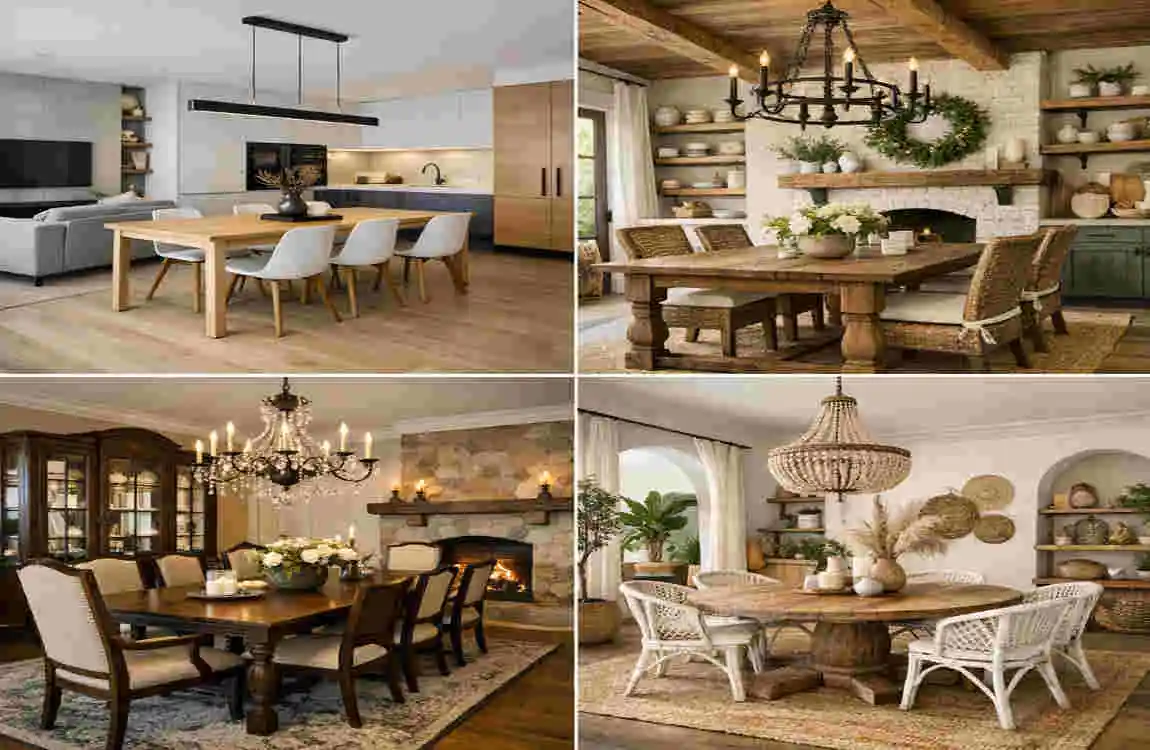
Modern homes
If your home has a modern look, choose a table with clean lines and simple shapes. Glass and metal often work very well here.
Neutral colours and a minimal design will help the table blend into the space without looking busy.
Farmhouse style
For a farmhouse look, a rustic wooden table is a natural fit. It adds warmth and feels welcoming.
This style works especially well if you want your dining area to feel relaxed and family-friendly.
Traditional interiors
Traditional homes often look best with rich wood finishes and classic table shapes. These tables usually feel formal, timeless, and well-balanced.
If your home already has elegant furniture, a matching dining table will help complete the room.
Contemporary spaces
A contemporary home usually needs a table with simple lines and a fresh look. Neutral tones, smooth surfaces, and balanced shapes are a good match.
The goal is to keep the room looking clean and current without making it feel cold.
Think About Everyday Use
Use matters as much as style.
A dining table should fit the way you live. A beautiful table is great, but it also needs to work in everyday life.
Ask yourself how the table will be used. Will it be for family meals, work-from-home tasks, homework, or hosting dinner parties?
Extendable tables for flexibility
If you often host guests, an extendable dining table can be a smart choice. It gives you a smaller table for daily use and more seating when needed.
This kind of table is practical because it adapts to different situations. It is especially helpful if you want both comfort and flexibility.
Family-friendly features
If you have young children, safety and durability matter a lot. Rounded edges can reduce bumps and scratches, and durable finishes can withstand daily wear.
A table that is easy to clean is also a big plus. Families often need furniture that can handle spills, crayons, and busy mealtimes.
Balance beauty with function.
Do not choose based on looks alone. A table should support your habits and routine. When style and function work together, you get a better result.
Budget Wisely
Think of it as a long-term purchase.
A dining table is not something you replace every year. It is often a long-term part of your home, so quality matters.
It may be tempting to choose the cheapest option, but a low price can sometimes mean weaker materials or a shorter lifespan. A better-made table may cost more at first but save money later.
Compare construction and materials.
When comparing tables, look beyond the surface. Ask what the frame is made of, how sturdy the legs are, and whether the finish will hold up over time.
A table with strong construction usually gives better value, even if it costs a little more.
Check for warranties or guarantees.
If available, a warranty can give you extra peace of mind. It shows the maker stands behind the product.
This is especially helpful if you are spending more on solid wood, stone, or custom furniture.
Frequently Asked Questions
What is the best dining table shape for small spaces?
A round dining table is usually the best choice because it saves space and allows easier movement.
How much space should I leave around a dining table?
Leave at least 36 inches between the table and surrounding walls or furniture.
Which dining table material lasts the longest?
Solid wood is one of the most durable and long-lasting materials when properly maintained.
Are extendable dining tables worth buying?
Yes. They give you flexibility for daily use while offering extra seating for guests and special occasions.
What size dining table is suitable for a family of six?
A rectangular table measuring 60 to 72 inches long is usually comfortable for six people.
| Factor | Details |
|---|---|
| Purpose | Choose a table that fits your daily meals, family gatherings, and entertaining needs. |
| Table Shape | Round for small spaces, rectangular for larger rooms, square for compact dining areas, and oval for flexibility. |
| Size | Leave at least 36 inches (91 cm) of clearance around the table for comfortable movement. |
| Seating Capacity | Select a table based on your household size and expected guests (4, 6, 8, or more seats). |
| Material | Solid wood for durability, glass for a modern look, metal for industrial style, and marble for luxury. |
| Style | Match the table with your home’s interior, such as modern, farmhouse, traditional, rustic, or contemporary. |
| Table Height | Standard dining tables are typically 28–30 inches high and fit most dining chairs. |
| Extendable Option | An extendable table offers extra seating while saving space when not in use. |
| Maintenance | Choose easy-to-clean materials if the table will be used frequently by families with children. |
| Budget | Set a realistic budget and balance quality, durability, and design for the best long-term value. |