
Selling a house already comes with enough stress. You are packing boxes, cleaning corners you forgot existed, and trying to keep up with paperwork all at once. So it is no surprise that many sellers ask the same practical question: Can you leave stuff behind when you sell your house?
The short answer is sometimes yes, but only if the contract, local rules, and buyer agreement allow it. In many sales, anything personal that you leave behind may be treated as the buyer’s property after closing. That means you cannot always assume the new owner will be okay with your old furniture, forgotten boxes, or a pile of basement extras.
This matters because house sales are not just about the land and the walls. They also involve what stays, what goes, and what both sides agreed to in writing. A chair in the wrong place, an old washer left in the garage, or a box of forgotten family items can turn into a real dispute if you are not careful.
If you want a smooth sale, you need to understand the difference between fixtures, personal property, and items that should be removed before closing. You also need to know what buyers expect when they walk into the house on move-in day. Most buyers want a clean, empty home that feels ready for them, not one that still holds the seller’s belongings.
| Item Type | Can You Leave It? | Notes |
|---|---|---|
| Fixtures | Yes | Bolted items like cabinets, light fixtures, built-in shelves stay. |
| Appliances | Sometimes | Ovens/dishwashers (if built-in) yes; fridges/washers usually no—specify in contract. |
| Curtains/Blinds | Sometimes | Rods/rails stay; curtains often personal (remove or agree). |
| Personal Belongings | No | Clothes, books, decor, kitchenware must go for “broom clean” standard. |
| Outdoor Items | No | Potted plants, loose furniture—remove unless secured/fixtures. |
| Junk/Debris | No | Risk breach; buyers own leftovers post-closing but may charge you. |
Legal Basics: What You Need to Know First
Before you decide whether you can leave items behind, the most important thing to understand is that the contract controls the sale. Not your assumption, not your memory, and not what you think is “normal.” The written agreement is what matters most.
What the Contract Says
In many home sales, the property must be delivered in broom-clean condition. That usually means the home should be free of personal belongings and cleaned enough for the buyer to take possession without having to deal with your clutter.
That does not always mean every inch must be spotless. It usually means the house should be reasonably clean and cleared out, with only the items that the contract says should remain.
If you leave something behind without permission, the buyer may have the right to treat it as abandoned property. That can lead to arguments, removal fees, or even delays in closing if the issue is found early enough.
This is why sellers should never guess. If you want to leave something behind, put it in writing. If you do not want to remove a certain item, make that clear before closing. That way, nobody is surprised later.
State and Local Laws Can Change the Rules
Laws regarding abandoned property and home sale cleanup vary from state to state. In the United States, there is no single federal law that dictates how every seller should handle leftover items in a home sale. Instead, the rules often depend on the state, the local market, and the terms in the contract.
In some places, buyers or agents may have to give notice before removing items. In other places, the buyer may be able to discard them after closing if nothing in the contract says otherwise.
That is why local guidance matters so much. A seller in one area might be allowed to leave a shed full of tools if the buyer agrees. Another seller in a different area might face cleanup charges or legal trouble for doing the same thing.
If the home is being sold as part of a probate sale, foreclosure, or estate sale, the rules may be even more specific. In those situations, the presence of personal property can create extra legal steps.
Risks of Leaving Items Behind
Leaving stuff behind might seem harmless, but it can create very real problems if you do not handle it properly.
Here are some of the most common risks:
- The buyer thinks the home was supposed to be empty.
- The seller breaches the contract by failing to remove the personal property.
- The buyer asks for money to clear out the items.
- The closing gets delayed while both sides argue.
- Hazardous or illegal items create legal liability.
Some sellers think, “It is just a few boxes,” but those few boxes can become a major problem if the buyer refuses to accept them. This is especially true with junk, paint, chemicals, old appliances, and anything that could cause safety issues.
Risk and Solution Table
RiskPossible ConsequenceSmart Fix
Leaving personal items without permission , Contract dispute or closing delay , List exclusions early in writing
Leaving hazardous materials, fines, cleanup fees, or legal claims. Hire professional disposal help.
Leaving bulky junk. Buyer demand for removal costs. Remove items before closing.
Leaving items the buyer did not expect, Loss of trust, and conflict. Confirm everything in the contract
This table clearly shows the main idea: when in doubt, write it down first.
Fixtures vs. Personal Property: What Stays and What Goes
One of the biggest sources of confusion when selling a house is the difference between fixtures and personal property. If you understand this part, you will avoid many mistakes.
What Counts as Fixtures?
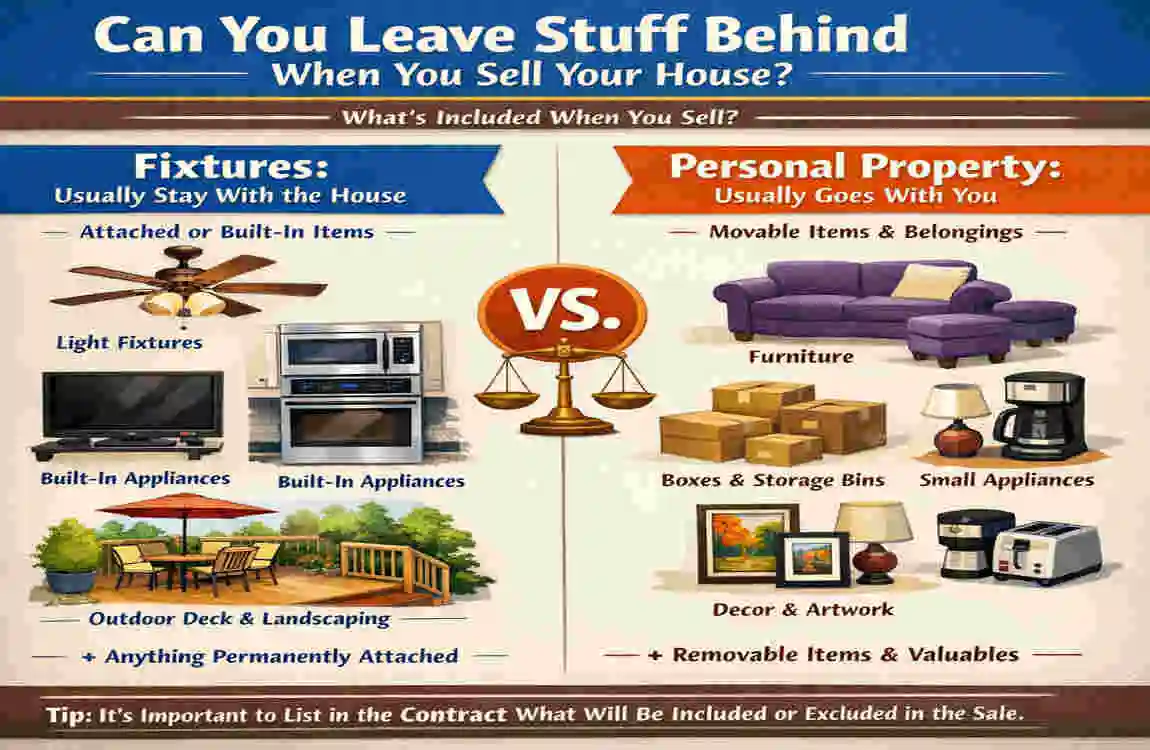
Fixtures are items attached to the home that become part of the property. In many sales, fixtures stay with the house unless the contract says otherwise.
Common examples include:
- Built-in cabinets
- Light fixtures
- Ceiling fans
- Wall-mounted shelves
- Attached mirrors
- Curtain rods
- Permanently installed appliances, if included in the sale
- Built-in bookshelves
- Attached garage storage units
The easiest way to think about fixtures is this: if it is bolted, wired, nailed, or built in, it probably stays unless removed and replaced before closing.
That said, there are still gray areas. For example, a chandelier may be considered a fixture. Still, if you want to take it with you, you should replace it with a similar one and make sure the contract allows it. Never assume the buyer will guess your intentions.
What Counts as Personal Property?
Personal property is usually anything that is not permanently attached to the home. This is the stuff you should remove unless the buyer agrees to keep it.
Common examples include:
- Clothing
- Boxes
- Books
- Small decor
- Furniture
- Electronics
- Freestanding appliances
- Tools
- Toys
- Lawn equipment
- Dishes
- Plants in pots
If you can pick it up and move it without damaging the home, it is usually personal property.
That means if you leave it behind, you should expect the buyer to treat it as something they may keep, remove, or dispose of after closing, depending on what was agreed.
The Gray Areas That Cause Problems
Some items are not easy to classify. These are the things sellers forget to discuss early enough.
Examples include:
- Curtains
- Blinds
- Wall-mounted TVs
- Refrigerator and washer
- Shelving units
- Outdoor furniture
- Planters
- Garden statues
- Detached storage sheds
One seller may think the washer is staying because it looks built in enough. The buyer may think the washer is leaving because it is not attached to the house. If nobody clarifies this in writing, the result can be frustration on both sides.
Quick Reference Table: Fixtures vs. Personal Property
Category Examples Usually Leave? Notes
Fixtures, cabinets, chandeliers, ceiling fans. Usually stays if attached
Appliances : oven, dishwasher, refrigerator, washer . Maybe it must be stated in the contract
Personal items: Clothes, books, furniture, decor. No Remove before closing
Outdoor items: Pots, lawn tools, patio chairs. Only stay if specifically agreed
Attached extras: curtain rods, wall shelves, built-ins. Yes, often considered part of the home
This table can help you think through the property room by room before moving day.
What Buyers Expect When They Buy a Home
Now let’s look at the other side. If you are asking whether you can leave stuff behind when you sell your house, you should also ask a second question: what does the buyer expect?
Most Buyers Want an Empty Home
Most buyers expect to walk into a home that is fully cleared out. They want to start fresh, move their own belongings in, and not deal with someone else’s leftovers.
That does not mean the house has to be decorated beautifully or scrubbed to perfection. But it does mean buyers usually want the seller’s personal stuff gone by the time they get the keys.
A clean, empty house also feels more spacious. It lets buyers imagine their own furniture, their own style, and their own life in the home. That emotional shift matters more than many sellers realize.
Leftover Items Can Affect the Sale Experience
Even if the leftover items are harmless, they can still make the buyer feel like the home was not handled properly. A few boxes in the garage may look small to you, but they can signal carelessness to the buyer.
That can lead to:
- Lower trust
- More negotiation
- Requests for cleanup credits
- Complaints at final walkthrough
- A poor first impression after closing
When a buyer feels like the home was left in a messy state, that feeling may color their view of the whole transaction.
Staging and Clean Presentation Matter
Homes that look clean and ready tend to perform better in the market. Buyers often respond more positively to a home that feels move-in ready, in some cases, that can even strengthen the offer.
That is why sellers should aim for a polished presentation rather than a cluttered one. If you leave too much behind, it can work against the value of the home you are trying to sell.
Practical Steps to Handle Unwanted Items Before Selling
If you already know the house has extra stuff you do not want, do not wait until the last minute. A simple plan will save you stress later.
Make a Full Inventory
Walk through the house and list everything that is staying, leaving, or being removed. Do not rely on memory. Write it down, room by room.
This helps you spot the items that might confuse you later, such as appliances, shelving, outdoor tools, or leftover furniture.
Decide What You Really Want to Keep
Some things are easy to give up. Others may be worth taking.
Ask yourself:
- Is this item useful?
- Does it have resale value?
- Will it cost too much to move?
- Is it already part of the agreement?
- Does the buyer expect it to stay?
This kind of filter helps you avoid leaving behind items that could be valuable or meaningful.
Put Agreements in Writing
If you want to leave a couch, refrigerator, lawn mower, or any other item, write it into the contract or addendum. Do not trust casual conversation alone.
A written agreement protects both you and the buyer. It makes expectations clear and prevents arguments later.
Remove Hazardous or Restricted Items First
Some things should never be left behind unless local rules allow it and the buyer specifically accepts it.
Examples include:
- Paint cans
- Chemicals
- Propane tanks
- Fuel containers
- Batteries
- Broken electronics
- Old pesticides
- Illegal items
These can create safety, environmental, or legal problems if you forget them in the house.
Hire Help if Needed
If you are overwhelmed, hire a junk removal company or moving crew. This can be worth it if the home is full, the timeline is tight, or the items are large and difficult to move.
Yes, it costs money. But it may cost less than a legal dispute or a delayed closing.
Selling Furnished vs. Selling As-Is
Not every home sale is the same. Some sellers want to sell the home furnished. Others want to sell it as-is and leave the rest behind. These two approaches are different.
Selling Furnished
Selling furnished can work well in some cases.
It may make sense if:
- The home is a vacation property
- The buyer is an investor
- The furniture is stylish and in good condition
- You want to simplify moving
- You have agreed on the items in advance
A furnished sale can make the home feel more complete and ready to use. Some buyers even like that because it saves them time.
But the furniture still has to be discussed clearly. If you assume the dining table stays and the buyer thinks it leaves, that creates confusion.
Selling As-Is
An as-is sale means the buyer agrees to take the property in its current condition. But that does not automatically mean you can leave anything you want behind.
You still need to disclose what is staying, what is going, and what condition the property will be in at closing.
As-is usually helps with condition issues, but it does not erase the need for clear communication. You still need to handle belongings carefully.
Which Option Is Easier?
For most sellers, an empty home is easier to sell. It lowers the chance of disagreement and helps the handoff go smoothly.
But if you are trying to sell quickly, or if the buyer wants some items furnished or partially furnished, furnished or partially furnished sales can work fine as long as everything is documented.
Cost-Saving Tips for Unwanted Items
You do not need to spend more than necessary to clear a home. A little planning can save money.
Donate Useful Items
If furniture, tools, or appliances are still in good condition, donating them can be a smart option. It helps reduce waste and makes the move easier.
Sell Items Before Closing
Online resale platforms or local marketplaces can help you move items faster. This works especially well for furniture, equipment, and household goods.
Ask the Buyer What They Want
You may be surprised by what the buyer is willing to keep. Sometimes a buyer wants the washer, freezer, shelving, or patio set. If so, that can save you time on removal.
Use Professional Junk Removal When Needed
Sometimes it is worth paying for fast removal. Professional crews can clear bulky items much more quickly than you can.
This is especially helpful when the house has:
- Heavy furniture
- Multiple rooms of junk
- Old appliances
- Garage clutter
- Yard debris
Cost vs. Convenience
You may spend more upfront on removal, but you may save time, reduce stress, and avoid closing problems. That tradeoff is often worth it.
If you work with a real estate team, ask whether they can recommend junk removal support or a moving checklist. That small help can make the whole process feel much easier.
Common Mistakes Sellers Make
Even careful sellers make mistakes when they are rushing to move. The good news is that most of these mistakes are easy to avoid.
Leaving Items Without Written Permission
This is the most common error. A seller assumes the buyer will not care, but the buyer may care a lot.
How to avoid it: Put every kept item into the contract or addendum.
Forgetting About Small Belongings
Some sellers focus on furniture and forget about drawers, cabinets, closets, and the garage. That is where boxes, manuals, receipts, and personal papers often get left behind.
How to avoid it: Do a final room-by-room check before handing over the keys.
Leaving Hazardous Materials
Leftover chemicals, batteries, propane, and similar items can create safety issues.
How to avoid it: Remove anything unsafe well before closing day.
Assuming the Buyer Wants Extras
The buyer may not want your old fridge, broken shelf, or used lawn tools.
How to avoid it: Ask first instead of guessing.
Not Inspecting the House After Moving Out
Some sellers move everything out in a rush and forget to check the home again before closing.
How to avoid it: Do a final walk-through of every room, closet, attic, basement, shed, and garage.
Real-Life Examples That Show Why This Matters
Sometimes the easiest way to understand this issue is to look at common real-life situations.
The Seller Who Left Tools in the Garage
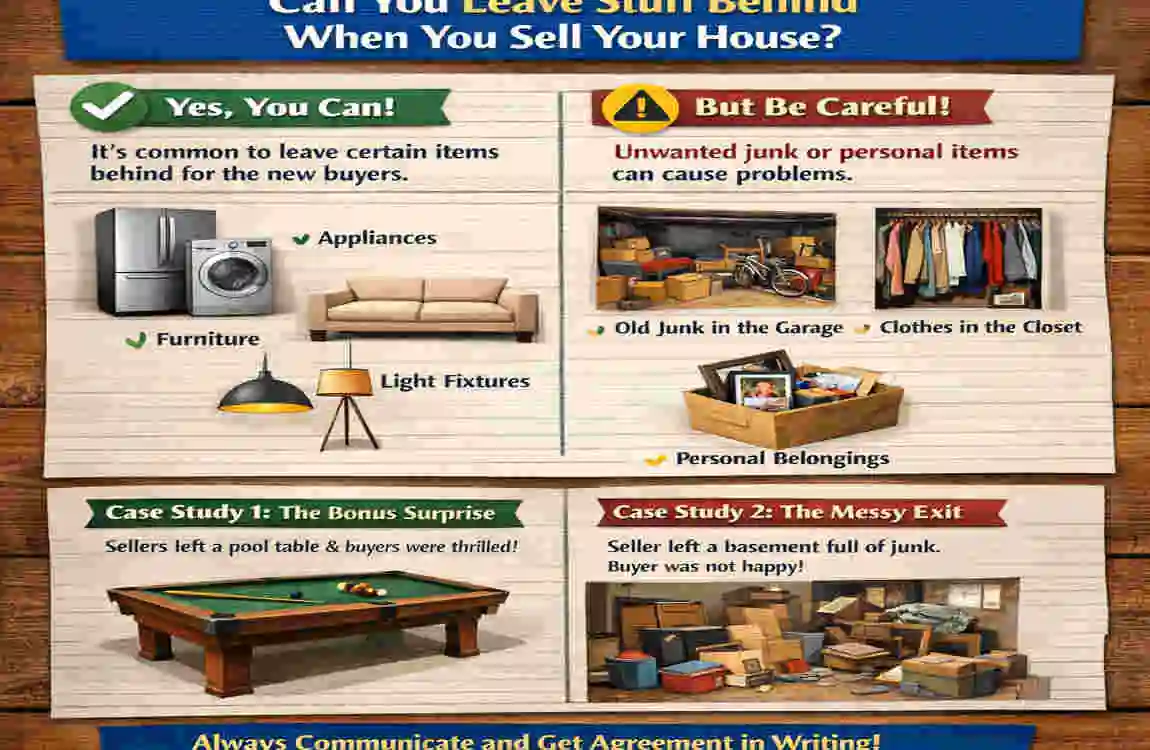
A seller moved out in a hurry, leaving several power tools in the garage. The buyer kept them because the contract did not mention them.
The seller later regretted leaving behind items that could have been sold or donated. The mistake did not cause a legal issue, but it did create frustration.
The Washer That Caused a Delay
In another case, a seller thought the washer would stay, but the buyer assumed it would leave. That mismatch caused confusion at closing, and the parties had to work out a last-minute agreement.
The issue was small, but it created stress at the worst possible time.
Leftover Junk in a Basement
A seller left trash bags, broken furniture, and old boxes in the basement. The buyer was unhappy and requested a credit because the items had to be removed after closing.
That extra cleanup costs time and money that could have been avoided with better planning.
These examples show a simple truth: small things can become big things when a sale is involved.
Frequently Asked Questions
Can you legally leave stuff behind when you sell your house?
Yes, sometimes you can, but only if the contract, local rules, and buyer agreement allow it. In many sales, personal belongings should be removed unless the buyer agrees in writing to keep them.
What happens if the buyer finds leftovers after closing?
In many cases, the buyer now owns the items if they were left behind without a special agreement. That said, the exact result depends on the contract and local rules. Sometimes the buyer may ask the seller to remove them or pay for cleanup.
Is it okay to sell a house with stuff in it?
Yes, it can be okay, especially in furnished or as-is sales. But you should still document everything clearly and make sure the buyer knows what is included.
What should I never leave behind?
You should avoid leaving hazardous materials, illegal items, personal documents, and anything that the buyer did not agree to accept. That includes things like chemicals, fuel, batteries, and trash.
Do fixtures stay with the house?
Usually, yes. Fixtures are items attached to the home, such as built-ins, light fixtures, and curtain rods. If you want to take a fixture, you should replace it or specify it in the contract.
What is the safest way to handle unwanted items before selling?
The safest method is to sort everything early, remove what you do not want to keep, and put any exceptions in writing. If you are unsure, ask your agent or attorney before closing.