Have you ever walked into a room and immediately felt like the walls were closing in on you? We have all been there. It is that cramped, boxy feeling that makes you want to turn around and walk right back out. But here is the good news: you don’t need to knock down walls or finance a massive renovation to change that feeling. Sometimes, the solution is right under your feet. Discovering the best floor color for a small house can transform tight, suffocating spaces into airy, welcoming havens.
It might seem like magic, but it is actually just smart design. The color of your flooring acts as the canvas for your entire home. If you get the canvas right, everything else falls into place. By understanding the optics of light reflection and a little bit of color psychology, you can trick the eye into seeing more space than is actually there.
Why Floor Color Matters in Small Houses
You might be wondering, “Is the floor really that important?” The short answer is: Absolutely.
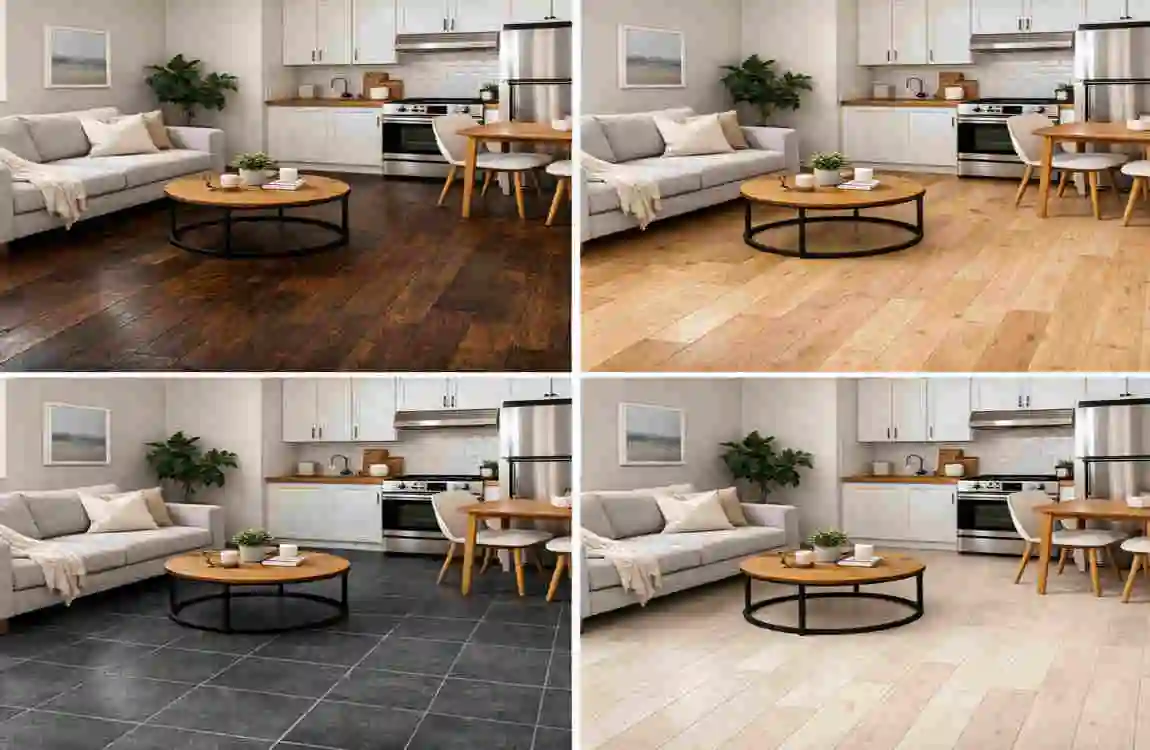
When you are dealing with limited square footage, every surface counts. The floor is the second largest surface area in a room (after the walls), and it plays a huge role in how light travels through your home. This is where optical illusions come into play. Light colors are naturally reflective. When sunlight or lamp light hits a light-colored floor, it bounces back up onto the walls and ceiling, blurring the boundaries of the room. This effect visually pushes the walls outward, creating that coveted sense of openness.
On the flip side, dark colors absorb light. While a dark walnut floor can look stunning and add depth, it can also create a “grounding” effect that feels heavy in a small room. If you aren’t careful, a dark floor in a tiny house can suck the light out of the space, making it feel cave-like.
The Science of Perception
It isn’t just about light versus dark, though. You also have to consider color temperature.
- Cool colors (blues, cool grays) tend to recede, meaning they look like they are moving away from you.
- Warm colors (reds, yellow-based woods) advance, meaning they feel closer.
Think about Scandinavian minimalism. There is a reason those designs feature wall-to-wall white or pale wood floors. They mimic the look of infinite space. One of the most common mistakes homeowners make is choosing a floor texture or color that is too busy or too dark, which immediately overwhelms the eye.
Top Design Principles for Floor Colors in Tiny Spaces
Before we dive into the specific colors, let’s establish some ground rules. Choosing the right floor isn’t just about picking a color you like; it is about picking a color that performs. Here are the key principles to keep in mind to pick the best floor color for a small house.
Maximize Light Reflection
You want to look for flooring with a high Light Reflectance Value (LRV). Ideally, for a small house, you want an LRV of roughly 70% or higher. This measures how much light the color reflects rather than absorbs. The higher the number, the brighter and bigger the room will feel.
Balance Warmth and Coolness
While cool colors expand space, you don’t want your home to feel like a hospital. You need to strike a balance. If you choose a very cool gray floor, you should warm it up with rugs or warm wall colors. Conversely, a warm beige floor brings coziness, which is great, as long as it doesn’t make the room feel cluttered.
Consider Foot Traffic and Maintenance
In a small house, high-traffic areas are really high traffic because you are walking over the same spots constantly. The best floor color for a small house should also be practical. Super dark floors show dust instantly, while pure white floors show mud and dirt. Finding a middle ground is key to sanity.
Match Your Style
Your floor has to talk to your furniture.
- Modern: Go for cool grays or whitewashed looks.
- Rustic/Farmhouse: Opt for warm oaks or beiges.
- Eclectic: A neutral taupe allows you to go wild with decor.
Test Samples
Never buy flooring based on a picture online. Always bring a sample into your home. View it in the morning sunlight, the afternoon shade, and under your artificial lights at night.
Here is a quick cheat sheet to help you visualize the impact:
PrincipleBenefit for Small HousesExample Shade
High LRV Bounces light to trick the eye into seeing more space. Soft White / Ivory.
Cool Undertones: visually pushes walls back to expand the room. Light Blue-Gray.
Warm Undertones adds a cozy “homey” vibe without shrinking the room. Pale Oak / Beige.
Low Contrast Blurs lines between floor and wall for a seamless look Off-White / Cream
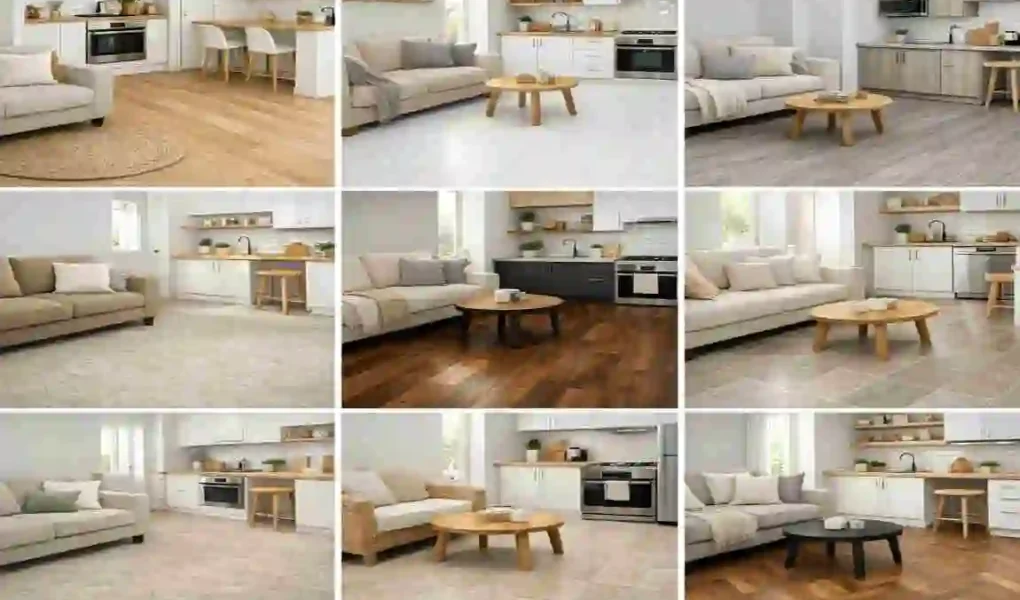
The 7 Best Floor Colors for Small Houses
Now, let’s get to the fun part. We have curated the top 7 shades that are proven to enhance small spaces. These aren’t just colors; they are strategic design choices.
Soft White or Off-White
If you are looking for the absolute maximum expansion of space, Soft White is the champion. It is the ultimate light reflector. White floors create a seamless, airy, and spa-like atmosphere that instantly lifts the ceiling and pushes back the walls.
Why it works: White floors reflect almost all available light. In a tiny apartment kitchen or a cramped bathroom, white tile or painted wood obscures the corners. It creates a blank canvas that makes your furniture appear to “float,” which reduces visual clutter. When you are hunting for the best floor color for a small house, white is the boldest choice for creating a sense of spaciousness.
Real-Room Application: Imagine a 10×10 living room. With dark floors, your eye stops at the floorboards. With soft white floors, the light from the window travels across the entire room without interruption.
Pros and Cons:
- Pros: Maximum brightness; fits any decor style; timeless appeal.
- Cons: High maintenance (easily shows dirt); can feel cold if not styled correctly.
Styling Tip: To avoid the “clinical” look, use an off-white rather than a blinding pure white. Pair it with textured rugs, natural wood furniture, and bold accent walls to create depth.
Light Gray
For those who love a modern, sleek aesthetic, Light Gray is a top contender. It has become the “new neutral” over the last decade for a good reason. It offers the brightness of white but with a little more character and durability.
Why it works: Gray typically sits on the cooler side of the color spectrum. As we mentioned in the principles section, cool tones recede visually. A light gray floor makes the floor space feel expansive and open. It is particularly effective in urban homes or industrial-style lofts where you want a chic, sophisticated vibe.
Maintenance Note: Unlike white, light gray is excellent at hiding dust and light lint, making it a practical choice for pet owners living in small spaces.
Styling Tip: Stick to light, “misty” grays. Avoid dark charcoals, which will have the opposite effect—pair light gray floors with white trim and pastel accessories for a soft, airy look.
Pale Oak or Light Wood Tones
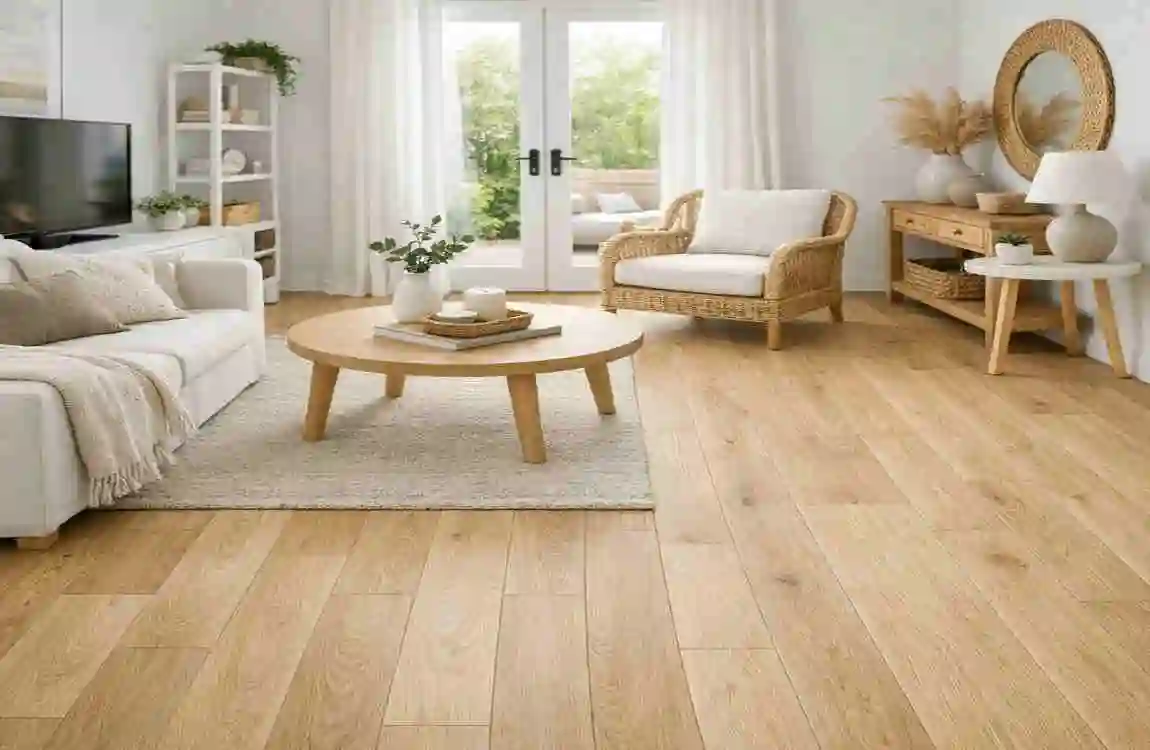
You cannot go wrong with nature. Pale Oak or light maple wood tones bring the warmth of the outdoors inside without the heaviness of traditional dark hardwoods. This is often considered the best floor color for a small house if you want a balance of coziness and size.
Why it works: Light wood grains provide texture and pattern, which draws the eye lengthwise across the room. If you lay the planks parallel to the longest wall, you elongate the room even further. The golden or blonde undertones reflect light warmly, making the space feel inviting rather than sterile.
Sustainability Angle: Many light wood options are available in sustainable bamboo or engineered hardwood, making this an eco-friendly choice for the conscious homeowner.
Styling Tip: Pale oak is incredibly versatile. It works with Scandi, Japandi, Bohemian, and traditional styles. It is the “little black dress” of flooring—it goes with everything.
Beige or Taupe
If gray feels too cold and wood feels too rustic, Beige or Taupe is your happy medium. These sandy, earthen tones are grounding yet bright. They are fantastic for creating a continuous flow throughout a small house.
Why it works: Beige is a master of camouflage. It blends seamlessly with most furniture legs and neutral wall colors. When the floor color matches the furniture color, your eye doesn’t snag on “obstacles,” making the floor plan feel open and fluid. It is excellent for narrow hallways or for connecting a kitchen to a living area in a small, open-plan home.
Budget Friendly: Beige is a standard color for almost every flooring material, from luxury vinyl plank (LVP) to carpet and ceramic tile, giving you plenty of budget-friendly options.
Styling Tip: Layer different textures of beige and cream to create a monochromatic look. This is a high-end designer trick that makes small spaces feel luxurious and expensive.
Cool Blue-Gray
This specific variation of gray deserves its own spot. Cool Blue-Gray mimics the hues of the sky or the ocean. It is subtle, but that slight blue undertone does heavy lifting in optical illusions.
Why it works: Blue is the color of distance (think of distant mountains looking blue). By using a flooring with a blue-gray undertone, you are subliminally telling the brain that the floor stretches out further than it actually does. It is perfect for compact bathrooms or laundry rooms where space is at a Premium.
Coastal Vibes: This shade naturally evokes a coastal or Hamptons style. It feels breezy and fresh, which is exactly how you want a small home to feel—airy, not stuffy.
Styling Tip: Pair this with crisp white wainscoting and metallic accents, such as chrome or brushed nickel, to reflect even more light throughout the room.
Creamy Ivory
Creamy Ivory is the sophisticated cousin of bright white. It offers all the light-reflecting benefits of white but with a yellow or buttery undertone that softens the glare.
Why it works: Ivory creates a glow. When sunlight hits an ivory floor, it warms up the light, creating a “golden hour” effect in your home all day long. This is the best floor color for a small house that lacks natural light or has north-facing windows, as it injects artificial warmth into the space.
Vintage Appeal: Ivory tiles or carpeting look stunning in homes with a vintage or classic aesthetic. It feels established and elegant, proving that small spaces don’t have to sacrifice grandeur.
Styling Tip: Be careful with yellow undertones clashing with your walls. If you choose ivory floors, ensure your wall paint has similar warm undertones so they don’t look dingy by comparison.
Ash Blonde
Trending heavily for 2026 and beyond, Ash Blonde is a desaturated wood tone. It lacks the yellow/orange tints of traditional oak and leans toward a slightly gray/beige tone.
Why it works: Ash blonde is the best of both worlds: it has the organic grain of wood (which guides the eye) and the cool, expansive properties of gray. It is incredibly modern and makes a studio apartment feel like a high-end boutique hotel.
Durability: Because it is a mid-to-light tone with a grain pattern, ash blonde is legendary for hiding scratches, dents, and pet hair. It is a workhorse floor that looks delicate but acts tough.
Styling Tip: This is the ultimate choice for a “California Cool” aesthetic. Mix it with plants, leather furniture, and linen fabrics.
Real-Life Case Studies and Before/After Examples
To truly understand the power of the best floor color for a small house, you have to visualize the transformation.
The 400 Sq. Ft. Studio
- Before: The apartment had dark, cherry-wood laminate flooring. The space felt heavy, and the dark floors absorbed all the light from the single window, creating dark corners that looked unusable.
- After: The owners swapped the flooring for Pale Oak luxury vinyl planks.
- The Result: The room immediately felt twice as big. The light from the window bounced off the floor, illuminating the studio’s back corners. The seamless color allowed the bed area to flow into the living area without a harsh visual break.
The Narrow Row House Hallway
- Before: A patterned, dark carpet made the hallway feel like a tunnel.
- After: Installation of Soft White large-format tiles.
- The Result: The “tunnel” effect vanished. The hallway felt wider and became a bright connector between rooms rather than a dark passage to hurry through.
Potential Drawbacks and How to Avoid Them
While light colors are generally the best floor color for a small house, they aren’t without their challenges. It is important to go into your renovation with your eyes open.
The “Floating” Feeling Sometimes, if everything is too light (white floors, white walls, white furniture), a room can feel ungrounded. You might feel like you are floating in a cloud, which can be disorienting.
- The Fix: Add grounding elements like a dark rug, black hardware on doors, or dark-legged furniture to establish a visual horizon line.
Can Dark Floors Ever Work? You might be asking, “Can dark floors be the best floor color for a small house?” The answer is a hesitant yes if you have high ceilings and tons of natural light. If you have a small room with 12-foot ceilings, a dark floor can look majestic. However, for the average small home, it is a risk.
The Cleaning Factor: Light floors show everything. Muddy paw prints, a dropped crumb, or a strand of dark hair will stand out on a white or ivory floor.
- The Fix: Choose a textured finish or a “heathered” look (like Ash Blonde or patterned tile) rather than a solid glossy color. Matte finishes also hide dust better than glossy ones.
Frequently Asked Questions
1. What is the best floor color for a small house with north-facing light? North-facing rooms get cooler, bluer light. To counteract this and prevent the room from feeling chilly, avoid gray or blue-based floors. Instead, opt for Warm Honey Oak, Beige, or Creamy Ivory. These shades inject synthetic warmth into the space.
2. Do dark floors ever work in tiny homes? They can, but it is tricky. Dark floors work in small spaces only if you contrast them with stark white walls and have plenty of vertical height (high ceilings). Generally, they are not recommended if your goal is purely to make the room look bigger.
3. What are the best budget floor colors for small spaces? Vinyl sheet flooring and laminate are budget-friendly kings. Look for Light Maple laminate or off-white vinyl tiles. These materials often mimic high-end wood or stone at a fraction of the cost, and they come in all the space-enhancing colors we discussed.
4. Should I use the same floor color throughout a small house? Yes! This is crucial. Using one continuous floor color throughout the entire house (kitchen, living, hallway) eliminates “visual breaks.” It tricks the brain into seeing the house as one large, continuous space rather than a series of small, chopped-up boxes.
5. How do I choose between vinyl and hardwood for a small house? Hardwood adds value, but luxury vinyl plank (LVP) is often better for small homes because it is thinner (saving vertical space), waterproof (great for using the same floor in the kitchen and bath), and softer underfoot. LVP comes in incredible Ash Blonde and Light Oak shades that look just like the real thing.