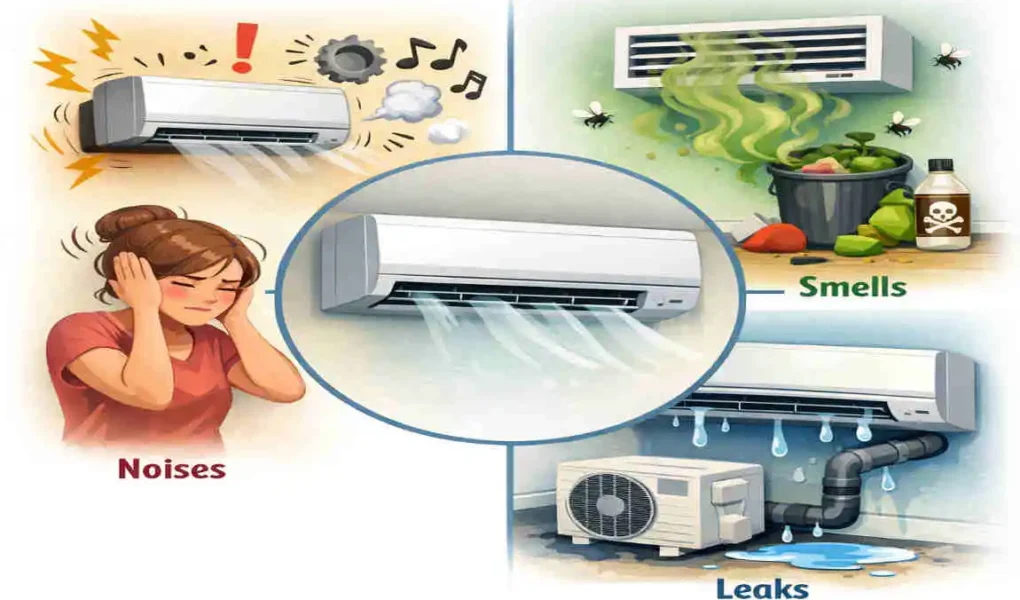
A working air conditioner should feel almost invisible. It cools your home quietly, keeps the air comfortable, and runs in the background without much fuss. But when your AC starts making odd sounds, giving off strange smells, or leaking water, it is trying to tell you something.
These warning signs matter. If you catch them early, you can often avoid bigger damage, higher repair bills, and a full system breakdown when you need cooling the most.
Why You Shouldn’t Ignore AC Warning Signs
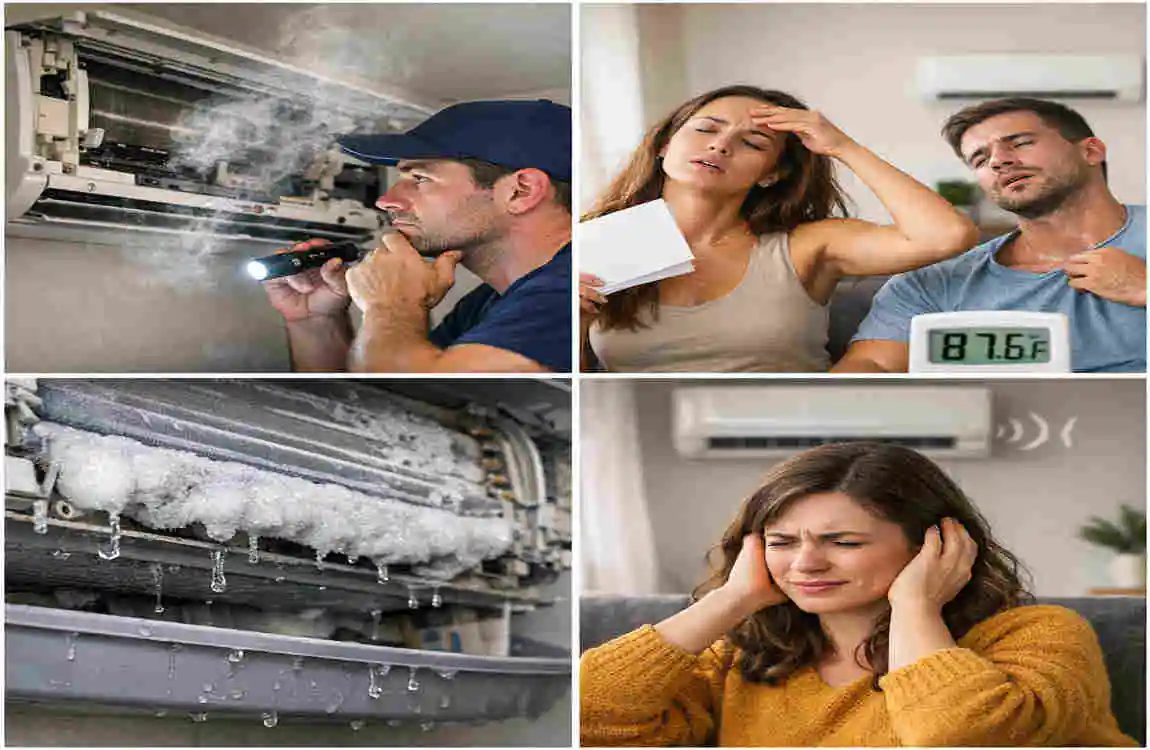
Your air conditioner often gives early hints before it fails. That is why it is smart to pay attention to small changes.
Early Signs Save Money
A minor issue can turn into a major repair if you wait too long. For example, a loose part may cause more wear, and a small leak can lead to water damage.
Early Signs Improve Comfort
When your AC works properly, your home stays cool and steady. When something goes wrong, you may notice weak airflow, warm rooms, or higher humidity.
Early Signs Help Your System Last Longer
A well-maintained AC usually lasts longer. Fixing problems early reduces strain on the system and helps it run more smoothly.
Common AC Noises and What They Mean
Your AC should make some light humming or soft running sounds. But loud, new, or strange noises are usually a warning.
NoisePossible CauseWhat You Should Do
Banging Loose or broken internal parts Turn off the AC and schedule service.
Buzzing Electrical issue or loose wiring Have the unit inspected
Clicking Faulty thermostat or relay problem Check thermostat and call a technician if it continues
Squealing Worn belt or motor bearings Stop use and have parts checked
Rattling Loose screws or debris Inspect the unit and tighten visible parts
Banging or Clanking
A banging sound often means something inside the unit is loose or broken. That is not something to ignore.
If you hear this, shut the system off and call for help. Running it longer may worsen the damage.
Buzzing or Humming
A buzzing sound can point to an electrical issue. It may also mean a loose wire or failing part.
Electrical problems can become serious, so this is one of those sounds you should take seriously right away.
Clicking
A little clicking when the system starts or stops can be normal. But repeated clicking usually points to a problem with the thermostat or relay.
If it keeps happening, have a technician look at it.
Squealing
A squealing noise may mean a belt or bearing is worn out. This sound usually does not go away on its own.
The sooner you deal with it, the better chance you have of avoiding bigger motor damage.
Rattling
Rattling can happen if screws are loose or debris is trapped inside the unit. Sometimes it is a simple fix.
Still, if the sound continues, it is worth checking before the problem gets worse.
Strange AC Smells Explained
Odd smells are another strong clue that your air conditioner needs attention. Different smells often point to different problems.
Burning Smell
A burning smell may indicate that the motor or electrical components are overheating. That is a serious warning sign.
Turn the system off right away and do not use it until it has been checked.
Musty Smell
A musty odor usually indicates mold or mildew somewhere in the system. This can happen in the air handler or ductwork when moisture builds up.
Changing the air filter may help, but deeper cleaning may be needed if the smell stays.
Rotten Egg Smell
An AC does not normally produce a rotten-egg smell. If you notice this odor, it may be due to a nearby gas leak.
Leave the home and contact your gas provider immediately.
Chemical Smell
A strong chemical smell can point to a refrigerant leak. Refrigerant helps your AC cool the air properly.
If there is a leak, the system may cool poorly and needs professional repair.
Why Is My AC Leaking Water?
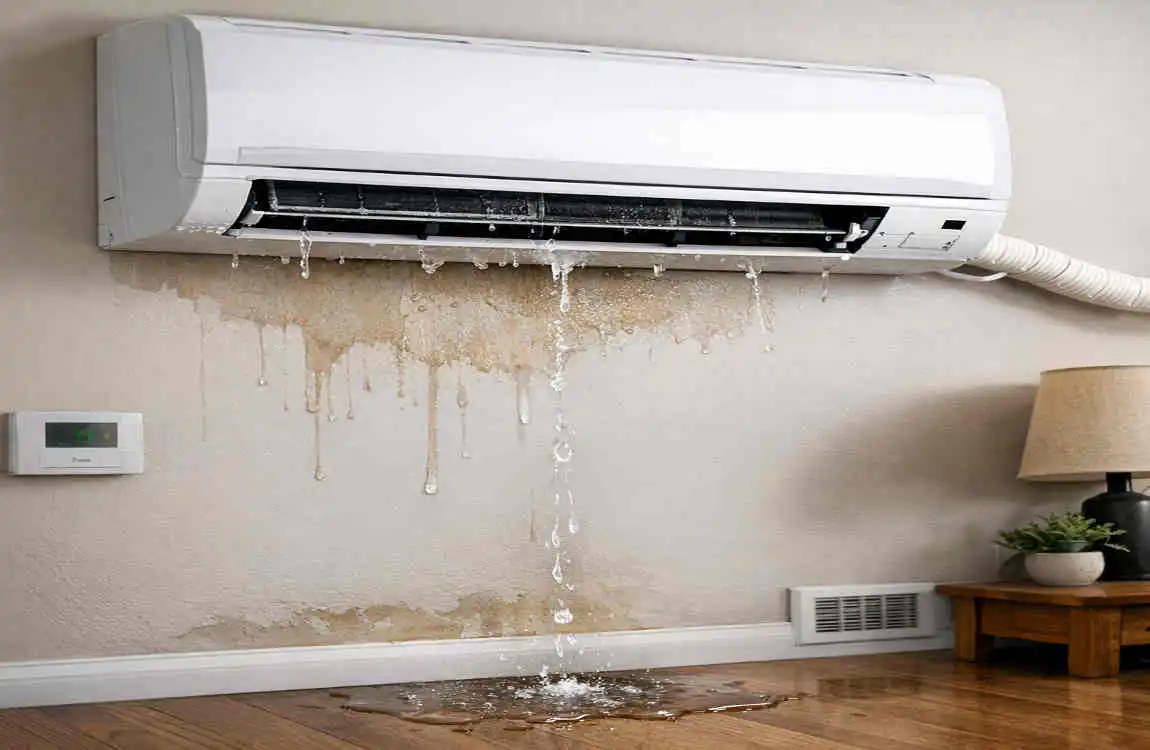
Some condensation is normal, but water pooling around your indoor AC unit is not.
Common Causes of Water Leaks
- Clogged condensate drain line
- Dirty air filter causing frozen coils
- Cracked drain pan
- Frozen evaporator coil
- Improper installation
What the Leak May Mean
A clogged drain line can block water from draining properly. A dirty filter can reduce airflow and cause coils to freeze, then drip as they thaw.
A cracked drain pan or installation problem can also lead to repeated leaks. If water keeps showing up, the issue should be fixed quickly.
Why You Should Act Fast
Water around the unit can damage floors, walls, and nearby items. It can also lead to mold if the problem continues.
A small puddle may not look serious at first, but it can grow into a bigger repair.
Other Signs Your AC Needs Immediate Attention
Some problems do not make much noise or smell, but they still matter.
Weak Airflow
If air barely comes out of the vents, your system may be struggling. This can happen because of clogged filters, duct issues, or a failing fan.
Warm Air Instead of Cool Air
If the AC is running but the air feels warm, something is wrong. It could be a refrigerant issue, a thermostat issue, or a compressor issue.
Frequent Turning On and Off
When the system keeps cycling too often, it may be short cycling. This wastes energy and puts extra stress on the unit.
Higher Energy Bills
If your cooling bill suddenly goes up, your AC system may be working harder than it should. That often means a hidden issue is affecting performance.
Uneven Cooling
If one room feels much warmer than another, your system may not be distributing air properly. This can point to airflow or duct problems.
Ice on the Unit
Ice on the indoor or outdoor unit is never a good sign. It often means airflow is blocked or refrigerant is low.
Basic Maintenance Tips
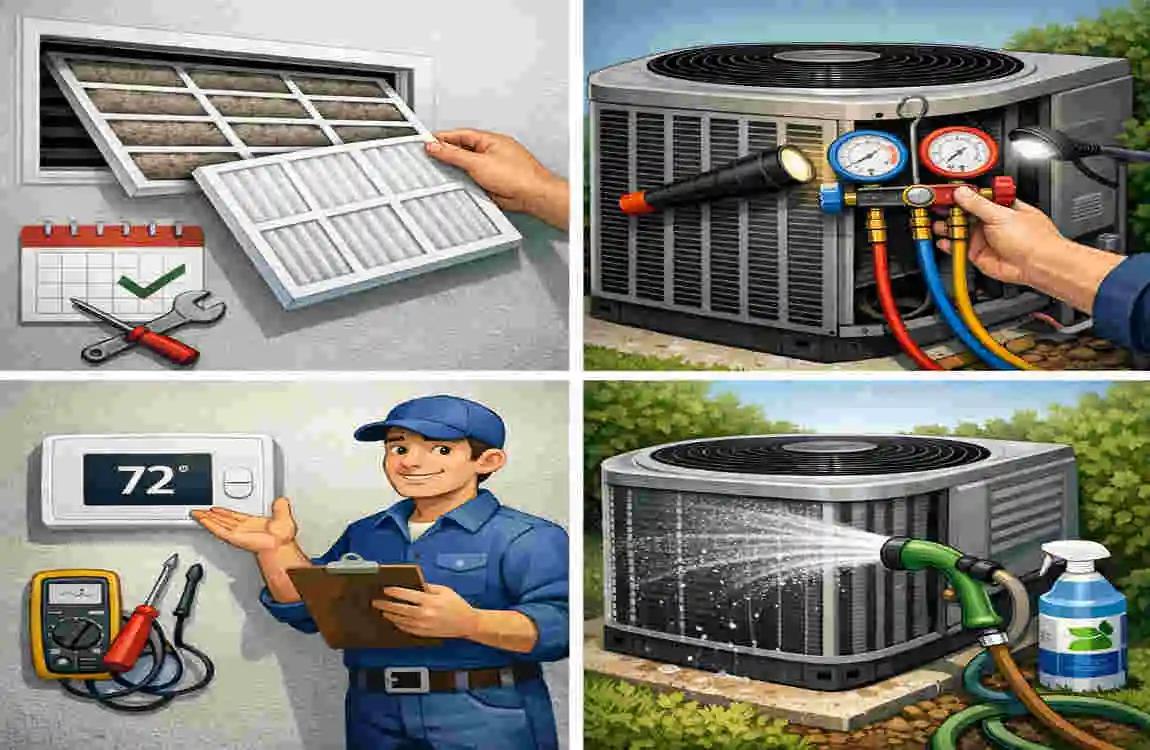
Simple care can prevent many AC problems before they start. A little routine upkeep can go a long way.
Easy Things You Can Do
- Replace air filters every 1–3 months
- Keep the outdoor unit clear of leaves and debris
- Clean supply and return vents
- Check the drain line for clogs
- Schedule yearly professional maintenance
These steps help your system run more efficiently and may reduce the chance of surprise repairs.
When to Call an HVAC Professional
A trained technician is best equipped to handle some AC system problems. It is better to call early than wait until the system fails.
Call a Pro If You Notice:
- Loud banging, grinding, or squealing
- Burning or chemical smells
- Repeated water leaks
- Refrigerant leaks
- Poor cooling after thermostat changes
- Frequent shutdowns
A professional can identify the cause and prevent the problem from worsening.
Frequently Asked Questions
Is it normal for my AC to make noise?
A soft hum is normal. Loud banging, squealing, grinding, or rattling usually means something is wrong.
Why does my AC smell musty?
A musty smell often comes from mold or mildew inside the unit or ductwork.
Why is my indoor AC leaking water?
Common causes include a clogged drain line, a frozen coil, a dirty filter, or a damaged drain pan.
Can I keep using an AC that smells like burning?
No. Turn it off right away because it may have an electrical or motor issue.
How often should I service my home AC?
Most professionals recommend once a year, usually before the cooling season.
| Warning Sign | What It Means | Possible Cause | Recommended Action |
|---|---|---|---|
| Banging Noise | Loose or broken internal parts | Broken blower, connecting rod, or motor issue | Turn off the AC and call an HVAC technician. |
| Buzzing Sound | Electrical or mechanical problem | Loose wiring, failing capacitor, or dirty condenser | Schedule a professional inspection. |
| Squealing Noise | Worn-out moving parts | Damaged fan belt or motor bearings | Replace worn components promptly. |
| Clicking Noise | Electrical control issue | Faulty thermostat or relay | Have the electrical system checked. |
| Burning Smell | Overheating electrical components | Burnt wiring, motor, or insulation | Shut off the AC immediately and contact a technician. |
| Musty Odor | Mold or mildew growth | Moisture buildup in ducts or evaporator coil | Clean the AC unit and replace the air filter. |
| Rotten Egg Smell | Possible gas leak (if near furnace) | Natural gas leak or dead animal nearby | Leave the area and contact your gas provider immediately. |