If your home has old wiring, faulty outlets, or a panel that cannot handle today’s power needs, rewiring may be one of the most important upgrades you can make. It is not the most exciting project, but it is one of the most valuable because it affects safety, comfort, and long-term home value.
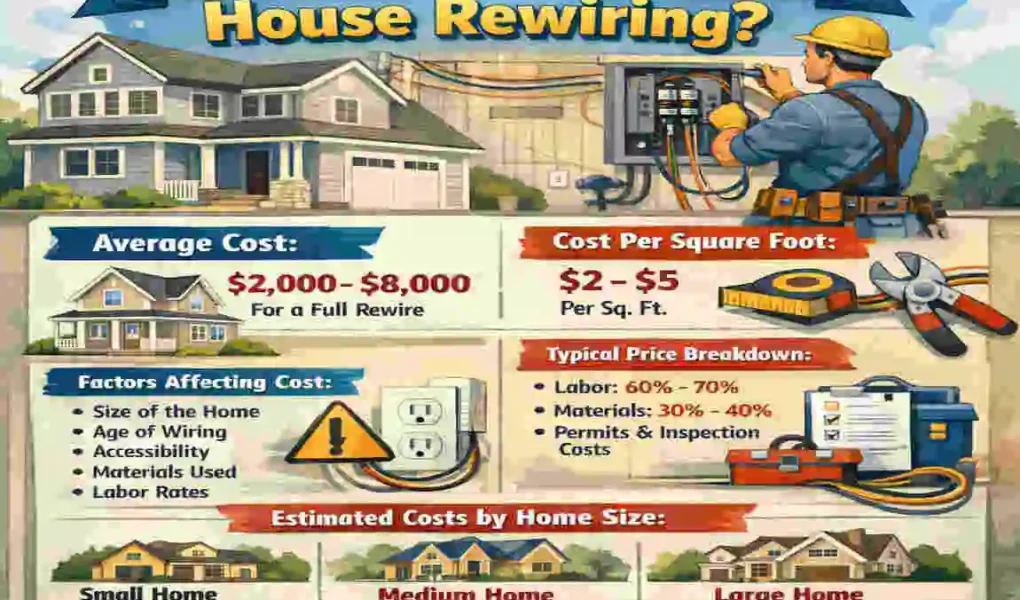
So, how much does rewiring a house cost in 2026? In most cases, homeowners can expect to spend between $7,000 and $15,000 for a full rewiring project, though smaller homes may cost less and larger or older homes may cost much more.
What Does House Rewiring Involve?
Understanding a Full House Rewire
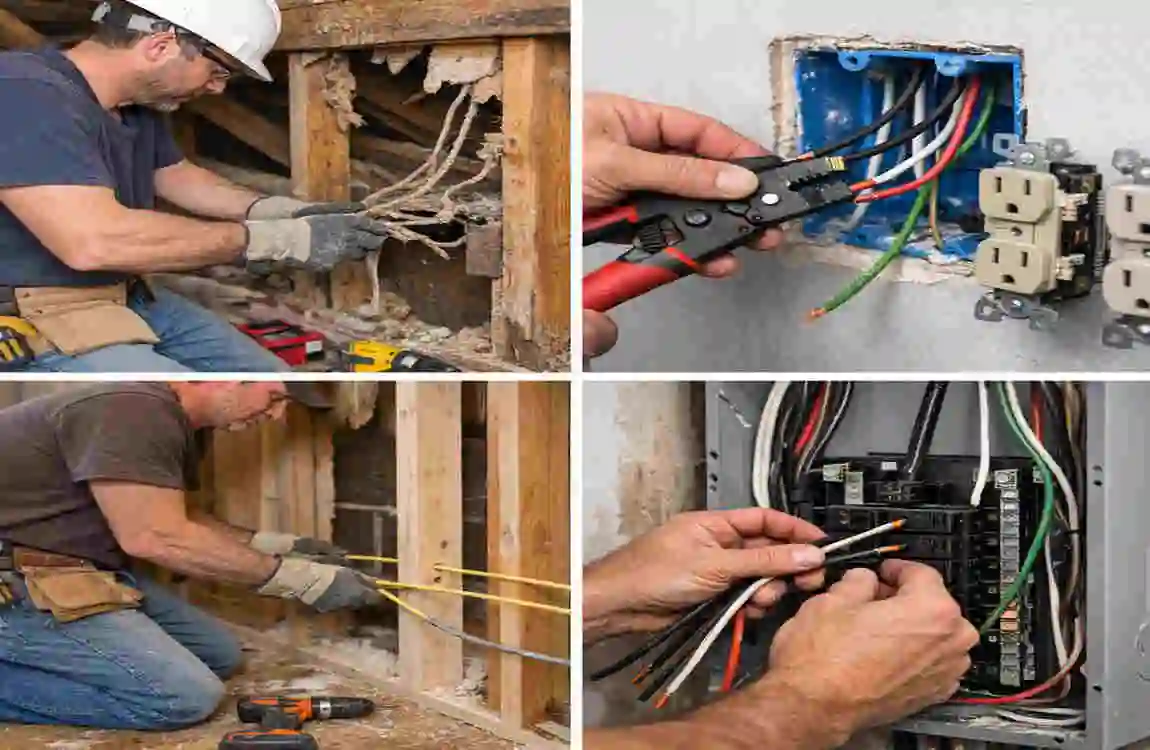
A full house rewire means replacing the old electrical wiring in your home with new wiring that meets modern safety standards. It often includes:
- Removing outdated or damaged wires
- Adding new circuits
- Installing new outlets and switches
- Updating the breaker panel
- Improving grounding and safety features
In simple terms, rewiring gives your home a fresh electrical system that can support modern appliances, electronics, and lighting.
Signs Your Home Needs Rewiring
You may need rewiring if you notice any of these problems:
- Frequent breaker trips
- Flickering or dimming lights
- Burning smells near outlets
- Old wiring systems
- No grounded outlets
If your home is older and still has outdated wiring, it is a good idea to have it inspected before problems get worse.
How Much Does Rewiring a House Cost?
Average House Rewiring Costs
The cost of rewiring depends on your home’s size, how easy the wiring is to access, and whether any additional upgrades are needed. On average:
- Small homes: $3,000–$8,000
- Mid-size homes: $7,000–$15,000
- Large homes: $15,000–$30,000+
A big part of the cost goes to labor. Materials matter too, but the time and skill required for electrical work usually account for the largest share of the total bill.
Estimated Costs by Home Size
Home Size Average Rewiring Cost
1 Bedroom Home $3,000–$8,000
2 Bedroom Home $4,500–$10,000
3 Bedroom Home $7,000–$15,000
4 Bedroom Home $10,000–$20,000+
Large Homes $15,000–$30,000+
These numbers are general estimates. A home with difficult access, older walls, or an outdated electrical panel can cost more.
Partial vs Full Rewiring Costs
A partial rewire usually costs less because it only replaces certain sections of wiring. This may work if only one area of the home has issues.
A full rewire costs more but is often the better long-term choice if your entire electrical system is old or unsafe.
In many cases, a full rewire gives you:
- Better safety
- Fewer future repairs
- More reliable power
- Less chance of hidden problems later
Key Factors That Affect Rewiring Costs
Size of the House
The bigger the home, the more wire, outlets, and circuits you need. More rooms usually mean more labor too. A small home may be finished much faster than a large one with multiple floors.
Age of the Property
Older homes often need more work because their wiring may be outdated or damaged. They may also need upgrades to meet current electrical codes.
This is especially common in homes built decades ago, where the system was never designed for today’s appliances, computers, HVAC systems, and entertainment equipment.
Accessibility of Wiring
If the electrician can access the wiring easily, the job is usually cheaper. If walls are closed, ceilings are finished, or the wiring runs through tight spaces, the work becomes slower and more expensive.
Homes with open walls, attics, or crawl spaces are often easier to rewire than fully finished homes.
Electrical Panel Upgrades
Many rewiring projects also need a new electrical panel. If your current panel cannot support modern power use, this adds to the cost.
A panel upgrade is often worth it because it helps your home safely handle more devices.
Local Labor Rates
Electrician pricing varies by location. Areas with higher living costs usually have higher labor rates. Licensed electricians may charge more in some regions, but that often reflects local market conditions and experience levels.
Permit and Inspection Fees
Most rewiring jobs require permits and inspections. These help make sure the work is safe and up to code.
Permit fees are usually not the biggest expense, but they should still be included in your budget.
Cost Breakdown of a Typical House Rewiring Project
Labor Costs
Labor is usually the largest part of the budget. Electricians often charge an hourly rate or quote a full project price based on the job’s size and complexity.
Because rewiring is detailed work, skilled labor can account for a major portion of the total cost.
Material Costs
Materials include things like:
- Electrical wire
- Outlets
- Switches
- Circuit breakers
- Panel parts
- Safety devices
Material costs are usually lower than labor, but they still add up, especially if you want modern features or a larger electrical setup.
Repair and Restoration Costs
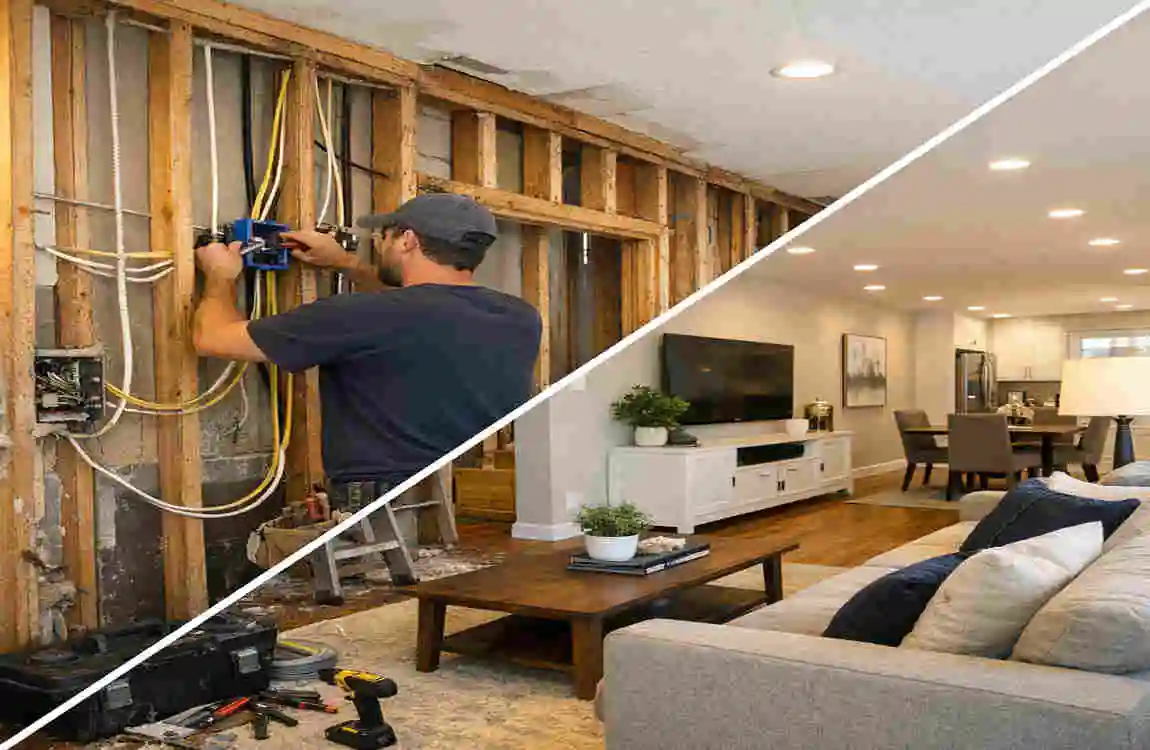
Rewiring often means opening walls, ceilings, or floors. After the electrical work is done, you may need repairs such as:
- Drywall patching
- Painting touch-ups
- Flooring repair
- Trim replacement
These costs are easy to forget, but they can significantly affect your final budget.
Rewiring Costs by Type of Property
Small Apartments and Condos
Smaller properties usually cost less to rewire because they have fewer rooms and shorter wiring runs. Still, access can be tricky in tight spaces, so that the price may vary.
Single-Family Homes
Single-family homes often fall in the middle of the cost range. The price depends on square footage, number of floors, and whether the home has old or hidden wiring issues.
Historic and Older Homes
Older homes can be the most expensive to rewire. They often need careful work, more repairs, and extra code upgrades. In some cases, electricians may also need to preserve older features while updating the system.
Multi-Story Houses
Multi-story homes usually take longer and require more materials. Longer wire runs and multiple levels can raise labor costs.
Additional Electrical Upgrades to Consider
Smart Home Wiring
If you want smart lighting, smart thermostats, or home automation, rewiring is a good time to prepare for it. Adding these features later may cost more.
USB and Modern Outlets
Modern outlets with USB ports can make everyday charging easier. They are a small upgrade, but many homeowners like the convenience.
Whole-House Surge Protection
This protects your appliances and electronics from power surges. It is a smart add-on, especially if you live in an area with unstable power.
EV Charger Installation
If you plan to buy an electric vehicle, wiring your home for a charger now may save money later.
Energy-Efficient Lighting Systems
Rewiring is also a good time to switch to LED lighting and more energy-efficient designs.
How Long Does House Rewiring Take?
Typical Project Timelines
A smaller home may take just a few days, while a larger or older house can take one to two weeks or longer.
Factors That Extend the Timeline
The job may take longer if:
- The house is large
- The wiring is hard to reach
- The panel needs replacement
- Repairs are needed after the electrical work
- The home has code issues that must be corrected
Can You Stay in the House During Rewiring?
Sometimes yes, but not always. For smaller projects, you may stay in the home with some inconvenience. For larger projects, it may be safer and easier to stay elsewhere for part of the work.
Ways to Save Money on House Rewiring
Get Multiple Contractor Quotes
Always compare at least three licensed electricians. This helps you understand the market rate and avoid overpaying.
Combine Projects
If you are already remodeling, it may make sense to rewire at the same time. Opening walls once can save money and reduce the need for repeated labor.
Plan for Future Electrical Needs
Think about where you will want outlets, lighting, chargers, and smart devices in the future. Planning now can prevent costly changes later.
Avoid DIY Electrical Work
DIY electrical work may seem cheaper, but it can be dangerous and may cause code problems. In the long run, it often costs more to fix mistakes.
Schedule Work During Renovations
If you already plan to renovate kitchens, bathrooms, or basements, rewiring during those projects can reduce disruption and save on repair work.
Money-saving tips:
- Compare at least three licensed electricians
- Bundle rewiring with remodeling projects
- Use energy-efficient upgrades where possible
- Prioritize critical electrical updates first
Is Rewiring a House Worth the Investment?
Improved Safety
This is the biggest reason to rewire. Old wiring can create fire risks, power problems, and safety hazards. New wiring helps protect your family and your home.
Increased Home Value
Buyers like homes with updated electrical systems. It can make your property more attractive and easier to sell.
Better Energy Efficiency
Modern wiring and updated electrical setups can help your home run more smoothly. While rewiring does not lower bills on its own, it supports more efficient systems.
Insurance Benefits
Some insurance companies view updated wiring more favorably. That can help with coverage or reduce concern about old electrical risks.
Future-Proofing Your Property
A new electrical system helps your home keep up with modern life. That means better support for appliances, devices, and chargers, as well as future upgrades.
Frequently Asked Questions
How much does rewiring a house cost on average?
Most homeowners spend between $7,000 and $15,000 for a complete house rewire.
Is it cheaper to rewire a house before moving in?
Yes. An empty house is easier to work on, so labor time and repair costs are often lower.
How often should a house be rewired?
Many homes should be inspected after 25 to 40 years, but the exact need depends on the condition of the wiring.
Can I live in my house during rewiring?
Sometimes yes, but larger projects may make temporary relocation the better option.
What is the most expensive part of rewiring a house?
Labor is usually the highest cost.
Does homeowners insurance cover rewiring?
Usually not for routine updates, but it may cover damage from certain covered events.
| Factor | Budget Range (USD) | Notes |
|---|---|---|
| Overall Average | $600 – $22,300 | Most homeowners spend in this range |
| Typical 3-Bedroom Home | ~$7,000 | Average for a standard 3-bedroom property |
| Per Square Foot (New Wiring) | $4 – $9/sq ft | Standard for new house wiring |
| Per Square Foot (Old House Rewire) | $5 – $17/sq ft | Higher due to access difficulties |
| 1,000 sq ft Home | $4,000 – $9,000 | New wiring; $5,000–$17,000 for old house |
| 2,000 sq ft Home | $8,000 – $18,000 | New wiring estimate |
| 3,000 sq ft Home | $12,000 – $27,000 | New wiring; can exceed $60,000 for old large homes |
| Partial Rewire (1 Room) | $1,500 – $3,500 | Single-room rewiring |
| Small Home (Full Rewire) | $3,000 – $8,000 | Full rewiring for small properties |
| Large Home (Full Rewire) | $8,000 – $15,000+ | Full rewiring for large properties |
| Electrical Panel Upgrade (200A) | $1,000 – $3,000 | Often needed with rewiring |
| Lowest Expected Cost | ~$1,500 | Very small apartment |
| Highest Expected Cost | Up to $15,000+ | Enormous/complex homes |