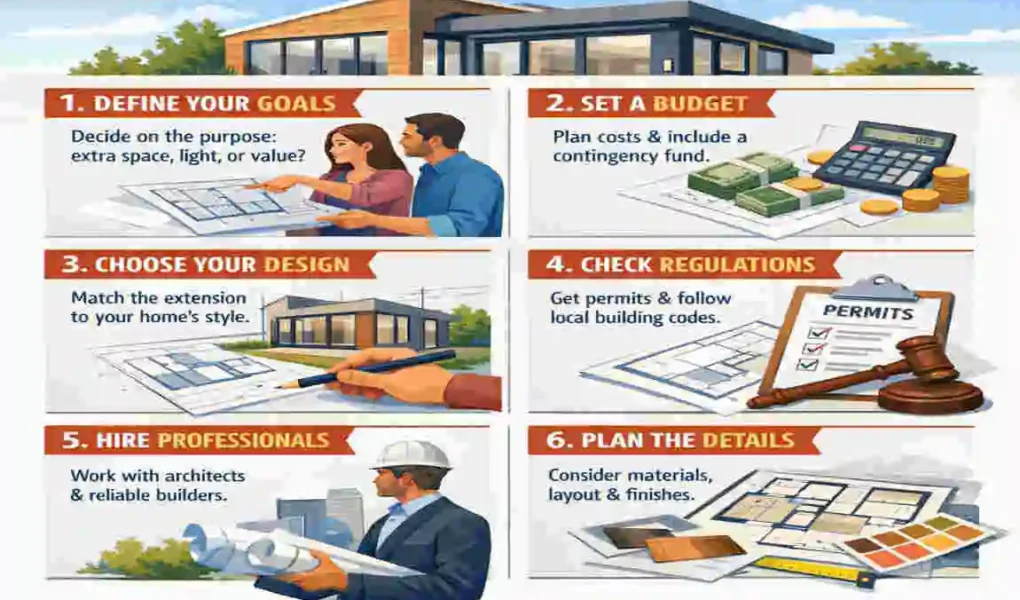
Modern home extensions are a smart way to add more space, improve comfort, and make a home feel better suited to everyday life. Instead of going through the stress of moving, many homeowners choose to extend the home they already love.
A well-planned extension can give you a bigger kitchen, a new bedroom, a home office, or a brighter family area. It can also improve how your home looks and works. The key is to plan carefully from the start so your project stays on budget, fits your lifestyle, and adds real value.
Understanding Modern Home Extensions
What Defines a Modern Home Extension?
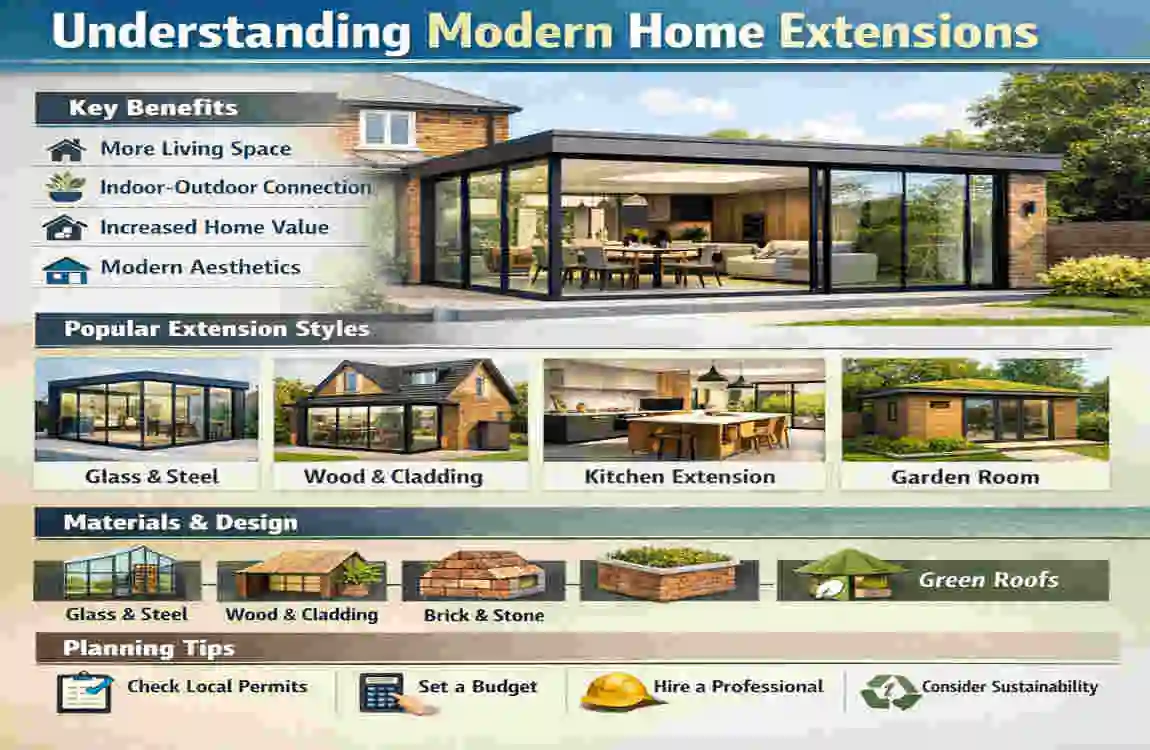
A modern home extension usually focuses on clean lines, open space, natural light, and simple design. It often uses materials such as glass, steel, concrete, and sustainable timber to create a fresh, contemporary look.
These extensions are not just about adding rooms. They are about making the whole home feel more open, practical, and connected.
Popular Types of Modern Home Extensions
Some of the most common options include:
- Rear extensions for larger kitchens or living spaces
- Side-return extensions for narrow homes needing extra width
- Double-story extensions for more than one new room
- Wraparound extensions for major space changes
- Loft or garage conversions for flexible extra living areas
Each type works best for different homes and budgets, so the right choice depends on your space and goals.
Benefits of Modern Home Extensions
A good extension can give you more room, a better layout, and an improved property value. It can also make daily life easier by creating spaces that suit your family’s needs.
Just as important, a modern extension can make your home feel more stylish and more enjoyable to live in.
Extension TypeBest ForMain Benefit
Rear extension Kitchens, dining areas More open living space
Side-return extension Narrow homes Better use of unused space
Double-story extension Growing families More rooms without moving
Wraparound extension Big redesigns Maximum space gain
Loft conversion Extra bedroom or office Uses existing roof space
Setting Clear Goals for Your Extension Project
Identify Your Space Requirements
Before you begin, be clear about what you need the extra space for. Maybe you want another bedroom, a larger kitchen, a home office, or a relaxed entertainment area.
This step matters because the purpose of the extension affects everything else, from the layout to the budget.
Define Your Design Vision
Think about the style you want. Do you prefer a minimalist look, a bright open-plan layout, or something that connects smoothly with your garden?
A clear design vision helps you make better decisions and avoid changes later.
Consider Future Needs
Try to plan for the years ahead, not just today. Your family may grow, your work needs may change, or you may want easier access as you get older.
A flexible design gives your home more long-term value.
Creating a Realistic Budget
Calculate Construction Costs
Your main costs will usually include materials, labour, and professional fees. These can change based on size, design, and the level of finish you want.
It helps to get several quotes so you understand what is realistic for your project.
Account for Additional Expenses
Many people forget about the extra costs that come with an extension. These may include permits, utility changes, electrical upgrades, and landscaping work.
If your extension affects drainage, heating, or access, those changes should also be included in the budget.
Set Aside a Contingency Fund
Always keep some money aside for the unexpected. Old homes can hide structural problems, and material prices can rise during the project.
A contingency fund gives you breathing room and reduces stress.
Planning the Design and Layout
Maximise Natural Light
Natural light makes a home feel bigger, warmer, and more inviting. Features like skylights, glass walls, and bi-fold doors can help bring in more daylight.
This is especially useful in modern home extensions because light plays a big role in making the space feel open and calm.
Improve Space Flow
A good layout should feel easy to move through. Rooms should connect in a way that makes daily life simple, not crowded.
Open-plan layouts work well for many families, but even smaller extensions can feel better with smart room placement and clear walking paths.
Choose Modern Materials
The materials you choose affect both style and performance. Glass creates openness, steel adds strength, concrete offers a bold look, and sustainable timber brings warmth.
The best designs often combine materials in a way that feels balanced and modern.
Blend New and Existing Structures
Your extension should feel like part of the home, not something awkwardly added on. Matching rooflines, finishes, and window styles can help everything feel connected.
A smooth transition between old and new makes the project look more polished.
Understanding Planning Permissions and Regulations
Research Local Building Codes
Before you begin building, check your local rules carefully. Some homes have limits on height, size, boundaries, or proximity to neighbouring properties.
A small mistake here can lead to delays or costly changes later.
Obtain Required Permits
Depending on your project, you may need building permits, structural approvals, or utility permissions. These approvals protect you and help ensure the work is done safely.
It is always better to sort this out early.
Work with Professionals
Architects, structural engineers, and building inspectors can help you avoid serious mistakes. They understand the technical side of the project and can guide you through the approvals process.
Their support often saves time, money, and stress.
Hiring the Right Professionals
Selecting an Architect
Look for an architect with real experience in modern home extensions. Check their portfolio and see whether their past work matches the style you want.
A good architect should listen to your needs and turn them into a practical design.
Choosing a Contractor
Your contractor will bring the design to life, so choose carefully. Check their licensing, insurance, references, and reviews.
Also, make sure their pricing is clear and easy to understand.
Importance of Communication
Good communication keeps the project on track. Ask about timelines, budget updates, and how design changes will be handled.
When everyone stays informed, the work usually moves more smoothly.
Incorporating Sustainability into Modern Home Extensions
Energy-Efficient Features
A modern extension should be comfortable and efficient. Good insulation, energy-efficient windows, and smart home controls can reduce waste and improve comfort.
These features also help make the home cheaper to run over time.
Sustainable Building Materials
If possible, choose recycled materials, eco-friendly timber, and low-VOC products. These options are better for the environment and can improve indoor air quality.
Small choices like these add up to a healthier home.
Renewable Energy Options
Solar panels, rainwater harvesting, and green roofs are useful additions for some homes. They can support a more sustainable lifestyle and reduce long-term energy use.
Even if you do not include all of them, one or two features can make a real difference.
Common Mistakes to Avoid
Underestimating Costs
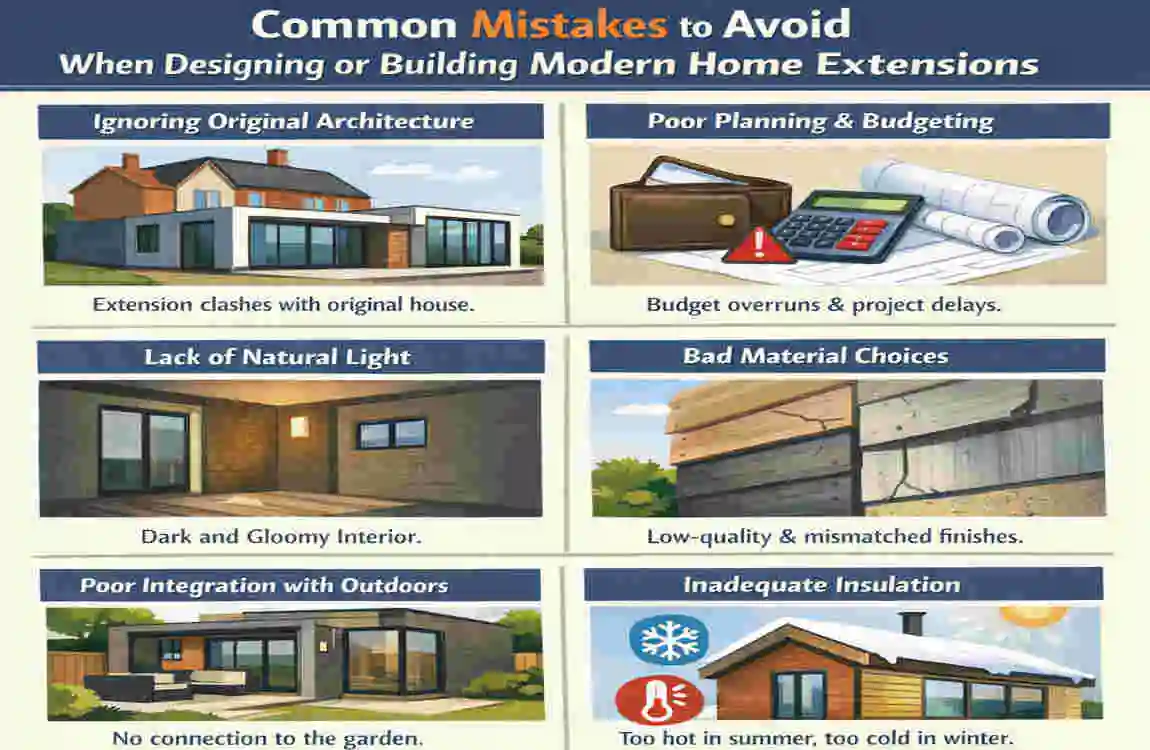
One of the biggest mistakes is assuming the project will cost less than it really will. Always budget for both expected and unexpected expenses.
Ignoring Local Regulations
Skipping permit checks can cause major delays. Always confirm the rules before work begins.
Poor Space Planning
A beautiful design is not useful if the layout does not work. Make sure the space fits your daily routine.
Choosing Style Over Functionality
A modern extension should look good, but it also needs to be practical. Do not sacrifice comfort for appearance.
Hiring Inexperienced Contractors
A cheap contractor can become expensive if the work is poor. Experience and reliability matter a lot.
FAQ
What are modern home extensions?
Modern home extensions are contemporary additions that increase living space while improving function and style.
How much do modern home extensions typically cost?
Costs vary by size, design, location, and materials, so it is best to plan a full budget early.
Do I need planning permission for a modern home extension?
In many cases, yes. It depends on your local rules, property size, and the type of extension.
How long does a modern home extension project take?
Most projects take several months, including planning, approvals, and construction.
What features should be included in a modern home extension?
Popular features include open-plan layouts, large windows, energy-efficient systems, and sustainable materials.
Can a modern home extension increase property value?
Yes, a well-designed extension can improve both usability and resale value.
| Step | How to Plan Modern Home Extensions Effectively | Key Considerations |
|---|---|---|
| Define Goals | Identify why you need the extension. | Extra living space, home office, kitchen expansion, or guest room. |
| Set a Budget | Establish a realistic spending limit. | Include construction, permits, design fees, and contingency costs. |
| Assess Property Space | Evaluate available land and structural limitations. | Consider lot size, setbacks, and access points. |
| Choose a Modern Design | Select a style that complements the existing home. | Open layouts, large windows, clean lines, and sustainable materials. |
| Check Local Regulations | Review building codes and permit requirements. | Ensure compliance with zoning and planning rules. |
| Prioritize Functionality | Design spaces that improve daily living. | Maximize natural light, storage, and energy efficiency. |