
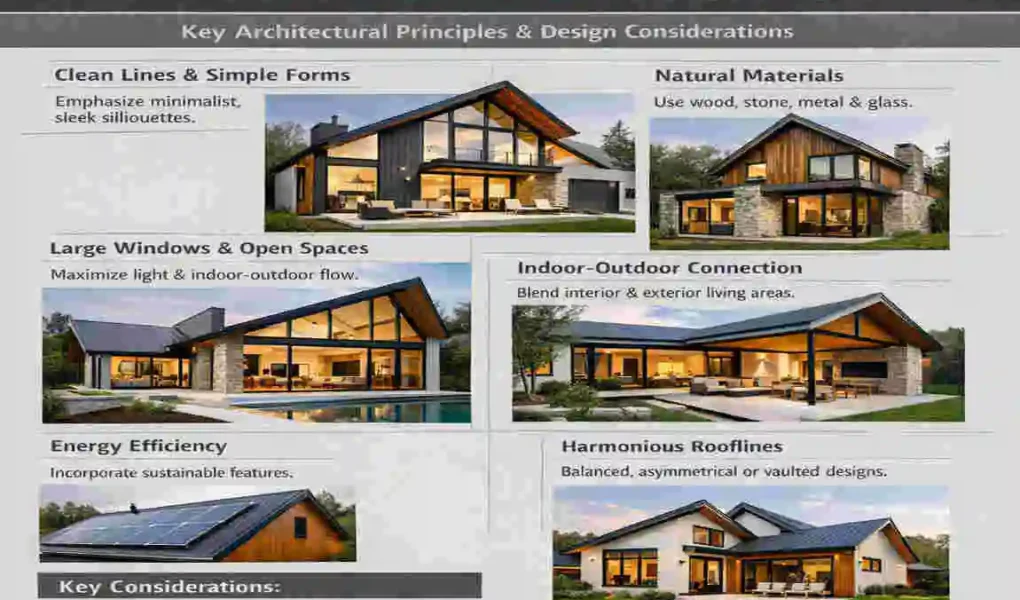
Modern pitched roof homes are becoming increasingly popular because they combine the best of both worlds: a classic roof shape and a fresh, modern look. Many homeowners like this style because it feels timeless, practical, and stylish all at once.
These homes work well in many settings, from city neighborhoods to quiet suburban areas. They often use clean lines, open floor plans, and large windows to create a bright and comfortable living space. At the same time, the pitched roof gives the home a strong shape and helps with weather protection and energy performance.
What Are Modern Pitched Roof Homes?
Definition and Key Characteristics
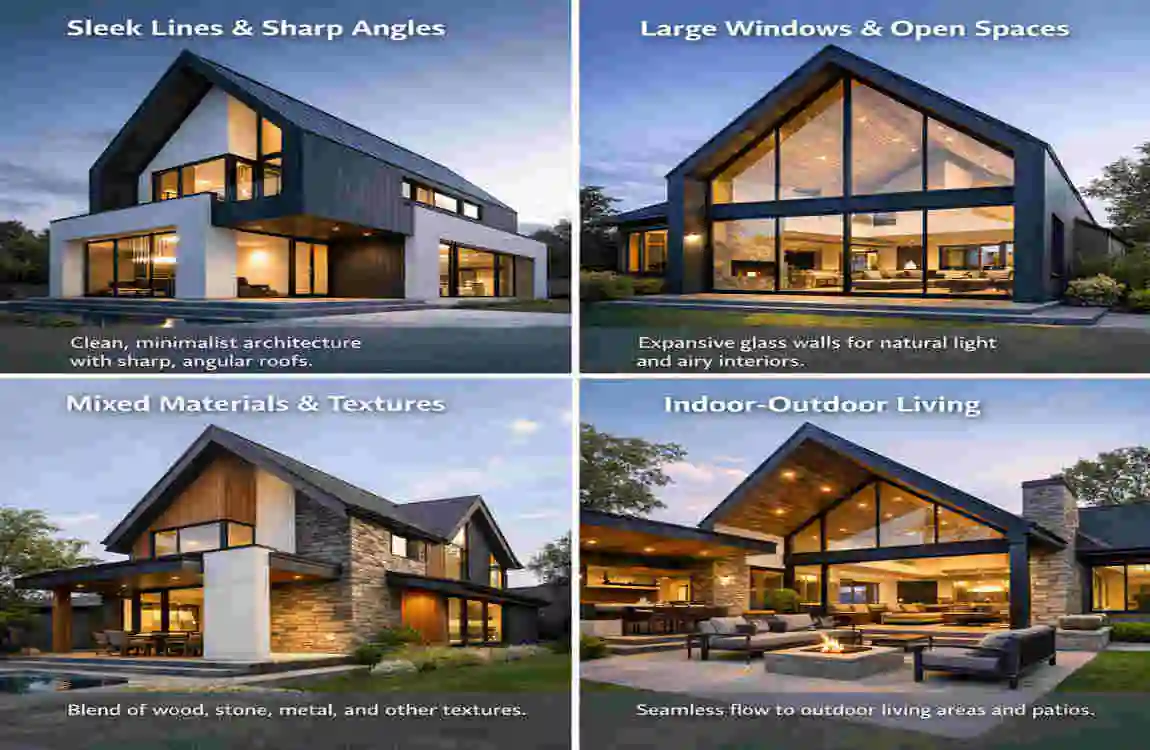
Modern pitched roof homes feature sloped roofs paired with contemporary design features. Instead of looking overly traditional, they often have a simpler and cleaner appearance.
You will usually notice straight lines, basic shapes, and large windows. These homes often feel open and airy inside, with layouts that support modern living. Natural light also plays a big role, so many designs include tall windows, skylights, or glass walls.
How They Differ from Traditional Pitched Roof Homes
Traditional pitched roof homes often feature classic details, decorative trim, and more intricate roof shapes. Modern versions keep the roof slope but remove much of the extra visual clutter.
They also tend to use more current materials, such as metal roofing, glass, concrete, and wood accents. Inside, the layout is usually more open and flexible. This makes the home feel more spacious and suited to today’s lifestyle.
Why Modern Pitched Roof Homes Are So Popular
Timeless Architectural Appeal
One of the biggest reasons people love this style is that it never feels outdated. The pitched roof has been used for generations, but when paired with modern design, it feels fresh and current.
This balance makes modern pitched roof homes appealing to many types of buyers. They look stylish now and are likely to stay attractive in the future.
Improved Weather Protection
A pitched roof is not just about appearance. It also helps water, rain, and snow move off the roof more easily. This can reduce the chance of leaks and long-term damage.
In areas with heavy rain or snow, this is a major advantage. The roof shape also supports better durability when the home is designed with the right materials and slope.
Enhanced Energy Efficiency
Modern pitched-roof homes can be designed with energy efficiency in mind. Their roof shape often works well with solar panels and can support better attic ventilation.
When the roof, insulation, and windows are planned carefully, the home stays more comfortable in both warm and cold weather. That can lead to lower utility bills over time.
Increased Property Value
These homes often have strong curb appeal, which helps attract buyers. People like homes that feel both modern and practical, and this style offers exactly that.
A well-designed pitched-roof house can stand out in the market. That can make it a smart long-term investment.
Essential Design Principles for Modern Pitched Roof Homes
Choose the Right Roof Pitch
The pitch of the roof affects both the look and function of the home. A low-pitch roof gives a sleek, modern feel, while a steeper pitch can feel more dramatic and help with snow or rain runoff.
Your choice should depend on your climate, style goals, and local building rules. If you live in a wet or snowy area, a steeper pitch may be more practical.
Focus on Simplicity
Modern design works best when it stays simple. That means fewer roof layers, fewer unnecessary details, and cleaner exterior shapes.
A simple roofline can make the house feel stronger and more elegant. It also helps the home look balanced instead of crowded.
Maximize Natural Light
Natural light is one of the most important features in modern home design. Large windows, skylights, and clerestory windows can make a big difference.
When sunlight enters the home, the rooms feel larger and more welcoming. It also helps reduce the need for artificial lighting during the day.
Create Open Interior Spaces
Modern pitched-roof homes often feel more spacious thanks to vaulted ceilings and open layouts. These features create a smooth flow between rooms.
Instead of many small closed-off spaces, the home feels connected and easy to live in. This is especially helpful for families who want flexible spaces for cooking, relaxing, and entertaining.
Balance Form and Function
A beautiful home should also be practical. That means every design choice should serve a purpose, from the roof angle to the window placement.
The best modern roof house design is one that looks stylish while also supporting comfort, weather protection, and energy efficiency.
Quick Design Checklist
- Keep the roofline simple
- Plan for natural light
- Use materials that suit your climate
- Match the layout to your daily needs
- Think about long-term maintenance
Best Exterior Materials for Modern Pitched Roof Homes
Metal Roofing
Metal roofing is a popular choice for modern homes because it looks clean and lasts a long time. It also works well with simple roof shapes.
It can handle harsh weather, and it often comes in finishes that give the home a sharp, contemporary style.
Natural Wood Accents
Wood adds warmth to a home that might otherwise feel too hard or cold. It works well around entryways, gables, or exterior walls.
When used carefully, wood creates a nice contrast with metal, glass, or concrete. It makes the home feel more inviting.
Stone and Concrete Elements
Stone and concrete can give modern homes a strong, grounded appearance. They are especially useful if you want a slightly rustic or earthy look.
These materials also pair well with simple shapes and neutral colors. Together, they create a polished and lasting exterior.
Glass Features
Large glass panels help connect the inside with the outside. They also bring in more daylight, making the home feel open.
Many contemporary pitched roof houses use glass to soften the roofline and create a more modern look.
Interior Design Ideas for Modern Pitched Roof Homes
Exposed Beams and Vaulted Ceilings
Inside, the roof shape can become part of the design. Exposed beams and vaulted ceilings add character without making the space feel busy.
They also help the room feel larger and more open. This is a great way to turn a structural feature into a visual highlight.
Neutral Color Palettes
Soft colors often work best in modern homes. Shades like white, gray, beige, and earth tones create a calm and balanced feeling.
These colors also let the natural light stand out. If you want, you can add small pops of color through art, pillows, or decor.
Minimalist Furniture Choices
Modern interiors usually look best when they are not overcrowded. Simple furniture with clean shapes helps the room feel open.
Choose pieces that are useful and attractive. This keeps the space practical while still feeling stylish.
Smart Home Integration
Modern homes often include smart systems that make daily life easier. This may include automated lights, smart thermostats, or remote climate control.
These features improve comfort and can also support energy savings. They fit naturally into modern architectural homes because they add convenience without disrupting the design.
Energy-Efficient Features to Include
Solar Panels
Solar panels are often a good match for pitched roofs because the slope can help capture sunlight. The best placement depends on roof direction and local sun exposure.
If you are planning, it is smart to design the roof with solar use in mind. That can make the home more efficient from the start.
High-Performance Insulation
Good insulation helps keep indoor temperatures steady. It reduces heat loss in winter and heat gain in summer.
This not only improves comfort but can also lower energy costs. It is one of the most important parts of an energy-efficient roof design.
Energy-Efficient Windows
Windows affect both light and temperature. Energy-efficient windows help limit drafts and reduce unwanted heat transfer.
This is especially useful in homes with many large windows. You get the bright, open feeling without sacrificing comfort.
Sustainable Building Materials
Using eco-friendly materials is a smart way to support long-term sustainability. It can also reduce waste and improve indoor quality.
Many homeowners now seek sustainable, modern homes that feel good to live in and are better for the environment.
Common Mistakes to Avoid When Designing Modern Pitched Roof Homes
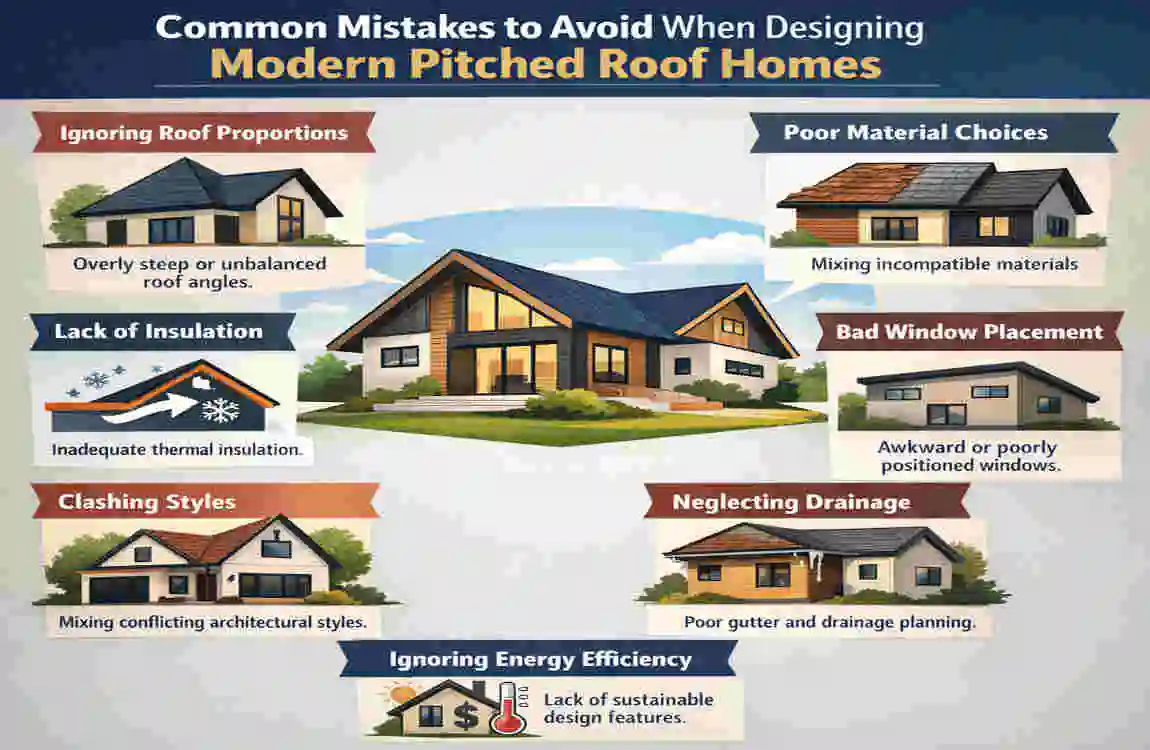
Overcomplicated Roof Designs
A modern home usually looks best when the roof is simple. Too many angles, bumps, or layers can make the design feel messy.
Poor Window Placement
Windows should let in light while supporting privacy. If they are placed poorly, some rooms may feel too dark or too exposed.
Ignoring Climate Conditions
Your roof should match your local weather. A design that works in a dry region may not be ideal in a rainy or snowy area.
Choosing Incompatible Materials
Not every material works well together. Try to choose finishes that look balanced and can handle the same climate conditions.
Neglecting Energy Efficiency
A beautiful home should still be efficient. If you skip insulation, good windows, or proper ventilation, you may end up paying more later.
Future Trends in Modern Pitched Roof Homes
Sustainable Architecture
More homeowners now want environmentally responsible homes. This is pushing designers to use better materials, better layouts, and smarter construction methods.
Smart Home Technology
Technology is becoming a normal part of home design. From lighting to temperature control, smart systems are making homes easier to manage.
Net-Zero Energy Homes
Some homeowners now want homes that generate as much energy as they consume. Pitched roofs can support this idea through the placement of solar panels and efficient design.
Biophilic Design Elements
Biophilic design brings nature into the home through plants, natural materials, and more daylight. This trend aligns well with modern house roof ideas that prioritize comfort and connection.
Frequently Asked Questions
What are modern pitched roof homes?
Modern pitched roof homes combine traditional sloped roofs with contemporary architecture, clean lines, and energy-efficient features.
Are modern pitched-roof homes energy efficient?
Yes. They often support better insulation, ventilation, and solar panel installation, thereby improving energy efficiency.
What materials work best for modern pitched roof homes?
Metal roofing, wood accents, concrete, stone, and large glass panels are all popular choices.
Can modern pitched-roof homes fit small lots?
Absolutely. Their simple roof structures and flexible layouts make them suitable for both small and large properties.
What roof pitch is best for a modern home?
The best pitch depends on climate, style, and local building rules, but low-to-medium pitches are common in modern designs.
Are modern pitched-roof homes expensive to build?
Costs vary based on size, materials, and customization. However, simple roof designs can help keep construction costs lower.
| Design Step | Key Action | Modern Design Tip |
|---|---|---|
| Choose Pitch Type | Select gable, shed, or asymmetrical pitch | Use asymmetrical gables or single-slope (shed) roofs for contemporary looks |
| Set Pitch Angle | Aim for 30°–45° slope | 45° pitch optimizes water runoff, solar panel placement, and visual drama |
| Select Materials | Metal, slate, clay tiles, or standing-seam | Standing-seam metal + smooth fiber-cement panels create modern material dialogue |
| Minimize Overhangs | Keep eaves slim (6–12 in) | Minimal overhangs + large windows = traditional form with contemporary quality |
| Integrate Roof & Walls | Use matching materials/colors | Clad exterior entirely in one color to highlight bold pitched form |