Modern architecture keeps changing, but one thing is clear: modern homes with pitched roofs are back in a big way. For a long time, flat roofs were seen as the standard choice for contemporary homes. They looked simple, sleek, and minimal. But today, many homeowners, architects, and builders are moving back toward roof designs with slope, shape, and character.
Why is this happening? The answer is simple. People want homes that feel modern, practical, and warm at the same time. A pitched roof gives you that balance. It brings a classic roof shape into a fresh, updated design. The result is a home that feels stylish without looking cold or plain.
| Topic | Key Points | Typical Options / Notes |
|---|---|---|
| Roof Types | Simple shapes, gable, hip, cross-gable, mansard, shed (mono-pitch) | Gable = economical; hip = better wind performance; mono-pitch = modern look |
| Pitch / Slope | Expressed as rise:run or degrees | Low: 3:12–6:12 (modern flat-ish); Medium: 6:12–9:12; Steep: 9:12+ (traditional) |
| Materials | Durability, weight, appearance, cost | Asphalt shingles (cost-efficient), metal (light, long-lasting), clay/ concrete tiles (heavy, durable), slate (premium) |
| Structure / Framing | Roof trusses vs rafters; load and snow/wind design | Trusses quicker and cost-effective; rafters allow custom shapes and vaulted ceilings |
| Insulation & Ventilation | Prevents heat loss, condensation, ice dams | Use continuous roof or cavity insulation, ridge and soffit vents, vapor control layer |
| Roofing Underlayment | Moisture barrier beneath finish layer | Synthetic underlayment or felt; consider ice-and-water shield at eaves in cold climates |
| Eaves & Overhangs | Protect walls, shade windows, drainage control | Minimal overhangs for modern look; 12–24″ common for weather protection |
| Roof-to-wall Details | Flashing, parapets, gutters, connections | Proper flashing at valleys, chimneys, and penetrations; use concealed gutters for sleek design |
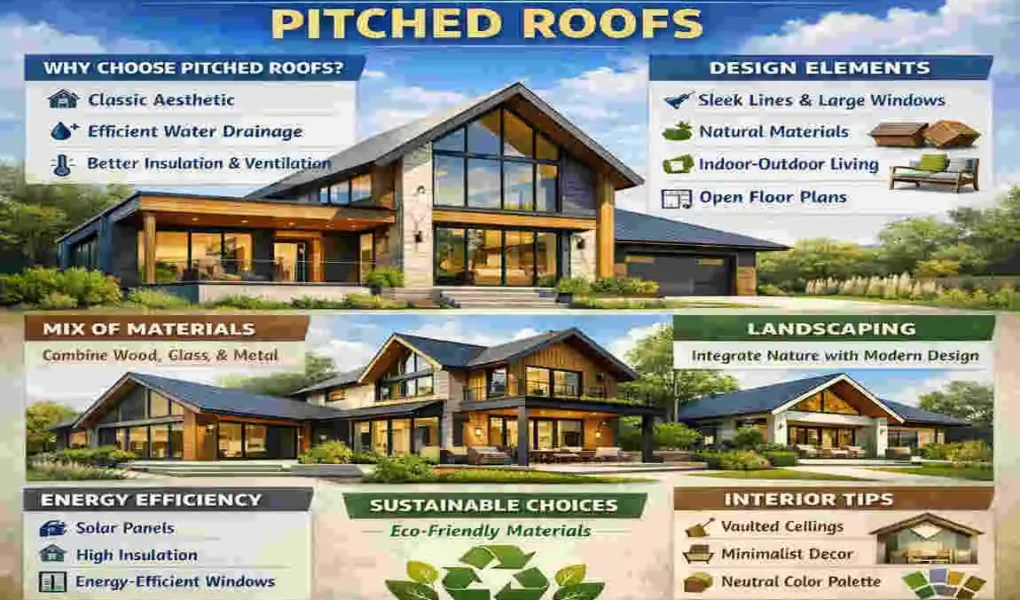
A well-designed pitched roof does more than improve the look of a house. It also helps with weather resistance, drainage, insulation, and interior space. That makes it a smart choice in many climates. Whether you live in a rainy area, a snowy region, or a place with strong sun exposure, a pitched roof can offer real benefits.
What Are Modern Homes with Pitched Roofs?
Definition of a Pitched Roof
A pitched roof is a roof that slopes downward, usually on one or more sides. The slope helps rain and snow move off the roof more easily. The angle of the slope can be gentle or steep, depending on the design and the climate.
This is different from a flat roof, which has very little slope. Flat roofs can work well in some settings, but they often need more drainage planning. A pitched roof, on the other hand, naturally sends water away from the structure. That makes it a strong and reliable choice for many homes.
In simple terms, a pitched roof is both practical and visually strong. It adds shape to the house and helps protect it from the weather.
What Makes a Home “Modern”?
A modern home usually focuses on simplicity, function, and clean design. It avoids too much decoration. Instead, it uses open layouts, straight lines, natural light, and smart use of space.
Modern homes often include:
- Minimalist forms
- Open floor plans
- Large windows
- Simple exterior finishes
- Functional room layouts
A modern home does not need to look cold or plain. In fact, many modern houses feel warm and comfortable because they use natural materials and thoughtful design choices. The key is balance. Every detail should serve a purpose.
Why This Combination Works
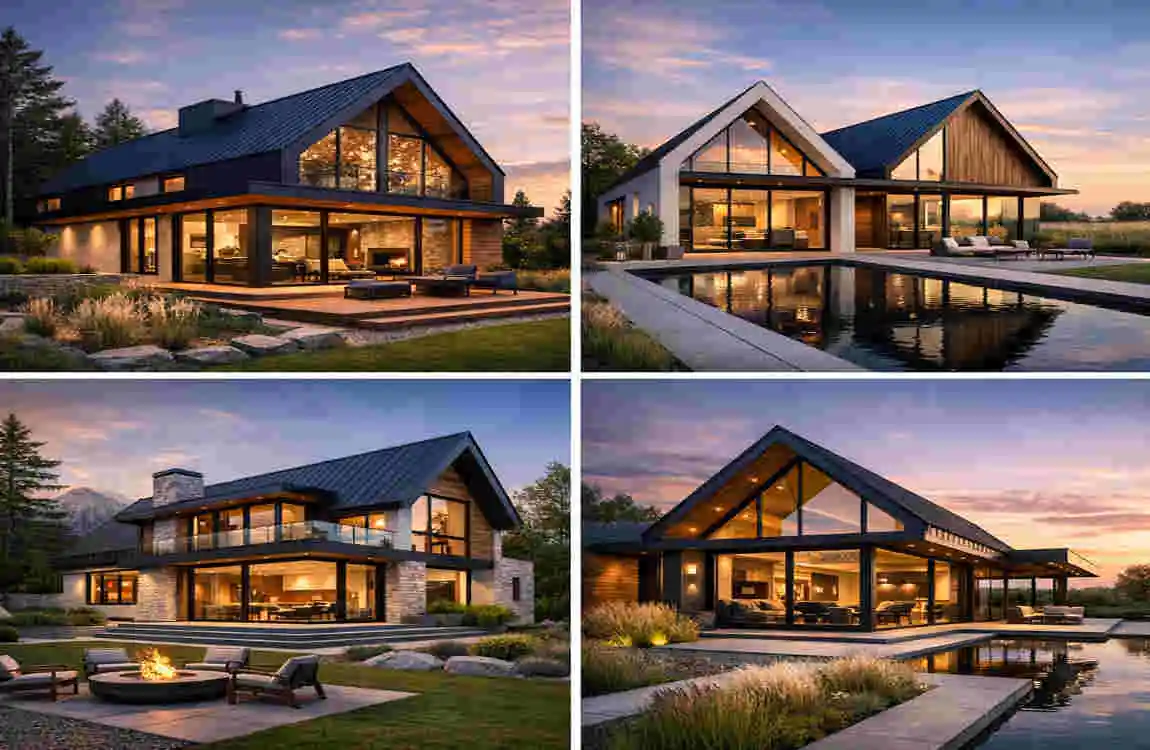
When you combine a modern home with a pitched roof, you get a design that feels both fresh and familiar. The sloped roof shape adds contrast to the clean lines of modern architecture. That contrast gives the home personality.
This mix works well because it brings together two different design ideas. The modern style gives the home a sleek look, while the pitched roof adds warmth and depth. Together, they create a house that feels current but not overly trendy.
That is why modern pitched roof design continues to grow in popularity. It offers a look that feels timeless, stylish, and practical all at once.
Key Architectural Features of Modern Homes with Pitched Roofs
Minimalist Exterior Design
One of the most common features of a minimalist pitched roof home is a clean exterior. The walls usually have simple shapes, few decorative details, and a strong focus on structure.
You will often see neutral colors like white, gray, black, beige, and natural wood tones. These shades help the roof stand out while keeping the overall design calm and balanced. The goal is not to create visual clutter. The goal is to make every line and material feel intentional.
Sharp roof edges and neat wall surfaces help the house look polished. Even if the design is simple, it can still feel elegant and high-end.
Large Windows and Glass Walls
Modern homes often include large windows, sliding glass doors, and glass walls. These features are important because they bring more daylight into the home. They also help connect indoor spaces with the outside world.
In a home with a pitched roof, large windows create a beautiful contrast. The roof adds structure, while the glass softens the look and makes the house feel more open.
This is especially useful in living rooms, kitchens, and dining areas. Natural light can make those rooms feel bigger and more welcoming. It also helps reduce the need for artificial lighting during the day.
Open Floor Plans
Open layouts are another key part of modern design. Instead of dividing the house into many small rooms, modern homes often connect the kitchen, dining area, and living room.
This creates a better flow of movement and makes the home feel larger. It also improves daily life. Families can spend time together more easily, and hosts can move between spaces without feeling crowded.
A pitched roof can support this idea because it often allows for high ceilings and wide interior volume. That means the home feels spacious without needing a bigger footprint.
Mixed Materials
Modern homes with pitched roofs often use a mix of materials to create texture and interest. This is one of the best ways to keep the design from feeling too plain.
Common materials include:
- Wood for warmth and natural character
- Concrete for strength and a sleek feel
- Metal for a sharp, modern edge
- Stone for texture and durability
- Glass for openness and light
Using mixed materials helps the home feel balanced. For example, a dark metal roof can pair beautifully with light wood siding. Or a concrete base can work well with a warm timber accent wall.
High Ceilings and Vaulted Interiors
One of the biggest advantages of a pitched roof is the extra space it creates inside. Because the roof slopes upward, it can support vaulted ceilings or tall interior rooms.
This adds a feeling of openness that flat ceilings often cannot match. High ceilings make rooms feel brighter and more breathable. They can also improve ventilation, which is useful in many climates.
In a sloped-roof modern house, the interior often feels more dramatic without becoming overly ornate. The roof shape itself becomes part of the interior design.
Benefits of Building Modern Homes with Pitched Roofs
Improved Drainage and Weather Protection
A pitched roof handles water very well. Rain naturally runs down the slope instead of pooling on top. This reduces the chance of leaks and water damage.
In areas with snow, the slope also helps snow slide off more easily. That lowers the weight sitting on the roof and reduces long-term strain on the structure.
This is one of the biggest reasons pitched roofs remain so popular. They offer simple, natural weather protection. That means fewer problems and less worry over time.
Energy Efficiency
A pitched roof can support better energy performance in several ways. First, the shape can improve air circulation in the attic or upper spaces. Second, the roof cavity gives room for stronger insulation.
Good insulation helps keep heat inside during winter and outside during summer. That can lower energy bills and improve comfort.
Another major advantage is solar planning. A sloped roof can be angled to catch more sunlight, which makes solar panels more effective. For homeowners who care about sustainability, this is a strong benefit.
Better Interior Volume
A pitched roof gives the home more usable space above the main living area. This creates opportunities for attics, lofts, storage zones, and cathedral ceilings.
Even if you do not build a full upper level, the roof shape can make the rooms below feel larger. That extra volume can change the atmosphere of the home in a very positive way.
It is not just about size. It is about how the space feels. A room with height often feels more relaxed, airy, and comfortable.
Long-Term Durability
A well-built pitched roof can last a long time. Its shape is structurally efficient, and many common roofing materials are made to perform well on sloped surfaces.
Because water and snow move off more easily, the roof often faces less stress from standing moisture. That can help protect the framing and the roof covering.
When builders choose the right materials and follow proper construction methods, modern homes with pitched roofs can offer strong long-term performance.
Strong Visual Appeal
There is no denying the visual impact of a pitched roof. It gives a home a clear shape and a strong silhouette. That matters a lot in modern design, where simple forms need to make a strong impression.
A pitched roof can make a house look elegant, bold, warm, or dramatic, depending on the style. It adds personality without requiring extra ornament.
That is one reason many people now prefer modern homes with pitched roofs over more basic roof forms. The design feels more complete.
Popular Roof Styles for Modern Homes with Pitched Roofs
Not all pitched roofs look the same. In fact, there are several modern pitched roof styles that can completely change the look and feel of a home. The right choice depends on your design goals, climate, budget, and personal taste.
Roof Style Comparison Table
Roof Style Main Look Best ForKey Benefit
Gable Roof , simple peak with two slopes , many home sizes , affordable and timeless
Mono-Pitch Roof , One single slope , Ultra-modern homes , Clean look, and solar-friendly
Butterfly Roof Two slopes that angle inward Bold design homes Striking appearance and rain capture
Saltbox Roof Uneven roof slopes Modern rustic homes Unique shape with character.
A-Frame Roof , very steep triangular shape , cabins and dramatic homes , strong visual impact
Cross-Gable Roof Multiple gable sections Larger family homes Flexible layout and dimension
Gable Roof
The gable roof is one of the most common and recognizable roof styles. It has two sloping sides that meet at a peak. It is simple, efficient, and easy to build.
For modern homes, the gable roof works well because it can be cleaned up and simplified. A plain gable shape with smooth finishes and large windows can look very contemporary.
It is also often a budget-friendly choice. That makes it a good option for homeowners who want style without excessive complexity.
Mono-Pitch Roof
A mono-pitch roof, also called a shed roof, has just one slope. It is one of the most striking choices for contemporary roof designs.
This roof style has a strong modern feel because it looks bold and minimal. It works especially well with clean boxy forms, large glass walls, and sharp exterior lines.
It can also support solar panels very well if the angle is planned correctly. If you want a sleek and futuristic look, this is one of the best options.
Butterfly Roof
A butterfly roof slopes downward toward the center, creating an inverted V shape. It is one of the most dramatic roof styles in modern architecture.
This roof type stands out instantly. It gives the home a sculptural quality and often pairs well with large glass walls. It can also help collect rainwater, which may be useful in sustainable building designs.
However, it requires careful engineering and drainage planning. Because of that, it is often chosen for design impact rather than simplicity.
Saltbox Roof
The saltbox roof has two unequal slopes. One side is longer than the other, which creates an asymmetrical and interesting profile.
This style has a traditional root, but it can feel very modern when used with clean finishes and minimal detailing. It works especially well for homeowners who want something a little different without going too far outside the norm.
A saltbox roof can also create great interior volume on one side of the home.
A-Frame Roof
The A-frame roof is steep and triangular, with sides that usually extend close to the ground. It creates a dramatic and cozy look that many people associate with cabins or retreat-style homes.
In modern design, the A-frame can feel bold and artistic. It works well in wooded settings, mountain regions, and vacation homes.
Its steep pitch helps with snow and rain, and its shape creates a strong visual identity. If you want a home that feels memorable from the outside and inside, the A-frame is worth considering.
Cross-Gable Roof
A cross-gable roof uses multiple gable sections that intersect. This makes it a good choice for larger homes or homes with more complex floor plans.
The advantage here is flexibility. The roof can follow the shape of different rooms and wings, creating a more layered appearance.
In modern settings, the cross-gable roof can feel fresh when it is simplified and paired with modern materials. It is especially useful for larger family homes that need both function and style.
Best Materials for Building Modern Homes with Pitched Roofs
Metal Roofing
Metal is one of the most popular choices for modern pitched roof house design. It has a clean look, performs well in harsh weather, and usually lasts a long time.
It is also lightweight compared with some other materials, which can reduce the load on the structure. Many homeowners like metal because it brings a crisp and refined finish to the roofline.
Asphalt Shingles
Asphalt shingles remain a favorite because they are affordable and widely available. They are easy to install and come in many colors and textures.
For homeowners working with a smaller budget, asphalt shingles can still support a strong modern look if the house design is thoughtful. They are practical and familiar, which makes them a safe choice.
Clay or Concrete Tiles
Clay and concrete tiles create a premium feel. They are durable and visually rich, which makes them a strong option for homes that want a more substantial appearance.
These materials are heavier than others, so the structure must be designed to support them properly. When used well, they can make a roof look elegant and long-lasting.
Wood Shingles
Wood shingles offer a warm and natural feel. They are often chosen when the goal is to blend modern design with an organic touch.
They work especially well in homes that use natural siding, stone, or earthy color palettes. While they need more care than some other materials, they can create a beautiful and inviting result.
Composite Roofing
Composite roofing is a versatile option made to mimic the look of other materials while offering strong performance. Many composite products are designed to be durable, lightweight, and low-maintenance.
This makes them a smart choice for homeowners who want a good balance between appearance, cost, and convenience.
Structural Framing Materials
The roofing material is only part of the equation. The structure below the roof matters just as much.
Common framing materials include:
- Steel for strength and long spans
- Timber for a warm and traditional feel
- Reinforced concrete for durability and solid support
Choosing the right frame affects cost, design flexibility, and how the roof performs over time.
Interior Design Ideas for Modern Homes with Pitched Roofs
Vaulted Ceilings
Vaulted ceilings are one of the most exciting interior features in these homes. They make rooms feel open, elegant, and full of air.
A high ceiling can change the whole mood of a room. It gives you space to breathe, and it often makes simple furniture and clean décor feel more striking.
Skylights
Skylights are a natural match for pitched roofs. They bring daylight deep into the home and can reduce the need for artificial light during the day.
They also make upper rooms feel brighter and more alive. In the right place, a skylight can turn an ordinary room into a standout feature.
Loft Spaces
The added volume under a pitched roof creates opportunities for lofts and mezzanines. These spaces can work as home offices, reading corners, guest areas, or play zones.
Lofts are especially useful in smaller homes, where every square meter matters. They add function without requiring a large footprint.
Exposed Beams
Exposed beams can add charm and texture to a modern interior. They bring a slightly rustic feeling without taking away from the clean design.
This works especially well in homes that mix modern and natural elements. The result is a space that feels warm, balanced, and human.
Open Kitchen-Living Areas
The pitched roof can support open kitchen-living plans by making the main room feel larger and more connected. This works beautifully for family life and for entertaining guests.
When a home has a height above the main living area, the open plan feels even more generous. It encourages flow, comfort, and togetherness.
Important Factors to Consider Before Building
Climate and Location
Your local climate should guide many of your decisions. If you live in a snowy area, a steeper pitch may be better because snow can slide off more easily. If your region gets heavy rain, proper drainage is essential.
Wind exposure also matters. In very windy areas, the roof shape and framing must be designed carefully to handle the load.
Budget Planning
Roof shape affects cost. Simple rooflines are usually cheaper to build than highly complex ones. More angles, valleys, and intersections often mean more labor and material use.
If budget is a major concern, keep the design efficient. A clean roof shape can still look very modern and attractive.
Building Codes and Regulations
Every area has rules about roof height, slope, drainage, fire safety, and structural standards. These rules can affect what you are allowed to build.
Before finalizing your design, make sure your plans fit local codes and permit requirements. This step may not feel exciting, but it saves time and trouble later.
Orientation and Sunlight
Think about how the sun moves across your site. Roof orientation can affect natural light, heating, cooling, and solar panel placement.
A smart roof angle can help your home stay brighter in winter and cooler in summer. That is one of the quiet advantages of careful planning.
Maintenance Requirements
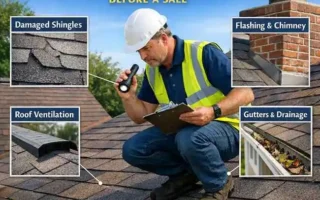
Even strong roofs need care. You should plan for inspections, gutter cleaning, drainage checks, and occasional repairs.
A simple roof shape is often easier to maintain. That is another reason many people choose modern homes with pitched roofs with clean lines rather than overly complex designs.
Common Mistakes to Avoid When Designing Modern Homes with Pitched Roofs
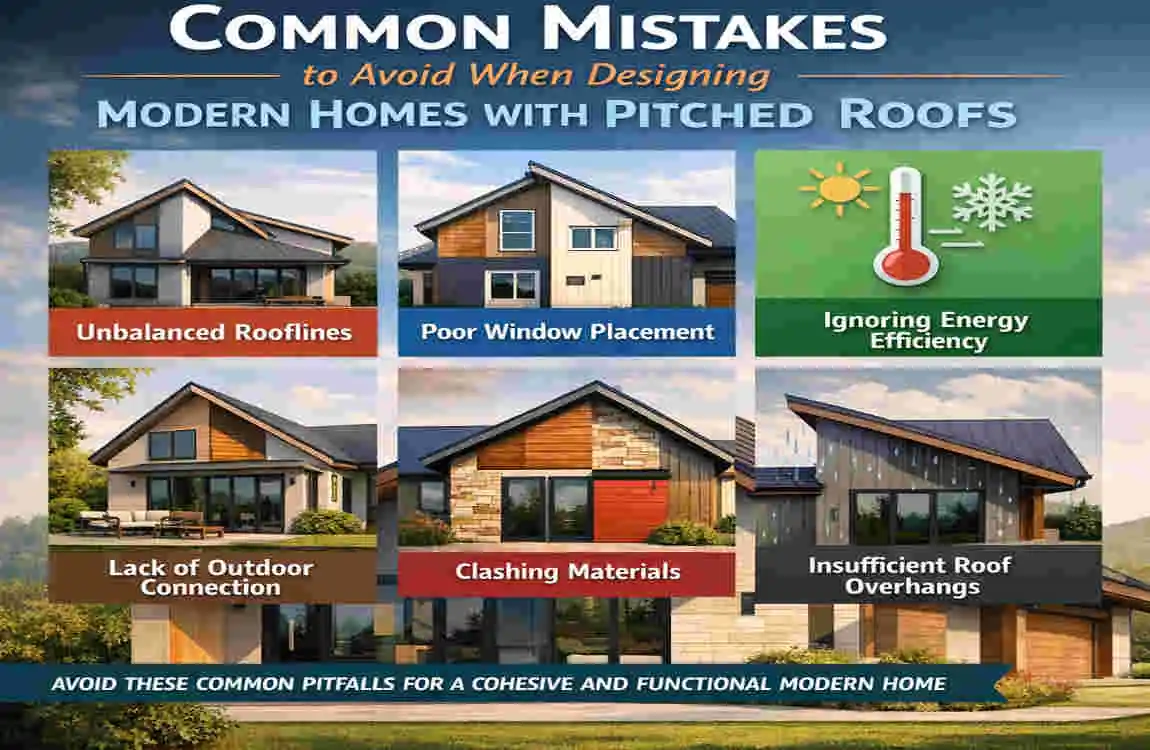
Choosing Style Over Function
A roof should look good, but it must also perform well. If the design is too focused on appearance, you may end up with poor drainage or structural problems.
Ignoring Energy Efficiency
A beautiful roof with weak insulation can become expensive to live with. Do not overlook heat loss, ventilation, and sun control.
Poor Window Placement
Windows should work with the roof and the sun path. If they are placed badly, you may lose light, create glare, or make rooms harder to heat and cool.
Wrong Roofing Material
Not every material fits every climate or design. Choosing the wrong one can shorten the life of the roof or increase maintenance needs.
Overcomplicated Rooflines
Too many roof angles can make the home harder to build and more costly to maintain. In many cases, simple is stronger. A clear design often looks better and works better, too.
Cost Considerations for Building Modern Homes with Pitched Roofs
Factors Affecting Cost
Several things influence the total cost of a pitched roof home. These include the roof style, the materials, the labor, the size of the home, and the framing system.
A simple roof with standard materials will usually cost less than a complex roof with custom elements. That does not mean you have to give up style. It just means you should plan carefully.
Budget-Friendly Options
If you want to keep costs under control, consider a simple gable roof and asphalt shingles. This combination is practical, reliable, and often easier to build.
It can still look modern if you use good proportions, clean finishes, and large windows.
Premium Features
Some features add cost but also add value. These include skylights, standing seam metal roofs, large glass walls, and custom roof angles.
These choices can elevate the home’s appearance and performance. They may cost more upfront, but they often create a stronger overall result.
Long-Term ROI
A well-designed roof can offer solid long-term value. Good energy performance may lower utility bills. Strong visual appeal can help with resale. Durable materials can also reduce repair costs over time.
That means the roof should not be viewed only as an expense. It is also an investment in comfort, efficiency, and home value.
Are Modern Homes with Pitched Roofs Right for You?
Ideal For:
Modern homes with pitched roofs are a great fit if you want:
- A clean, stylish look with more character
- A home that works well in cold or rainy climates
- Better energy performance and ventilation
- Spacious interiors with vaulted or lofted areas
- A design that blends modern and timeless features
May Not Be Best For:
This style may not be the best choice if you:
- Have a very tight budget and want the simplest build possible
- Prefer a very low-profile urban style
- Want a roof form that disappears into the background
Still, for many people, the benefits outweigh the drawbacks. If you want a home that feels modern but also practical and welcoming, this style is worth serious attention.
FAQ
Are modern homes with pitched roofs more energy efficient?
Yes, they often are. A pitched roof can improve ventilation, support better insulation, and make solar panel placement easier. All of that can help reduce energy use.
What is the best roof style for a modern home?
There is no single best choice, but mono-pitch, gable, and butterfly roofs are very popular. The right one depends on your budget, climate, and design goals.
Are pitched roofs better than flat roofs?
It depends on your needs. Pitched roofs usually handle rain and snow better. Flat roofs can work well, too, but they often need more drainage planning and maintenance.
What materials are best for pitched roofs?
Some of the best options include metal, asphalt shingles, clay tiles, and composite roofing. The best one for your home depends on cost, climate, style, and maintenance needs.