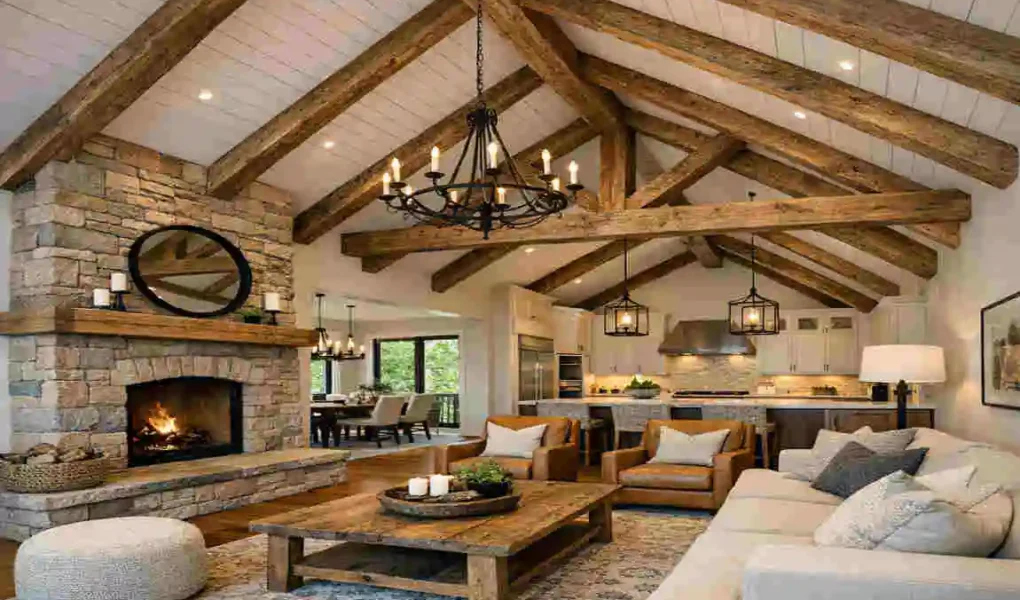
Imagine walking into a home where the ceilings seem to stretch endlessly above you, with elegantly crisscrossing wooden or steel beams overhead. The sense of openness, warmth, and drama is unmatched. This is the magic of vaulted ceilings and exposed beams. This design trend has gained immense popularity in recent years.
From the pages of Architectural Digest to the most shared pins on Pinterest, vaulted ceilings and exposed beams are making waves in 2025-2026. These architectural elements combine practical benefits—such as increased natural light and improved airflow—with unmatched aesthetic appeal. Whether you’re designing a rustic farmhouse, a sleek industrial loft, or a cozy Scandinavian retreat, these features seamlessly blend form and function.
What Are Vaulted Ceilings and Exposed Beams?
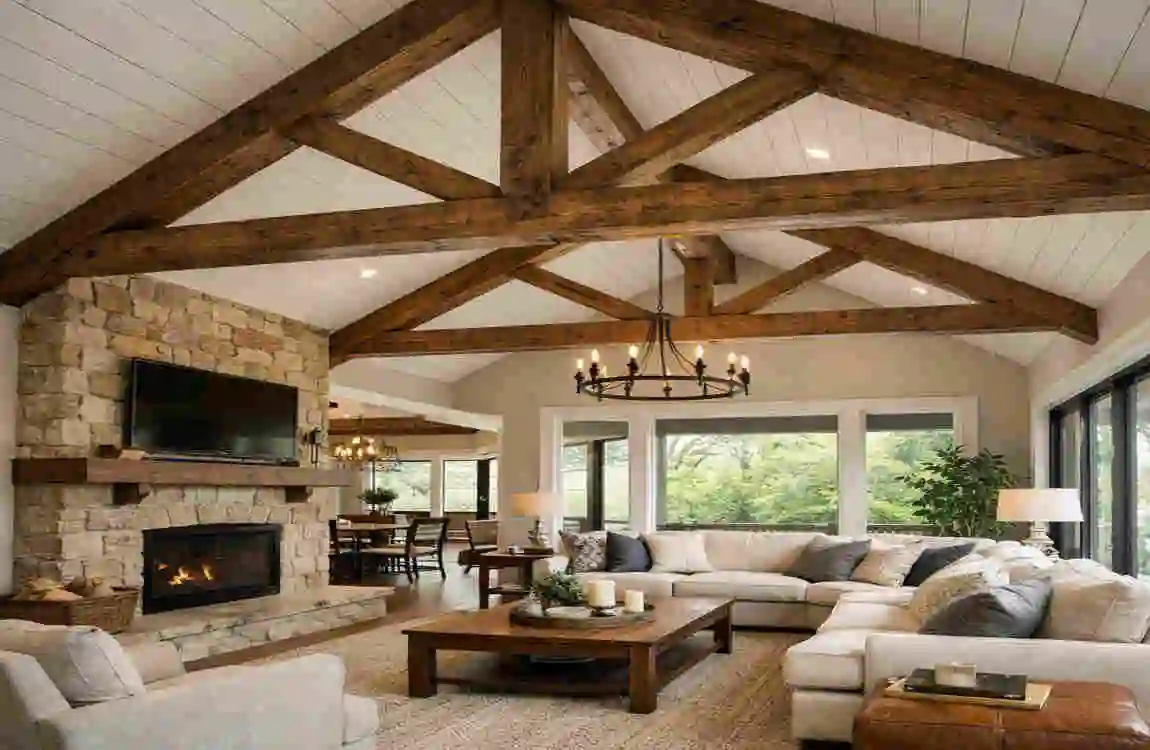
To appreciate the allure of vaulted ceilings and exposed beams, it’s essential to understand what they are and why they work so well together.
Vaulted Ceilings
Vaulted ceilings are ceilings that rise steeply to create height, often forming a peak or arch. Common styles include cathedral ceilings, which mimic the roof’s steep pitch, and barrel vaults, which create a smooth, curved effect. These ceilings create a sense of grandeur and spaciousness, often making a room feel twice its actual size.
Exposed Beams
Exposed beams, on the other hand, are structural or decorative elements left visible on a ceiling. They can be made of wood, steel, or even reclaimed materials, and they add a rustic, industrial, or modern touch depending on their style. Exposed beams bring texture and depth to a room, making them a fantastic companion to the airiness of vaulted ceilings.
Why They Pair Perfectly
When combined, vaulted ceilings and exposed beams strike a perfect balance between openness and coziness. While the vaulted ceilings draw your eyes upward, the beams add contrast and warmth, creating an inviting and luxurious atmosphere.
Comparison Table: Vaulted Ceilings vs. Exposed Beams
FeatureVaulted CeilingsExposed BeamsCombined Effect
Aesthetic Airy, dramatic Rustic, industrial Open, inviting luxury
Common Materials : Drywall, plaster , wood, metal , and sustainable reclaimed materials
Lighting Impact Maximizes natural light , adds depth with shadows , and highlights architectural drama
Cost Moderate to high Variable (wood/metal) Higher upfront but worth the investment
A Brief History of Vaulted Ceilings and Exposed Beams
Medieval Origins
The history of vaulted ceilings dates back centuries. Think of Gothic cathedrals with their towering, ribbed arches—designed to create awe-inspiring spaces filled with light and air. Exposed beams also have historical roots, especially in medieval timber-framed homes, where beams were both structural and decorative.
Mid-20th Century Revival
Fast forward to the mid-20th century, and vaulted ceilings found their way into A-frame cabins and ranch-style homes. Exposed beams became a hallmark of mid-century modern design, where clean lines and natural materials were the focus.
Resurgence
Today, the demand for open-concept living and biophilic design has brought these elements back into the spotlight. In a post-pandemic world, homeowners crave spaces that feel expansive yet grounded. Vaulted ceilings with exposed beams check all the boxes: they’re versatile, timeless, and stunning.
Top Design Trends Featuring Vaulted Ceilings and Exposed Beams
Rustic Modern
Picture distressed wooden beams paired with whitewashed vaulted ceilings. This trend works beautifully in kitchens and living rooms, creating a cozy yet contemporary vibe.
Industrial Loft
For urban dwellers, steel beams paired with matte-black vaulted ceilings create an edgy, industrial-chic aesthetic. Add pendant lighting for a dramatic effect.
Coastal Boho
Light oak beams set against airy, white ceilings are a staple in modern beach homes. This look exudes relaxation and tranquility.
Scandinavian Minimalist
Simple, slim beams in all-white spaces are perfect for minimalist interiors. The clean lines maintain the elegance of Scandinavian design.
Sustainable Farmhouse
Eco-conscious homeowners are gravitating toward reclaimed wood beams for a farmhouse look that’s both stylish and sustainable.
Ways to Style Vaulted Ceilings and Exposed Beams
- Add Pendant Lights: Hang statement lighting to draw attention to the ceiling height.
- Incorporate Texture: Use contrasting materials, such as wood beams and plaster ceilings.
- Paint for Contrast: Choose darker beams against lighter ceilings for a bold look.
- Layer Decor: Add plants or artwork to complement the architectural elements.
- Highlight with Skylights: Use skylights to flood the space with natural light.
Benefits of Incorporating Vaulted Ceilings and Exposed Beams
- Increased Natural Light: Vaulted ceilings allow for larger windows, inviting more daylight into your home.
- Improved Airflow: Higher ceilings can improve ventilation, making your home feel fresher.
- Enhanced Home Value: Homes with unique architectural features often sell for 5-10% more.
- Warmth and Personality: While flat ceilings can feel bland, exposed beams add charm and character.
- Acoustic Benefits: In large rooms, the combination of height and beams can reduce echoes.
Potential Drawbacks and How to Overcome Them
Drawbacks
- Cost: Vaulted ceilings and exposed beams require a higher upfront investment.
- Heating Challenges: Larger spaces can be harder to heat in winter.
- Maintenance: Wooden beams may need regular sealing to prevent moisture damage.
Solutions
- Consider faux beams or phased installations to save costs.
- Insulate properly to manage temperature.
- Use treated or reclaimed wood for durability.
Rooms That Shine with Vaulted Ceilings and Exposed Beams
- Living Rooms: Perfect for cozy gatherings under dramatic peaks.
- Kitchens: Create stunning focal points with exposed beams above islands.
- Master Bedrooms: Add romance with soft lighting and vaulted designs.
- Home Offices: Boost creativity with inspiring spaces.
How to install Vaulted Ceilings and Exposed Beams: A Step-by-Step Guide
- Evaluate Structure: Consult a structural engineer.
- Remove Ceiling: Safely remove the existing ceiling.
- Frame the Vault: install rafters to create the desired shape.
- Add Beams: Choose between real or faux beams.
- Finish: install lighting and paint for the final touch.
Real-Life Inspirations and Case Studies
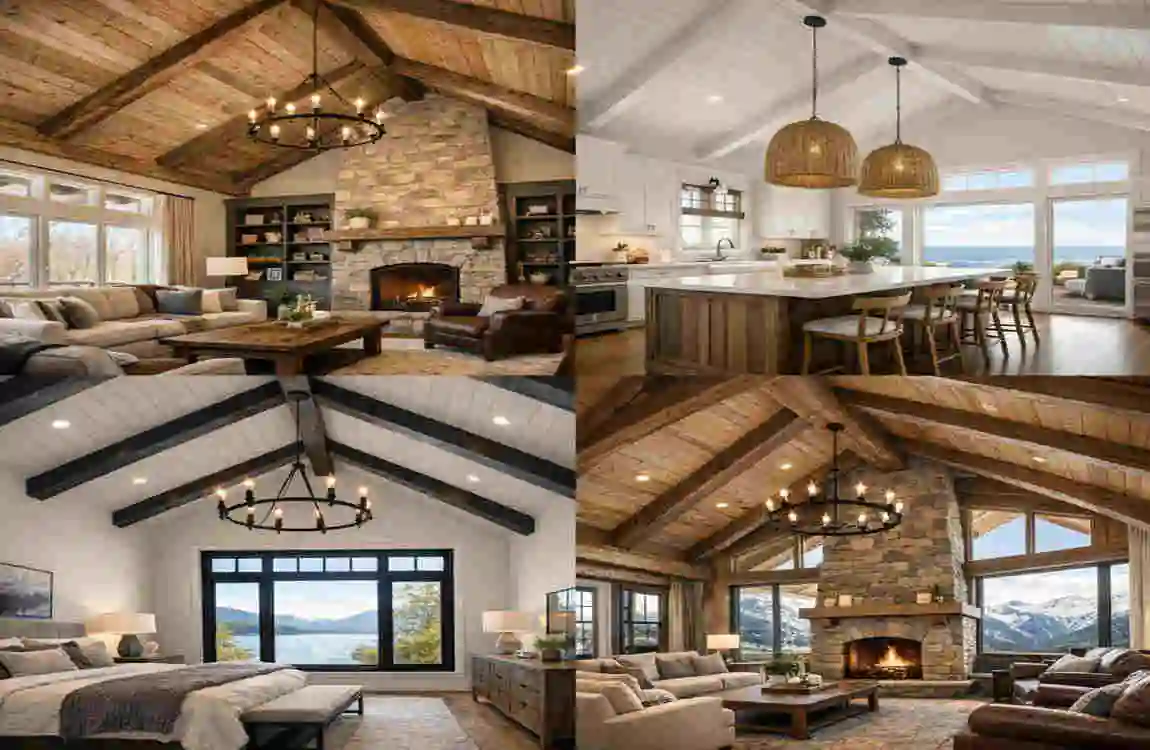
- Celebrity Homes: Blake Lively’s Hamptons kitchen features stunning vaulted ceilings with reclaimed beams.
- Budget Makeovers: Transform a room under $5K with faux beams and creative lighting.
- Global Designs: Scandinavian cabins and modern farmhouses worldwide showcase the trend’s versatility.
Vaulted Ceilings and Exposed Beams – FAQ
What is a vaulted ceiling?
A: A vaulted ceiling is a high, arched or sloped ceiling that creates a spacious, open feel in a room.What are exposed beams?
A: Exposed beams are visible structural or decorative beams on the ceiling that add character and style.Are vaulted ceilings expensive?
A: Yes, they can increase construction and heating/cooling costs due to extra height and materials.Do exposed beams have a purpose?
A: They can be structural (supporting the roof) or purely decorative.Are they energy efficient?
A: Not always—larger spaces can be harder to heat or cool without proper insulation.