
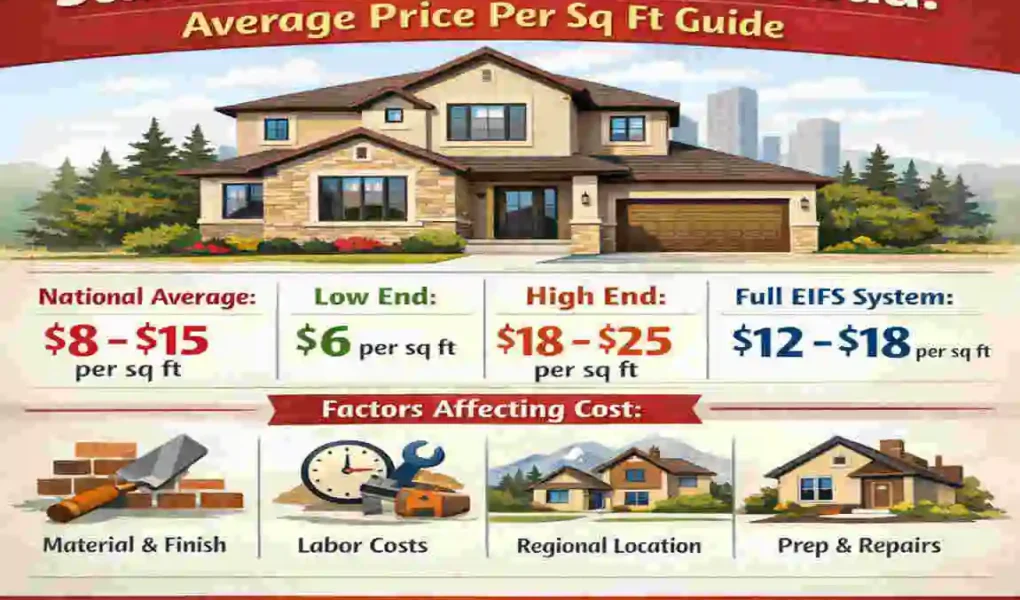
Welcome to the ultimate guide on upgrading your home’s exterior! As we move through the spring of 2026, the Canadian housing market continues to evolve. Homeowners are increasingly looking for ways to boost their property value while protecting their houses from our notoriously harsh weather. If you are planning an exterior renovation this year, you have likely noticed the rising popularity of stucco. It is beautiful, incredibly durable, and offers a low-maintenance solution that modern homeowners love.
But, like any major home improvement project, the very first thing on your mind is your budget. You are likely asking the core question: how much does it cost to stucco a house in Canada?
The short answer is that, on average, you can expect to pay between $6 and $15 per square foot for a complete stucco installation. However, that is a fairly wide range, and your final bill will depend on several unique factors specific to your home and your province.
What is Stucco Siding?
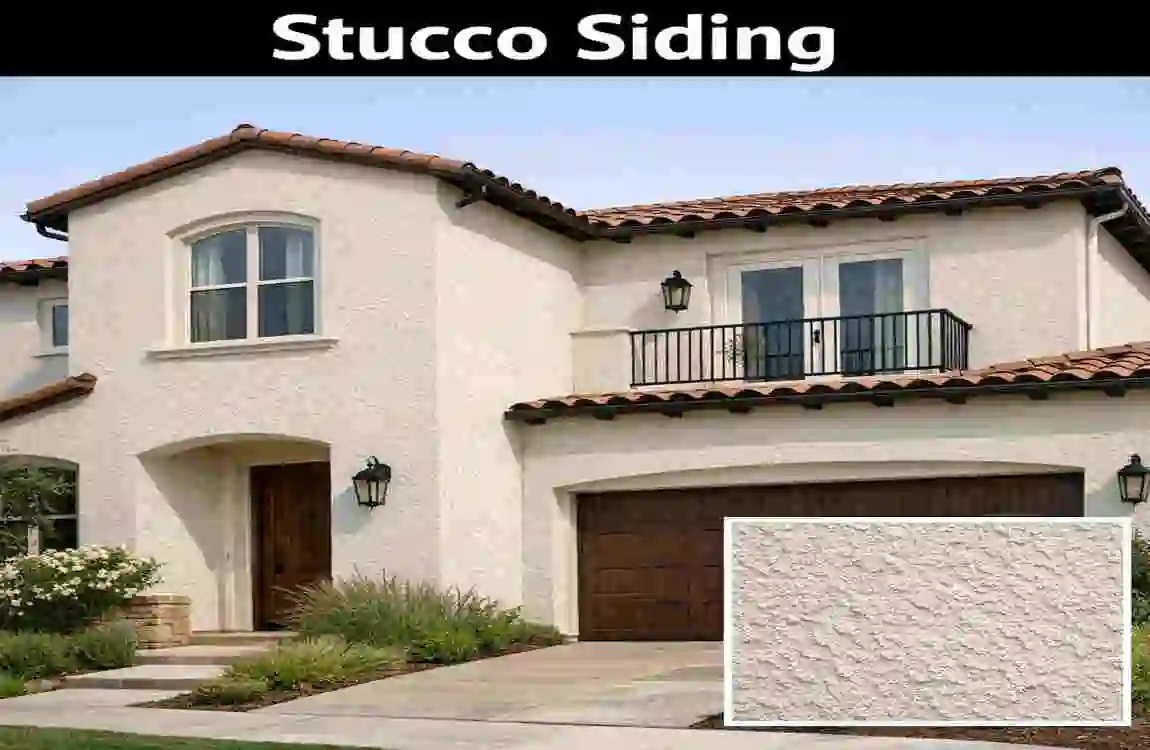
Before you can accurately calculate your budget, you need to understand exactly what you are paying for. Stucco is not just a simple coat of paint; it is a multi-layered exterior wall system designed to protect and insulate your home.
When you talk to contractors, you will generally hear about two main options: traditional wet stucco and synthetic stucco (often referred to as EIFS, or Exterior Insulation and Finish Systems).
Traditional stucco is made from a simple, time-tested mixture of Portland cement, sand, lime, and water. Contractors apply the wet mixture over a wire-mesh base in three distinct layers. It cures into a rock-hard, incredibly durable shell. Synthetic stucco, on the other hand, uses foam insulation boards topped with a flexible, acrylic-based finish. It is softer, lighter, and offers fantastic energy efficiency.
Why do Canadians love stucco so much? The benefits are hard to ignore. Stucco offers exceptional fire resistance, acts as an excellent barrier against noise, and provides superb insulation to keep your home warm in the winter and cool in the summer. Plus, the seamless, textured look delivers massive curb appeal.
However, no siding is entirely perfect. Let’s look at a quick breakdown of the pros and cons:
- The Pros of Stucco:
- Incredible Longevity: When properly maintained, a traditional stucco exterior can easily last 50 to 80 years.
- Customizable Aesthetics: You can tint stucco to almost any color and choose from dozens of textures.
- Energy Efficiency: The thick layers add thermal mass to your home, lowering your heating bills.
- The Cons of Stucco:
- Vulnerability to Shifting: In areas with heavy freeze-thaw cycles, shifting ground can cause rigid stucco to crack.
- Moisture Management: If improperly installed, water can get trapped behind the stucco, leading to hidden rot.
Ultimately, understanding the exact type of material you want helps answer the big question: how much does it cost to stucco a house in Canada? Let’s break down those costs next.
Factors Affecting Stucco Costs in Canada
You might be wondering why your neighbor paid $15,000 for their stucco job, while another friend across the country paid $25,000 for a house of the same size. The truth is that stucco pricing is highly variable.
To accurately estimate your budget, you need to consider the unique variables of your project. Here is a detailed comparison table showing the main factors that will shift your final quote up or down:
Factor Impact on Cost Example (per sq ft)
House Size: Larger homes benefit from economies of scale, lowering the per-square-foot rate. 2,000 sq ft home: $10 vs. 1,000 sq ft home: $14
Stucco Type Traditional cement stucco requires more intensive labor than synthetic (EIFS). Traditional: $12, Synthetic: $8
Location Urban centers like Toronto or Vancouver carry Premium living and labor costs. Ontario Urban: $11, Rural Prairies: $9
Labor Rates: Highly skilled, unionized workers in certain provinces charge higher rates for their expertise. Can add a +20% markup to the total labor bill.
Prep Work: Removing old siding, fixing rotted wood, or repairing the roofline incurs extra fees. Removing old vinyl: adds $2–$4, Roof repairs: extra $1,000+
Material vs. Labor Split
When you receive a quote from a contractor, it is helpful to know where your money is actually going. In the stucco industry, the general rule of thumb is a 40/60 split. This means that roughly 40% of your total bill covers the physical materials (cement, mesh, foam, and color tints). In comparison, the remaining 60% covers the highly specialized labor required to apply them correctly.
Inflation and Market Trends
We also have to factor in the current economic climate. As of early 2026, the construction industry is experiencing a slight bump in material costs due to ongoing supply chain adjustments and inflation. Industry experts note a roughly 5% increase in base material costs compared to last year. If you are planning a renovation, it is smarter to lock in your contractor’s rates now rather than waiting, as prices are trending upward.
Average Stucco Costs Per Square Foot
Now, let’s get right down to the numbers. We are directly addressing the core question: how much does it cost to stucco a house in Canada?
Based on 2026 market data, the national average to install new stucco on a standard residential home sits comfortably between $9 and $13 CAD per square foot. This average includes both the cost of the materials and the professional installation labor.
However, Canada is a massive country, and local economies dictate local pricing. A contractor in downtown Vancouver pays much more for their warehouse space and employee wages than a contractor in rural Saskatchewan. Therefore, you must look at regional averages to get a realistic number for your own home.
Here is a detailed breakdown of what you can expect to pay across different Canadian provinces:
Province Low-End Rate (per sq ft)High-End Rate (per sq ft)Avg. Total for a 2,000 sq ft House
Ontario $8 $14 $22,000
British Columbia (BC) $10 $16 $26,000
Alberta $7 $12 $19,000
Quebec $9 $15 $24,000
The Prairies (MB, SK) $6 $11 $17,000
Understanding the Regional Differences
Why is British Columbia consistently at the top of the price charts? In areas like Vancouver, the cost of living is exceptionally high, which drives up labor rates. Additionally, BC’s damp, coastal climate often requires specialized moisture-barrier treatments beneath the stucco to prevent mold, which adds to the material costs.
Conversely, the Prairies generally offer the most affordable rates. The lower cost of living and the dry climate make the curing process slightly more predictable, allowing crews to work efficiently.
The Cost Calculation Formula
Do you want to calculate a rough estimate for your own home right now? Grab a calculator and use this simple industry formula:
Total Cost = (Exterior Square Footage x Local Rate) + Prep Work (Add 10%) + Permits (Add 5%)
First, figure out the square footage of your exterior walls (excluding your roof). Multiply that number by the average rate in your province. Then, add an extra 10% to that total to cover expected prep work, and another 5% to cover local municipal building permits. This formula will give you a very solid baseline to start your budgeting process.
Total Cost Examples for Canadian Houses
Throwing around “price per square foot” is helpful, but it can be hard to visualize what that means for your actual bank account. Let’s look at some real-world scenarios to bring these numbers to life.
The Classic Canadian Bungalow
Imagine you own a standard, single-story bungalow with approximately 1,500 square feet of exterior wall space. You live in a mid-priced market like Alberta, and you want to replace your old, fading vinyl siding with beautiful, energy-efficient synthetic stucco.
At an average rate of $10 to $15 per square foot (factoring in the removal of the old vinyl), your base cost will range from $15,000 to $22,500. Because a bungalow is only one story high, your contractor will not need to rent extensive scaffolding, which helps keep your final bill closer to the lower end of that range.
The Large Two-Story Family Home
Now, let’s say you live in a bustling suburb in Ontario and own a spacious two-story home with 2,500 square feet of exterior walls. You want a traditional, hard-coat cement stucco applied over the existing brick.
Because traditional stucco requires three separate coats and extensive labor, and Ontario carries a slightly higher labor rate, you should expect quotes in the $10 to $15 range. This brings your total base project cost to between $25,000 and $37,500.
Do Not Forget the Hidden Fees
When budgeting, you must always plan for the unexpected. Exterior renovations often uncover hidden issues that add to your final invoice. Here are a few common “hidden fees” to watch out for:
- Scaffolding Rentals: For two-story homes, contractors must build safe platforms to reach the upper levels. This rental and setup fee can easily add $1,000 to $1,500 to your bill.
- Custom Paint and Tinting: If you want a highly specific, custom color that requires special mixing, expect to pay an extra $0.50 to $1.00 per square foot.
- Wood Rot Repair: When the crew tears off your old siding, they might discover water damage on your underlying wood framing. Repairing this rot is essential before applying stucco and will be billed at the carpenter’s hourly rate.
A Pro Savings Tip
Do you want to shave a significant chunk off your final bill? Try booking an off-season installation. Many stucco contractors are incredibly busy from May through September. If you book your prep work and initial installation for late fall, or lock in a contract during the slow winter months for an early spring start, many companies will offer a 10% to 15% discount to keep their crews working!
Stucco vs. Other House Siding Options
Deciding to invest in a new exterior is a major commitment. You might still be on the fence, wondering if stucco is truly the best choice for your luxury house, or if you should go with a cheaper alternative like vinyl.
To help you make an informed decision, let’s compare stucco to the other most popular siding options available to Canadian homeowners. This comparison table highlights the key differences that drive SEO clicks and homeowner interest:
Siding Type Cost per Sq Ft Durability (Years)Maintenance Level
Stucco $9–$13 50+ Years Low (Occasional washing and minor crack patching)
Vinyl Siding $4–$8 20–30 Years None (Just pressure wash yearly)
Traditional Brick $12–$20 100+ Years Low (Requires repointing every few decades)
Fiber Cement $7–$11 40–50 Years Medium (Needs repainting every 10-15 years)
Why Stucco Wins the Energy Efficiency Battle
Looking at the table, vinyl is clearly the cheapest option upfront. However, vinyl siding is essentially a thin, hollow plastic shell. It offers almost zero insulation value. When a harsh Canadian blizzard rolls in, the cold air cuts right through vinyl.
Stucco, particularly synthetic EIFS stucco, is an entirely different beast. It acts like a thick, cozy winter coat wrapped tightly around your house. Because it is applied seamlessly, it drastically reduces drafts and air leaks. The thick materials provide excellent “thermal mass,” meaning they absorb the sun’s heat during the day and slowly release it into your home at night.
While stucco costs more upfront than vinyl, it consistently wins the long-term energy-efficiency battle. You will see noticeable reductions in your monthly heating and cooling bills, helping offset the initial installation costs over the lifespan of your home.
DIY vs. Professional Stucco Installation
With the rise of home improvement television shows and online video tutorials, many homeowners are tempted to tackle major renovations themselves. You might be looking at that $20,000 estimate and thinking, “I can buy the cement and do this myself over a few weekends!”
Before you grab a trowel, let’s take a serious look at the pros and cons of doing it yourself versus hiring a certified professional.
The DIY Approach
- The Pros: The biggest, and honestly the only, real benefit of the DIY approach is the cost savings. If you only pay for raw materials, you can easily save 30% to 50% on the total project.
- The Cons: Stucco is incredibly messy and heavily time-dependent. You have to mix the cement perfectly and apply it before it dries. If you do not apply the moisture barrier perfectly, water will seep behind your uneven stucco. This trapped water will rot the wooden frame of your house, leading to $5,000+ in structural repairs down the road.
The Professional Approach
- The Pros: When you hire a professional team, you are paying for peace of mind. Pros work quickly and cleanly. Most importantly, professional contractors offer comprehensive warranties on their labor. They also ensure your home meets all local building regulations, such as the strict requirements of the Ontario Building Code.
- The Cons: You have to pay their labor rates, which increases the upfront cost.
Ultimately, hiring pros ensures accurate costing for stuccoing a house in Canada. When you do it yourself, you are constantly making emergency trips to the hardware store for forgotten tools. A pro gives you a guaranteed contract price, allowing you to budget with absolute certainty. For a project that directly protects your home’s structural integrity, hiring an expert is almost always the smartest financial move.
How to Budget and Save on Stucco Projects
You have weighed the options, and you are ready to move forward with a professional stucco installation. Now is the time to put a solid financial plan in place. Renovating your exterior does not have to drain your savings account if you approach it strategically.
Here is a step-by-step list on how to accurately budget and save money on your upcoming stucco project:
Always get 3 Quotes from Local Contractors. Never accept the very first estimate you receive. Reach out to at least 3 different, highly rated local contractors. Having multiple quotes allows you to compare labor rates, material choices, and timeline promises. It also gives you valuable leverage to negotiate a better deal!
Measure Your House Accurately. Do not let a contractor guess the size of your home from the street. Grab a tape measure and calculate the square footage of your exterior walls yourself. Subtract the area of your large windows and doors. Then, add a standard 10% to account for material waste. Knowing your exact numbers prevents contractors from over-ordering materials on your dime.
Consider Choosing Synthetic Stucco. If your budget is extremely tight, talk to your contractor about synthetic EIFS stucco instead of traditional hard-coat cement. Because synthetic stucco is lighter and faster to apply, the labor costs are significantly lower. Choosing synthetic can easily yield a 20% savings on your final bill while still providing excellent insulation.
Explore Smart Financing Options. You do not have to pay the entire $20,000 in cash from your checking account. In 2026, many Canadian banks are offering excellent rates on Home Equity Lines of Credit (HELOC). You can often secure financing at competitive interest rates of 5% to 7%.
Focus on the ROI (Return on Investment): When you feel stressed about the budget, remember that exterior renovations are an investment, not an expense. Real estate experts consistently note that upgrading to fresh, modern stucco significantly increases your home’s value. You can generally expect to recoup about 70% of the project’s cost in added property value when it comes time to sell your home!
Choosing the Right Stucco Contractor
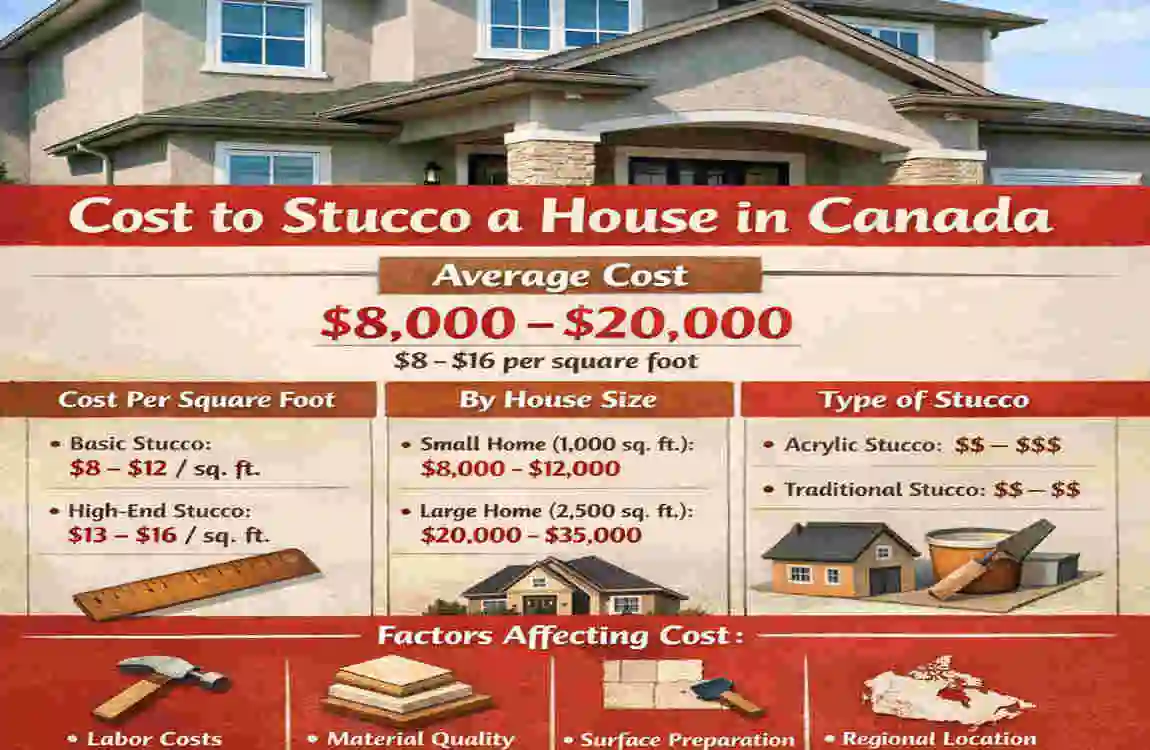
The success of your stucco project entirely depends on the skill of the people applying it. Hiring a cheap, inexperienced crew will result in cracking, peeling, and severe water damage within a few short years. You must choose a reputable contractor.
Here is a quick checklist of red flags and green flags to watch for during the interview process.
Red Flags to Avoid:
- They ask for more than 50% of the payment upfront in cash.
- They cannot provide proof of liability insurance or workers’ compensation coverage.
- They give you a quote over the phone without actually visiting your property to assess the prep work.
Green Flags to Look For:
- They provide a detailed written contract that breaks down the exact split between materials and labor.
- They offer a clear, multi-year warranty on their artistry.
- They have a strong portfolio of local homes you can actually drive by and inspect.
Crucial Questions to Ask: Before you sign on the dotted line, look the contractor in the eye and ask:
- “Are you fully licensed to operate in this specific municipality?”
- “How exactly do you handle moisture barriers and weeping screeds to prevent water damage?”
- “Who will be the on-site project manager for my luxury house, and how will we communicate?”
Taking the time to vet your contractor ensures your money is well spent and your home is protected for decades to come.
FAQs: Stucco House Costs in Canada
We know that a major home renovation raises many specific questions. To help you feel completely confident, we have gathered the most frequently asked questions from Canadian homeowners just like you.
How much does it cost to stucco a house in Canada? On average, Canadians can expect to pay between $9 and $13 per square foot for a full, professional stucco installation. For a standard 2,000-square-foot home, this translates to a total cost of roughly $18,000 to $26,000, depending on your province and the amount of prep work required.
Is stucco cheaper than brick? Yes, stucco is significantly cheaper than traditional brick. Brick siding generally costs between $12 and $20 per square foot, largely due to the high cost of materials and the highly specialized masonry labor required to lay each brick perfectly.
Can you apply new stucco directly over old siding? It depends on the existing material. You can often apply stucco over brick or concrete blocks with the right preparation. However, you absolutely cannot apply stucco directly over vinyl or aluminum siding. The old siding must be completely stripped away, which will increase your project’s labor costs.
How long does a stucco installation take? For a standard-sized Canadian home, a professional crew will typically take between two and three weeks to complete the job. This timeline accounts for erecting scaffolding, preparing the walls, applying the multiple coats, and allowing proper curing time between each layer.
Does stucco crack in the Canadian winter? It can, but it shouldn’t if installed correctly! Extreme freeze-thaw cycles cause the ground to shift, which can create hairline cracks in rigid traditional stucco. However, professional contractors use expansion joints and high-quality synthetic additives to give the stucco flexibility, drastically reducing the risk of winter cracking.
Is synthetic EIFS stucco better than traditional cement? “Better” depends on your goals. Synthetic EIFS is better for energy insulation because it uses thick foam boards. It is also more flexible, making it less prone to cracking. However, traditional cement stucco is much more resistant to hard impacts (like a rogue hockey ball in the driveway) and woodpecker damage.
Do I need a building permit to stucco my house? In almost all Canadian municipalities, yes. Because applying stucco changes the exterior envelope and fire rating of your home, you must pull a permit. A reputable contractor will usually handle this paperwork for you. Still, the fee (usually a few hundred dollars) will be added to your total bill.