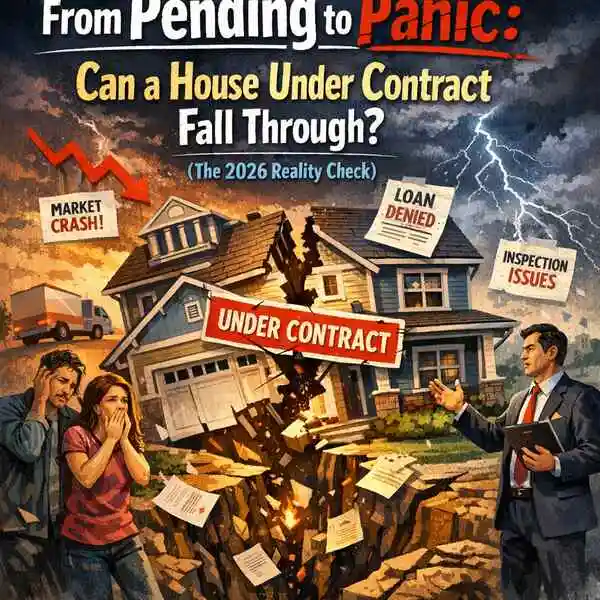
The “For Sale” sign in the yard has been slapped with a “Pending” or “Under Contract” sticker. Champagne corks are popping, boxes are being packed, and you are mentally arranging furniture in the living room. But somewhere in the back of your mind, a nagging question remains: Can a house under contract fall through?
The short, uncomfortable answer is: Yes.
In the dynamic real estate market of 2026, where interest rates fluctuate and inventory remains tight, a signed contract is not a guarantee of a sale. It is merely an agreement to proceed toward a sale if specific conditions are met. Until the deed is recorded and the keys are in your hand, the deal hangs in a delicate balance.
According to recent industry data, roughly 15% to 20% of residential real estate contracts hit a snag that causes the deal to collapse before closing.
If you are a buyer terrified of losing your dream home, or a seller worried about restarting the listing process, this guide is for you. We will dive deep into why deals die, the warning signs to watch for, and actionable steps to bulletproof your transaction.
What Does “Under Contract” Actually Mean?
Before we analyze the disasters, we need to understand the status. When a house is “under contract,” it means the seller has accepted the buyer’s offer. Both parties have signed a Purchase and Sale Agreement.
However, this period—often called “escrow” or the “contingency period”—is essentially a probationary phase. The contract is usually peppered with contingencies, which are “escape hatches” that allow the buyer (and sometimes the seller) to back out without legal penalty if certain criteria aren’t met.
If the house falls out of contract, it goes “back on the market” (BOM), a status that can sometimes unfairly stigmatize a property.
The Top 7 Reasons Why Houses Under Contract Fall Through
In 2026, the reasons for failed transactions have evolved. While inspection issues remain a classic hurdle, financial volatility has introduced new risks. Here is why pending sales are crumbling right now.
1. The Financing Fall-Through (The #1 Killer)
Even with a pre-approval letter in hand, financing is never 100% secure until the “Clear to Close” is issued. This is the most common reason deals die.
- Interest Rate Shock: If interest rates spike between the time of the offer and the time the rate is locked, the buyer’s debt-to-income (DTI) ratio might suddenly exceed the lender’s limit. The buyer literally can no longer afford the loan they were pre-approved for.
- The “New Car” Mistake: Lenders re-check credit right before closing. If a buyer takes out a new auto loan, buys furniture on credit, or misses a credit card payment during escrow, the mortgage application can be denied instantly.
- Job Changes: If a buyer changes jobs, loses a job, or switches from a salary to a commission-based structure during the contract period, the underwriting process often grinds to a halt.
2. The Low Appraisal
In a competitive market, bidding wars often drive the offer price significantly higher than the home’s actual market value. The bank, however, will only lend based on the appraised value, not the emotional value.
- The Scenario: You offer $550,000. The bank’s appraiser says the house is worth $520,000. There is now a $30,000 “appraisal gap.”
- The Stalemate: If the buyer doesn’t have the extra cash to cover the gap, and the seller refuses to lower the price to the appraised value, the contract falls through.
3. The Home Inspection Nightmare
This is the moment where the gloss comes off the property. A general home inspection might uncover issues that were invisible during the showing.
- Deal-Breakers: Structural damage, foundation cracks, active termite infestations, or outdated electrical wiring (like knob-and-tube) can scare buyers away.
- Negotiation Fatigue: Often, it’s not the defect itself but the refusal to compromise that kills the deal. If the buyer demands a new roof and the seller offers a $500 credit, the buyer may walk away using their inspection contingency.
4. The Home Sale Contingency (The Domino Effect)
Many buyers are “move-up” buyers who need to sell their current home to fund the purchase of the new one. This creates a chain.
If Buyer A is buying Seller B’s house, but Buyer A needs to sell their own house to Buyer C first… a hiccup with Buyer C collapses the entire chain. If the buyer’s current home doesn’t sell in time, they cannot perform on the contract for the new house, and the deal falls through.
5. Title Troubles
Title issues are the silent killers of real estate deals. They often pop up late in the game when the title company conducts a search.
- Liens: Unpaid contractor bills, tax liens, or child support liens attached to the property must be paid off. If the equity in the home isn’t enough to cover these debts, the seller might not be able to sell.
- Ownership Disputes: Sometimes, a long-lost heir, an ex-spouse who never signed a quitclaim deed, or a forgery in the past chain of title creates a legal cloud that prevents the transfer of ownership.
6. Cold Feet (Buyer Remorse)
Buying a home is stressful. Sometimes, the panic sets in. A buyer might wake up at 3 AM worrying about the mortgage payment, the neighborhood, or a sudden life change (divorce, illness).
While backing out simply because you “changed your mind” usually means forfeiting the earnest money deposit (more on that later), many buyers are willing to lose that deposit rather than commit to a 30-year mortgage they don’t want.
7. Uninsurable Property
With climate change impacting insurance markets in 2026, getting homeowners insurance is no longer a given.
If a home is in a high-risk flood zone or wildfire area, or if it has an old roof that insurers refuse to cover, the buyer may be unable to secure a policy. Without insurance, the lender will not fund the mortgage, and the deal dies.
Can a Seller Back Out of a Contract?
We usually talk about buyers walking away, but can a seller pull the plug? This is much harder.
A standard real estate contract heavily favors the buyer regarding “exit strategies.” A seller generally cannot back out simply because they got a higher offer or decided not to move.
However, a seller can cause a deal to fall through if:
- The Buyer Breaches Contract: If the buyer misses a deadline for a deposit or inspection.
- Contingencies Aren’t Met: If the seller included a “Suitable Housing Contingency” (meaning they sell only if they find a new home to buy) and they can’t find a place, they can terminate the contract.
Warning for Sellers: Attempting to back out without a legal basis can lead to a lawsuit for “Specific Performance,” where a judge forces you to sell the house to the buyer.
The Earnest Money Question: Who Keeps the Cash?
When a house falls out of contract, the immediate battle is over the Earnest Money Deposit (EMD). This is the “good faith” money (usually 1% to 3% of the purchase price) the buyer put down.
- Buyer Keeps It If: They back out using a valid contingency (e.g., the inspection was bad, financing was denied, or the appraisal was low). The contingencies are their safety net.
- Seller Keeps It If: The buyer backs out after all contingencies have been waived, or simply walks away without a contractual reason.
How to Prevent Your Deal From Falling Through
Whether you are the buyer or the seller, you want to reach the finish line. Here are actionable strategies to keep the deal alive.
For Buyers: Bulletproof Your Offer
- Get Fully Underwritten, Not Just Pre-Approved: Ask your lender to put your file through underwriting before you make an offer. This verifies your income and assets upfront, making your financing nearly guaranteed.
- Don’t Change Your Financial Picture: Do not buy a car, quit your job, or move large sums of money around until you have the keys. “Financial stillness” is key.
- Read the HOA Docs Early: If the property is in a Homeowners Association, review the rules immediately. Don’t wait until the week of closing to realize they don’t allow your breed of dog.
- Communicate: If you see a potential delay, tell your agent immediately. Extensions can often be negotiated if requested respectfully and early.
For Sellers: Pre-Game Prep
- Pre-Listing Inspection: Pay for your own inspection before listing. Fix the major issues upfront so there are no surprises when the buyer inspects. This prevents the “inspection renegotiation” phase.
- Vet the Buyer’s Lender: Not all pre-approval letters are created equal. Have your agent call the buyer’s loan officer to verify how thoroughly they have vetted the buyer.
- Backup Offers: In a hot market, encourage your agent to accept backup offers. If the primary buyer starts getting flaky, knowing there is a Backup #1 waiting in the wings gives you leverage and security.
What Happens When the Deal Dies? (The Aftermath)
If the worst happens and the house falls out of contract, take a deep breath. It is frustrating, but it is not the end of the world.
- The Release: Both parties usually must sign a cancellation and release agreement. This document dictates who gets the earnest money.
- The Re-Listing: The seller puts the home back on the market.
- Pro Tip for Sellers: If the deal failed due to buyer financing, have your agent state that clearly in the MLS notes (e.g., “Back on market at no fault of seller”). This prevents new buyers from assuming the house has a physical defect.
- The Disclosure: If the deal failed because of a bad inspection, the seller is now legally obligated in most states to disclose those known defects to future buyers.
Conclusion: Manage Expectations to Minimize Stress
So, can a house under contract fall through? Absolutely. It is a complex transaction involving dozens of people—agents, lenders, inspectors, appraisers, title officers, and lawyers. With so many moving parts, friction is inevitable.
However, a contract falling through isn’t a failure; it’s part of the risk management of real estate. For buyers, a failed deal might save you from a money pit. For sellers, it might lead to a stronger backup offer.
The key to navigating this period is vigilance. Stay in constant communication with your real estate agent, adhere strictly to timelines, and keep your emotions in check until the final signature is dry. The closing table is in sight—you just have to navigate the obstacle course to get there.
Frequently Asked Questions (FAQ)
Q: How often do pending home sales fall through in 2026? A: Industry statistics suggest that between 15% and 20% of pending sales fall through. The rate is typically higher in times of economic volatility or rising interest rates.
Q: Can a buyer back out of a contract before closing? A: Yes. If the buyer has contingencies (inspection, financing, appraisal) in the contract, they can back out without penalty. If they waive contingencies and back out, they will likely lose their earnest money.
Q: How long can a house be under contract? A: The average time from contract to closing is 30 to 45 days. However, this can vary from a 10-day cash close to a 60+ day close for complex loan types (like FHA or VA) or contingent sales.
Q: Do I get my earnest money back if financing falls through? A: Generally, yes—provided you had a “Financing Contingency” in your contract and you made a good-faith effort to secure the loan. If you waived this contingency, you may forfeit the deposit.
Q: Can a seller accept a higher offer while under contract? A: No. Once a seller has signed a contract with a buyer, they are legally bound to that buyer. They can accept “backup offers,” but they cannot kick the first buyer out just to take a higher price unless the first buyer breaches the contract.