Imagine this scenario: You have just walked into your home, ready to relax, but as you step onto your beautiful stone floors, you notice something is off. A dull, hazy finish has replaced the warm, inviting glow that once welcomed you. Walking on stunning travertine floors that lose their luster from everyday dirt is a heartbreaking experience for any homeowner. You chose travertine for its timeless elegance and natural charm, but seeing it look tired and worn can make the whole room feel lackluster.
Travertine is a unique, porous natural stone that requires specific, pH-neutral care to prevent etching and permanent damage. Unlike ceramic or porcelain tiles, travertine is a form of limestone deposited by mineral springs, which give it characteristic holes and troughs. Because it is calcium-based, it reacts poorly to acids. If you have been scrubbing away with generic cleaners, you might be unknowingly stripping away its beauty.
But here is the good news: You do not need expensive professional services to restore that showroom shine. This guide provides simple, natural methods for daily maintenance, deep cleaning, and handling those panic-inducing stains—saving you a significant amount of money compared to hiring pros. When treated with respect and proper care, travertine flooring can last for 75+ years, serving as a lifetime investment for your home.
Tools & Supplies Needed
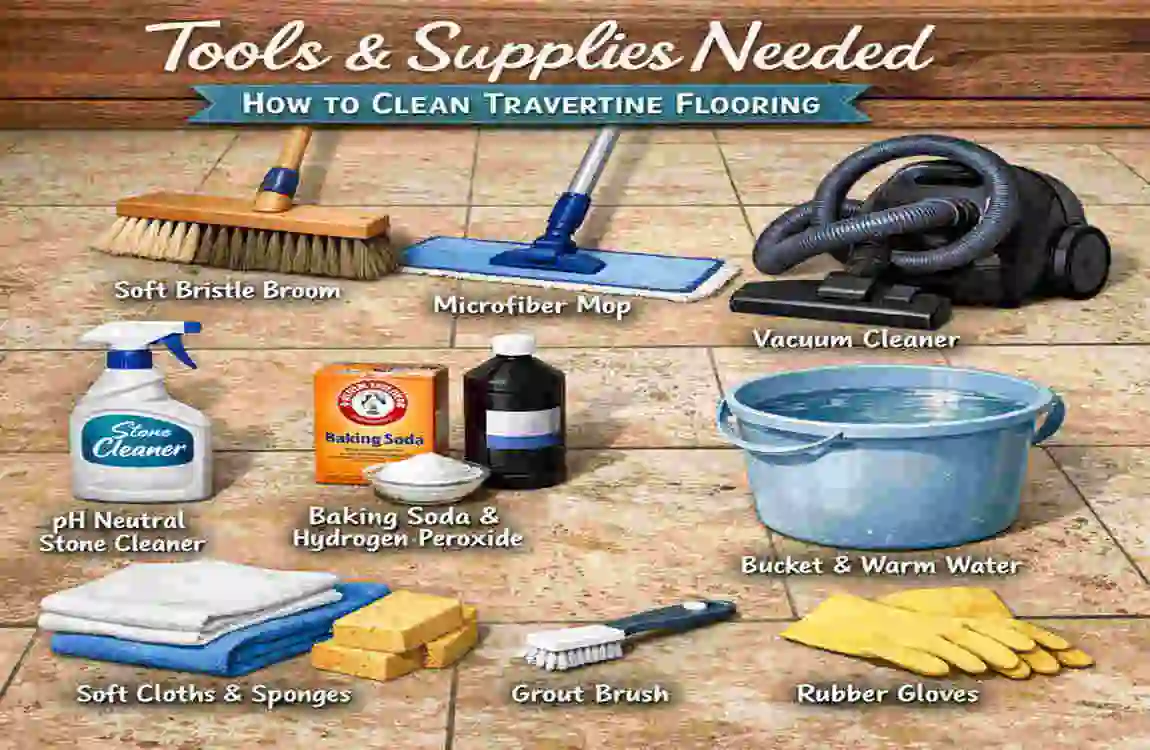
Before we dive into the scrubbing and mopping, we need to curate our cleaning kit. Using the wrong tools is the fastest way to ruin natural stone. You want to treat your travertine like a piece of fine art—because, in a way, it is.
Here is your essential checklist for safe cleaning:
- Soft-bristle broom or Vacuum: You need to remove grit and dust before you wet the floor. However, you must use a vacuum that allows you to turn off the beater bar. The rotating bristles on a standard beater bar can cause micro-scratches on the stone surface.
- Microfiber Mop and Cloths: Cotton mops tend to push dirty water around, leaving it to settle in the grout lines. Microfiber, on the other hand, traps dirt particles and absorbs water much more efficiently.
- pH-Neutral Stone Cleaner or Natural Mix: We will discuss recipes later, but your go-to solution will be warm water mixed with a mild Castile soap.
- Soft Brush: A toothbrush or a specifically designed soft nylon brush is perfect for agitating dirt in grout lines without scratching tile edges.
- Bucket: You will actually need two buckets—one for your cleaning solution and one for clear rinsing water.
- Old Towels: For drying the floor immediately after washing.
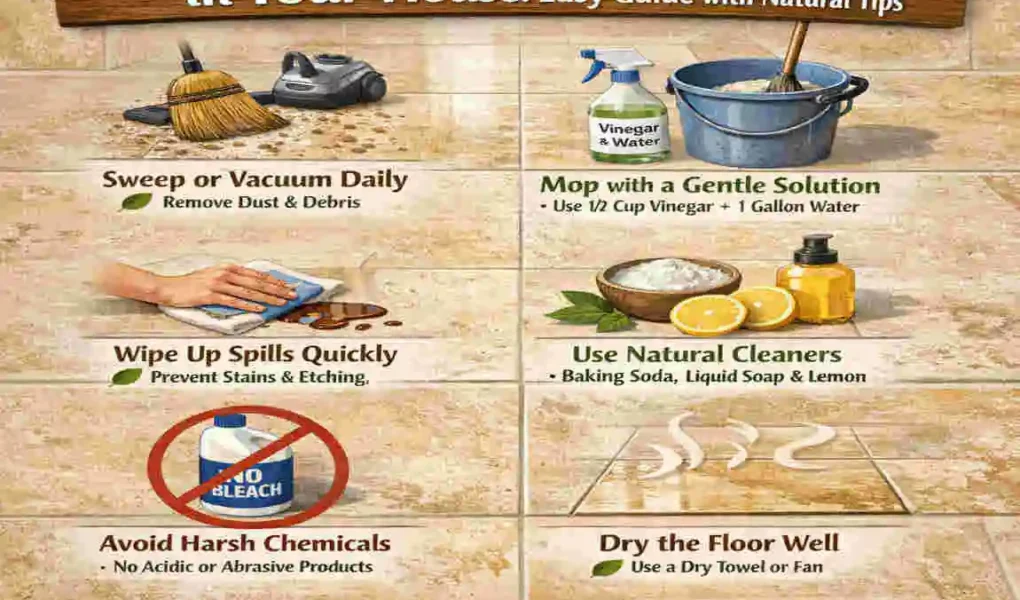
The “Do Not Touch” List: It is vital to know what to avoid. Never, under any circumstances, use vinegar, bleach, ammonia, or citrus-based cleaners (like lemon or orange) on travertine. These substances are acidic (or highly alkaline in the case of bleach) and will chemically react with the calcium in the stone, leading to dull white spots known as “etching.”
Pro Tip: Always test any new cleaner—even a natural one—on an inconspicuous spot, like inside a closet or under a rug, to ensure it doesn’t discolor the stone.
Daily Cleaning Routine
Why Daily Care Matters. You might be thinking, “Do I really need to clean these floors every day?” While you don’t need to do a deep scrub daily, consistent maintenance is the secret to longevity. Because travertine is porous, it has tiny holes and pits where dust and sand can settle. When you walk on this grit, it acts like sandpaper, slowly grinding down the floor’s finish. Daily care prevents this buildup.
Step-by-Step Guide
Sweep or Vacuum First. The first step is always dry cleaning. Use your soft-bristle broom or vacuum (remember: hard-floor setting, no beater bar) to remove all loose dirt, pet hair, and crumbs. If you skip this step and go straight to mopping, you are essentially creating wet mud and rubbing abrasive particles into the stone. This is the number one cause of scratches.
Prepare Your Solution: Fill a bucket with warm water. Warm water cuts through grease and grime better than cold water. Add just a few drops of stone-safe soap or mild Castile soap. You do not need many bubbles; too much soap leaves a sticky film that attracts more dirt later.
The Damp Mop Technique: Dip your microfiber mop into the solution and wring it out thoroughly. You want the mop to be damp, not soaking wet. Water is the enemy if it sits too long, as it can seep into the pores and cause discoloration. Mop in small sections, perhaps 4×4 feet at a time. Rinse your mop in a separate bucket of clean water frequently so you aren’t just spreading dirty water back onto the floor.
The Immediate Dry This is the step most people skip, but it makes the biggest difference. As soon as you finish a section, take a dry microfiber cloth or a soft towel and dry the floor by hand (or push the towel with a dry mop head). This prevents water spots and streaks from forming as the water evaporates.
Frequency: For high-traffic areas like the kitchen or entryway, aim to sweep and damp mop 2-3 times per week. Low-traffic areas, like a formal dining room, can be cleaned once a week.
Natural Tip: If your dark travertine floors look a bit dull, brew a strong pot of black tea. Let it cool and use it to damp mop the floor. The tannins in the tea react with the stone, bringing out its natural warmth and even mildly sealing the pores.
Deep Cleaning Methods
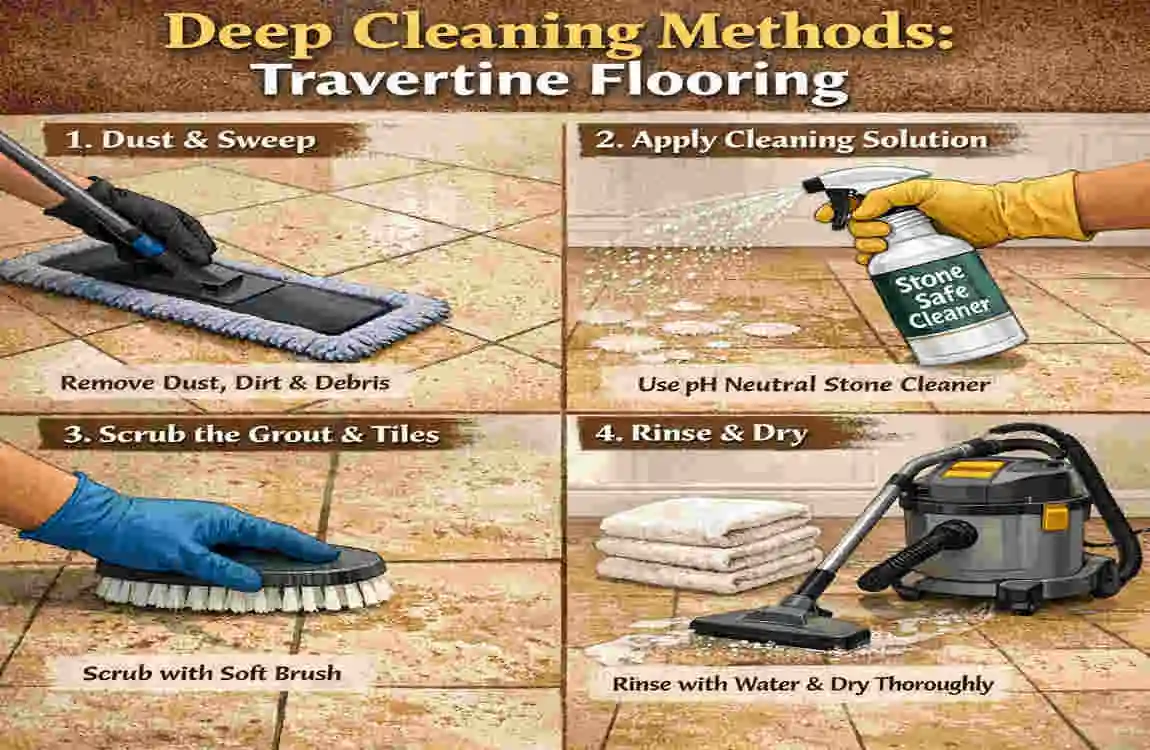
Even with the best daily routine, your floors will eventually need a reset. Maybe the grout is looking dark, or the tiles don’t have that “pop” they used to. This usually happens monthly or when you notice visible grime buildup.
Natural Deep Clean Recipe
When you need more scrubbing power than just soap and water can provide, baking soda is your best friend. It is mild enough not to scratch but abrasive enough to lift stuck-on gunk.
- Ingredients: Baking Soda and Water.
- Method: Mix baking soda with enough water to form a loose paste.
- Application: Apply this paste to the dirty tiles or grout lines. Let it sit for 10-15 minutes. This “dwell time” allows the baking soda to chemically break down grease and dirt.
- Scrubbing: After it has sat, scrub gently with your soft brush.
- Rinse thoroughly with clean water, then dry immediately.
Pro Steps for a Monthly Refresh
If you want to do a full-room deep clean, follow this professional workflow:
- Vacuum Thoroughly: Get every speck of dust out of the corners.
- Apply pH-Neutral Cleaner: Use a generous amount of your soap solution or a dedicated commercial stone cleaner. Let it dwell on the surface for 5-10 minutes. Do not let it dry out; if it does, add a little more liquid.
- Agitate the Grout: While the floor is wet, take your soft brush and run it along the grout lines. Grout is lower than the tile, so mops often glide right over it, leaving dirt behind.
- The Double Rinse: Crucial. Mop up the dirty cleaning solution. Then, dump your bucket, fill it with fresh plain water, and mop the entire floor again to remove any soap residue.
- Fan Dry: If you live in a humid climate, set up a box fan or turn on ceiling fans to help the stone dry faster.
Caution: Sealed floors are much easier to deep clean. If you notice water soaking in instantly during cleaning, your seal might be compromised. We recommend resealing your travertine yearly to maintain that protective barrier.
Cleaning Schedule at a Glance
Cleaning Type Frequency Key Natural Tip Time Needed
Daily Sweep/Mop 2-3x/week Warm water + mild soap 15 min
Deep Scrub Monthly Baking soda paste 45 min
Stain Spot-Treat As needed Olive oil + flour (poultice) 20 min + wait time
Removing Common Stains Naturally
Travertine is sensitive, and accidents happen. A spilled glass of red wine or a dropped slice of pizza can feel like a disaster. The key is to act fast. Liquid spills should be blotted up immediately—never wipe, as wiping spreads the stain over a larger area.
If a stain does set in, we use a technique called a poultice. A poultice is a paste that draws the stain out of the stone’s pores as it dries.
Oil and Grease Stains
Scenario: You dropped butter or cooking oil in the kitchen. The Fix: You need to draw the oil out. Make a thick paste using white flour and Hydrogen peroxide. Apply it over the stain about 1/4 inch thick. Cover it with plastic wrap and tape down the edges. Poke a few holes in the plastic to let it breathe. Leave it for 24 hours. As the paste dries, it pulls the oil from the stone. Scrape it off and wipe clean.
Rust and Mineral Deposits
Scenario: A metal planter pot left a ring on the floor.The Fix: Dampen a cloth with water and dip it into baking soda. Gently rub the rust spot. Do not scrub too hard, or you might scratch the finish. For stubborn rust, you might need a commercial non-acidic rust remover, but try baking soda first.
Wine and Coffee
Scenario: A dinner party foul.The Fix: These are organic stains. Soak a paper towel or cotton ball in Hydrogen peroxide and place it directly on the spot. Let it sit for a few minutes, then blot it up. Do not rub! Rubbing pushes the pigment deeper into the pores.
Grout-Specific Grime
Scenario: The tiles look clean, but the lines between them are black.The Fix: Mix a diluted soapy water solution. Dip a toothbrush into it and scrub the grout lines in a circular motion. Avoid bleach at all costs—it can degrade the grout over time and damage the edges of your travertine.
General Rule: The poultice method is safer than scrubbing because it works by absorption rather than abrasion. Always ensure the area is dry fully after treating any stain.
Maintenance & Sealing Tips
You have cleaned your floors, and they look amazing. Now, how do we keep them that way? The secret weapon is a sealer.
Sealing Basics: Travertine is a hard stone. Sealing fills those pores so dirt and liquids sit on top rather than soaking in. To test if your floor needs sealing, pour a small drop of water on a tile. If it beads up, your seal is good. If the stone darkens and absorbs the water within a minute, it is time to reseal.
- Process: Clean the floor meticulously and let it dry for 24 hours. Apply a penetrating sealer (look for natural, oil-based options or water-based penetrating sealers designed for stone) using a lamb’s wool applicator or a soft cloth.
- Frequency: Reapply every 6-12 months, depending on foot traffic.
Preventive Habits
- Use Rugs: Place mats at all entryways to catch dirt before it hits the stone. Put runners in high-traffic hallways.
- Immediate Spills: Train your family to blot spills the second they happen.
- Avoid Steam Cleaners: While popular for ceramic tiles, steam cleaners are risky for travertine. The intense heat and moisture can force water deep into the stone, damaging the sealer and leading to spalling (flaking) over time.
Longevity. With proper care, your travertine floors can serve you for decades. It is not uncommon to see well-maintained travertine in historic buildings that is over a century old. Your efforts today ensure decades of shine.
Common Mistakes to Avoid
We want to save you from heartbreak. Here are the most common ways homeowners accidentally ruin their travertine so that you can avoid them:
- Using Vinegar or Bleach: We cannot stress this enough. Vinegar is acidic. It will eat away at the calcium carbonate in the stone, leaving dull, rough spots that look like watermarks but are actually chemical burns.
- Wet Mopping: Sloshing a soaking wet mop onto the floor allows dirty water to settle into the pores and grout. Always wring your mop out until it is just damp.
- Abrasive Pads: Never use the green side of a sponge or steel wool. Travertine is softer than you think and scratches easily.
- Skipping Drying: Letting the floor air-dry naturally often results in water spots and can encourage mildew growth on the porous surface. Take the extra 5 minutes to towel dry.
The Fix: If you realize you have been making these mistakes, stop immediately. Switch to the natural alternatives we discussed. If etching has already occurred, you may need a professional honing powder to polish out the dull spots, but prevention is always easier than the cure.
FAQs
How to clean travertine flooring with vinegar? You don’t. While vinegar is a great cleaner for many things, it is the enemy of travertine. It is too acidic and will etch the finish. Always use a pH-neutral cleaner instead.
Can I use a steam mop on travertine? No, it is not recommended. The heat and forced moisture can penetrate the stone and damage the protective seal. Over time, this can cause the stone to degrade. Stick to damp mopping.
How often should I reseal travertine floors? For most residential homes, resealing once a year is a good rule of thumb. However, in very high-traffic areas or kitchens, check the seal quarterly using the water drop test.
Is there a natural cleaner for a travertine shower floor? Yes, the same methods apply! You can use the baking soda paste to scrub soap scum. Just ensure you rinse thoroughly and ventilate the bathroom to let the stone dry completely between showers, preventing mold from forming in its pores.