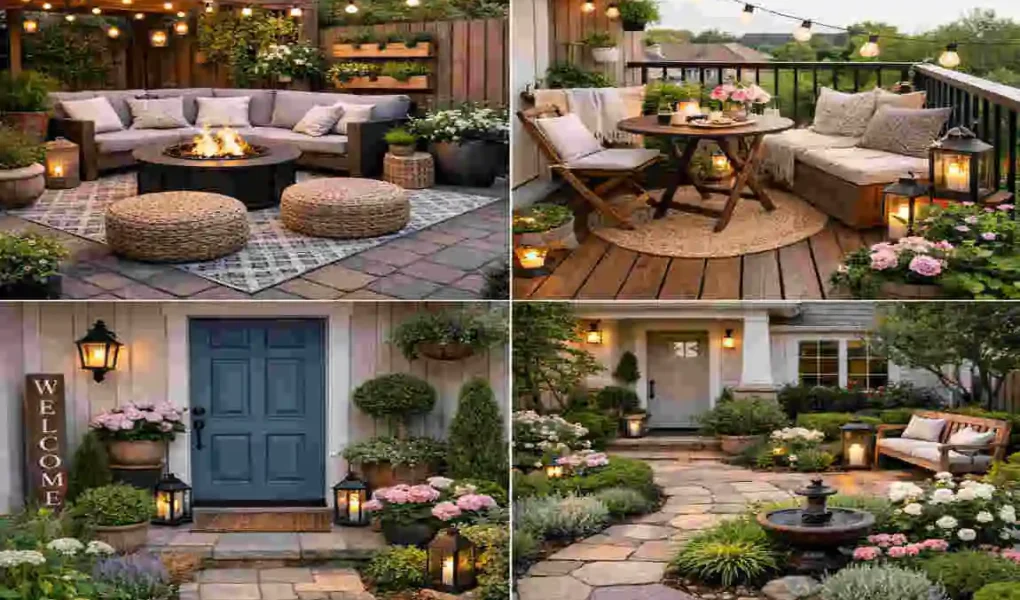
Let’s be honest: having a small outdoor space in a city apartment or a compact home often feels like a limitation. You might look at your tiny balcony, a narrow entryway, or a postage-stamp-sized patio and think, “What can I possibly do with this?” But here is the secret that professional landscape designers know: small spaces often punch way above their weight.
Because the area is limited, you don’t need a massive budget or a team of contractors to make a huge impact. A few strategic choices can turn a neglected concrete corner into a lush sanctuary. Whether you want a spot to sip your morning coffee, a green welcome for your guests, or a cozy reading nook, the right approach can make all the difference.
Design Principles for Compact Outdoor Spaces
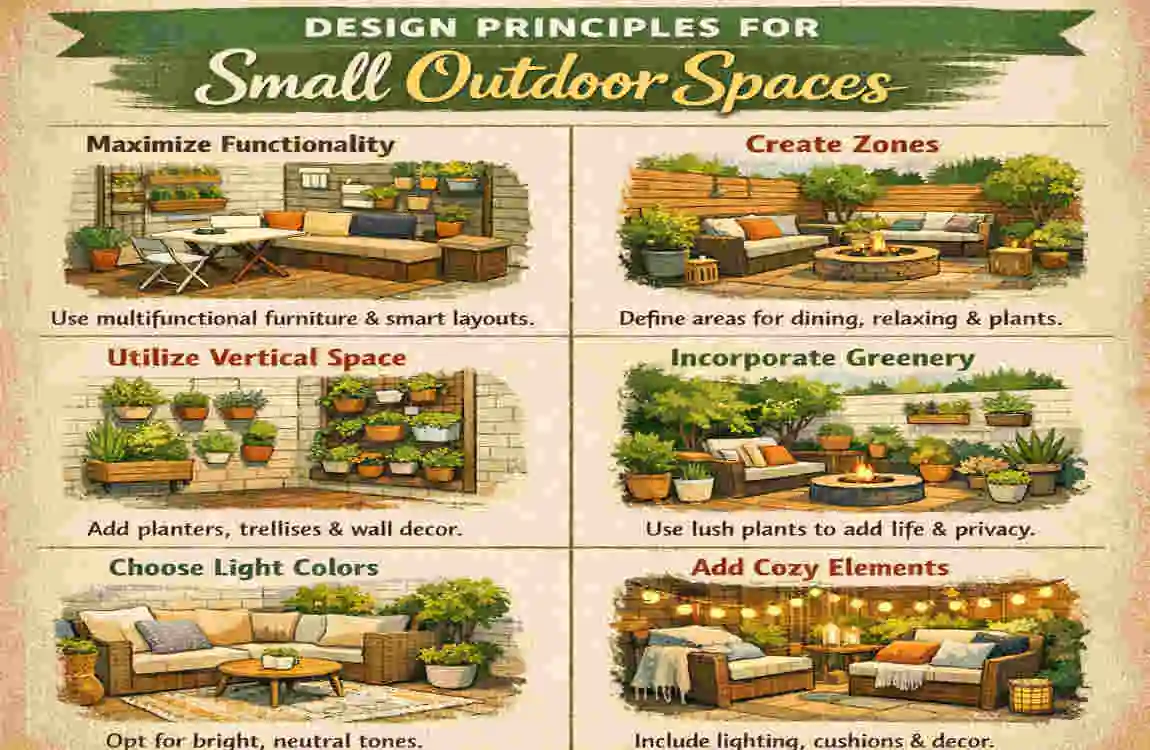
Before you buy a single bag of soil or a piece of furniture, you need a plan. When space is tight, every inch counts. The difference between a cluttered balcony and a relaxing retreat lies in the design principles you apply right at the start.
Adopt a Purpose-First Approach
The biggest mistake people make is trying to do too much. Ask yourself: What is this space for? Do you want to dine al fresco? Do you need storage for bikes? Is it purely for visual relaxation?
If you have a tiny balcony, it might not fit a dining table and a lounge chair. You have to prioritize. By defining the primary purpose—let’s say, a “morning coffee spot”—you immediately narrow down your furniture choices to a bistro set rather than a bulky sofa. This focus prevents the space from feeling cramped and chaotic.
Visual Tricks to Expand Space
You can actually trick the eye into thinking a space is larger than it is. Scale and proportion are your best friends here. Ironically, using a few larger pots looks much less cluttered than using twenty tiny pots.
Another trick is verticality. Draw the eye upward. Use tall, slender plants or hang string lights high up. This utilizes the “air space,” making the footprint feel less confining. Mirrors are another secret weapon; hanging a weather-resistant mirror on a garden wall reflects light and greenery, effectively “doubling” the view.
Creating Cohesive Themes
To make your small garden feel like a designed space rather than a collection of random items, stick to a theme. This includes your color palette and materials. If your interior style is modern, carry that outside with clean lines, grey tones, and metallic planters.
If you are working on a patio, balcony, and entryway, try to use a connecting element. For example, use the same terracotta pot style in all three areas. This creates a sense of flow, making your entire property feel unified and larger.
Lighting Strategy
Lighting is often an afterthought, but in small spaces, it is crucial. You want to layer your lighting.
- Ambient: Soft, general light (like string lights).
- Task: Brighter light for reading or cooking.
- Accent: Spotlights on a beautiful plant or architectural feature.
Proper lighting extends the usability of your garden well past sunset, giving you more “room” in your home for more hours of the day.
Patio Makeover Ideas: Maximize Style and Function
Your patio is likely the workhorse of your outdoor space. It is where you gather, grill, and relax. Here is how to upgrade it with smart small-garden makeover ideas.
Surface and Structure Upgrades
The floor of your patio sets the tone. If you are stuck with ugly, cracked concrete, you don’t have to tear it up. Modular decking tiles are a fantastic, renter-friendly solution. They snap together and instantly warm up the space with a wood look.
Alternatively, consider an outdoor rug. This is the easiest way to define a “zone.” If you place a rug under your chairs, you visually signal that “this is the lounge area,” separating it from the grill or the back door. It adds texture and color without taking up any physical space.
Greenery and Vertical Planters
On a small patio, floor space is Premium real estate. Do not fill it all with pots. Instead, go vertical.
- Wall Planters: Mount these on fences or walls to create a “living wall.”
- Railing Planters: If you have a fence, hang boxes over the side.
- Climbing Plants: Use a trellis and grow jasmine or ivy. This draws the eye up and creates a lush green wall that takes up only a few inches of floor depth.
For sunny patios, consider hardy herbs like rosemary and thyme—they smell great and love the heat. For shady corners, ferns and hostas add a lush, jungle vibe without needing direct sunlight.
Smart Seating and Ambiance
Furniture for small patios needs to work hard. Look for multi-functional pieces. A bench that opens up to reveal storage inside is perfect for hiding cushions, gardening tools, or charcoal.
Consider foldable furniture. A table that folds down against the wall when not in use can transform a dining area into a yoga spot in seconds.
For ambiance, fire features are popular, but big fire pits take up too much room. Look for tabletop fire bowls or slim, vertical propane heaters. They provide a cozy glow and warmth without dominating the patio’s footprint.
Water and Sound Elements
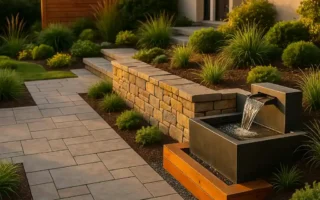
You might think a water feature is too grand for a small patio, but the sound of trickling water is incredible for masking city noise. A small tabletop fountain or a self-contained bubbling urn tucked into a corner can create a serene atmosphere. It drowns out traffic noise and turns your patio into a true escape.
Balcony Makeover Ideas: Vertical Gardening and Smart Storage
Balconies come with their own set of challenges: wind, weight limits, and often, a lack of privacy. However, they also offer the best views and fresh air.
Structural Improvements and Flooring
Most balconies have cold concrete floors. Just like the patio, interlocking deck tiles or artificial grass rugs can soften the space immediately.
Privacy is often a major concern on balconies. You don’t want to block the light, but you do want to block the neighbors’ view. Bamboo screens or reed fencing can be zip-tied to existing railings. They look natural, filter the wind, and provide instant privacy.
Planting Strategy for Heights
Balcony gardening is all about container gardening. You need lightweight pots (resin or fiberglass) because heavy ceramic pots filled with wet soil can be surprisingly heavy.
- Rail Planters: These straddle the balcony railing, using zero floor space.
- Hanging Baskets: Great for trailing plants like petunias or spider plants.
- Tiered Stands: A ladder-style plant stand lets you stack plants vertically, fitting four or five plants in the footprint of one.
Wind is a factor on higher balconies. Choose plants with flexible stems, like ornamental grasses, which sway rather than snap. Succulents are also great as they stay low and hold moisture well.
Furniture and Zoning
On a narrow balcony, “bistro style” is the way to go. A small round table and two folding chairs fit almost anywhere.
If you want to lounge, look for corner seating. A small L-shaped bench tucked into the corner maximizes the balcony’s width and often seats more people than individual chairs. Plus, you can usually store things underneath the seat.
Lighting and Safety
You likely don’t have an outdoor outlet on a balcony. Solar-powered lights are the solution. Wrap solar string lights around the railing. Use solar lanterns on the table.
Motion-activated lights are also handy if you use the balcony for storage. Just ensure any lighting you install is securely fastened so it doesn’t blow away in a storm!
Entryway Landscaping for Instant Curb Appeal
Your entryway is the handshake of your home. It sets the expectation for what is inside. Even a tiny front stoop can benefit from small garden makeover ideas.
Front-Door Presence
Create a focal point. Painting your front door a bold color is a classic trick, but framing it with greenery is even better. Symmetry works wonders here. Placing two identical potted plants on either side of the door creates a sense of grandeur and order, even in a small space.
Ensure the pathway is clear. You don’t want guests tripping over sprawling plants. Keep the walkway defined with low-profile edging or solar path lights.
Seasonal Greenery
Since the entryway is seen every single day, you want it to look good year-round. Use an evergreen backdrop. Boxwoods or dwarf conifers in pots look green even in the dead of winter.
Then, layer in seasonal color. In spring, tuck in some pansies. In summer, swap them for bright geraniums. In autumn, use mums or pumpkins. This keeps the entry looking fresh and tended without requiring a total overhaul every season.
Micro-Landing Design
If you have a small porch or landing, think about vertical utility. A wall-mounted mailbox with a built-in planter is a stylish space-saver.
If you have room for a chair, add one. Even if you never sit there, an empty chair with a bright pillow implies that this is a welcoming, leisurely home. It adds a “lived-in” charm that instantly boosts curb appeal.
Practical Considerations
Entryways take a beating. Make sure your pots are durable and frost-resistant if you live in a cold climate.
Also, consider scent. Placing fragrant plants like lavender or jasmine near the door means you and your guests are greeted by a wonderful smell every time you enter or leave. It is a subtle detail that makes a huge psychological difference.
A Three-Phase Makeover plan for Small Spaces
Trying to do everything at once is overwhelming and expensive. Break your project down into this proven three-phase approach.
Audit and Define 40–60 Minutes
Grab a notebook and a tape measure.
- Measure everything—length, width, and railing height.
- Map the sun. Watch your space for a day. Where does the sun hit at 10 AM? 2 PM? 5 PM? This dictates what plants will survive.
- List Must-Haves. Be ruthless. “I need a place to sit” is a must-have. “I want a pizza oven” might be a nice-to-have.
Design and Sourcing 1–2 Weeks
This is the fun part.
- Create a Mood Board. Save photos of styles you like. Look for common threads (e.g., “I seem to like black pots and ferns”).
- Select a Palette. Pick 2-3 colors and stick to them.
- Source Items. Look for modular, stackable, or multi-use items. Check measurements twice before buying furniture!
Implementation and Maintenance 2–6 Weeks
Don’t rush the install.
- Hardscaping First. Lay the floor tiles or rugs first.
- Furniture Second. Place the big items.
- Greenery Last. Bring in the plants and accessories.
- Routine. Set up a watering schedule immediately so your investment doesn’t die.
Budgeting Your Small Garden Makeover
You can spend \$50 or \$5,000 on a small space. Here is how to allocate resources wisely using a tiered approach.
Cost-Saving Strategies
- Propagate: Ask friends for cuttings of their plants.
- Repurpose: An old ladder can become a plant stand. Old tin cans (painted) make cute herb pots.
- End-of-Season Sales: Buy furniture in late autumn when prices drop by 50% or more.
Budget Tiers
Here is a quick breakdown of what you can expect at different investment levels.
Budget TierPatio/Balcony StrategyEntryway Strategy
Low (\$100 – \$300) Repurpose existing pots; buy annual seeds; solar string lights; deep clean existing surfaces. Paint the front door, install a new welcome mat, and plant two small pots with seasonal flowers.
Mid (\$300 – \$1,000) New outdoor rug; bistro set; mix of perennials and annuals; bamboo privacy screen. Two large statement planters, solar path lights, and updated house numbers.
Premium (\$1,000+) High-end modular flooring; Premium weatherproof furniture; automated drip irrigation; vertical garden system. New paving stones, custom lighting installation, and permanent landscaping shrubs.
Plant and Material Recommendations
Choosing the right materials is critical for longevity, especially in harsh weather.
Hardscape Materials
- Composite Decking: Great for balconies. No splinters, no rot, easy to clean.
- Resin Wicker: Looks like classic wicker but withstands rain and sun much better.
- Powder-Coated Steel: Strong and rust-resistant, perfect for bistro tables.
Plant Lists by Light Exposure
Don’t buy a plant just because it is pretty. Buy it because it fits your light conditions.
For Sunny Spots (6+ hours direct sun):
- Lavender: Smells great, loves sun, drought-tolerant.
- Succulents/Sedum: Low maintenance, architectural look.
- Geraniums: Bright pops of color that last all summer.
- Olive Trees (Dwarf): Trendy, sophisticated, loves heat.
For Shady Spots (Less than 4 hours of sun):
- Ferns: The classic shade plant. Adds texture and movement.
- Hostas: varied leaf colors (greens, blues, whites). Very hardy.
- Begonias: One of the few plants that flowers well in shade.
- Ivy: Great for trailing over edges or climbing walls.
Maintenance and Upkeep Guide
The goal of small garden makeover ideas is to reduce stress, not create a chore list. However, small containers dry out faster than big gardens, so they need attention.
The Watering Routine
In the heat of summer, small pots may need water every day. To make this easier, consider a drip irrigation kit. You can buy simple tubing systems that attach to a faucet and water all your pots at once on a timer. If that is too complex, invest in self-watering pots which have a reservoir at the bottom.
Seasonal Calendar
- Spring: Clean the winter grime off the deck. Prune back dead leaves—plant fresh herbs.
- Summer: Water frequently. Deadhead (pinch off) faded flowers to encourage new blooms.
- Fall: Empty ceramic pots that might crack in the frost. Plant bulbs for next spring. Bring tender plants inside.
- Winter: Ensure evergreen plants are watered occasionally if it is dry. Check securements on balcony items for winter storms.
Quick Refresh Ideas
If your space feels stale, you don’t need a renovation. Just swap the soft goods. New throw pillows on the bench or a different outdoor rug can completely change the vibe for under \$50. Fresh mulch in your pots also instantly makes them look tidy and professional.
Real-World Case Studies
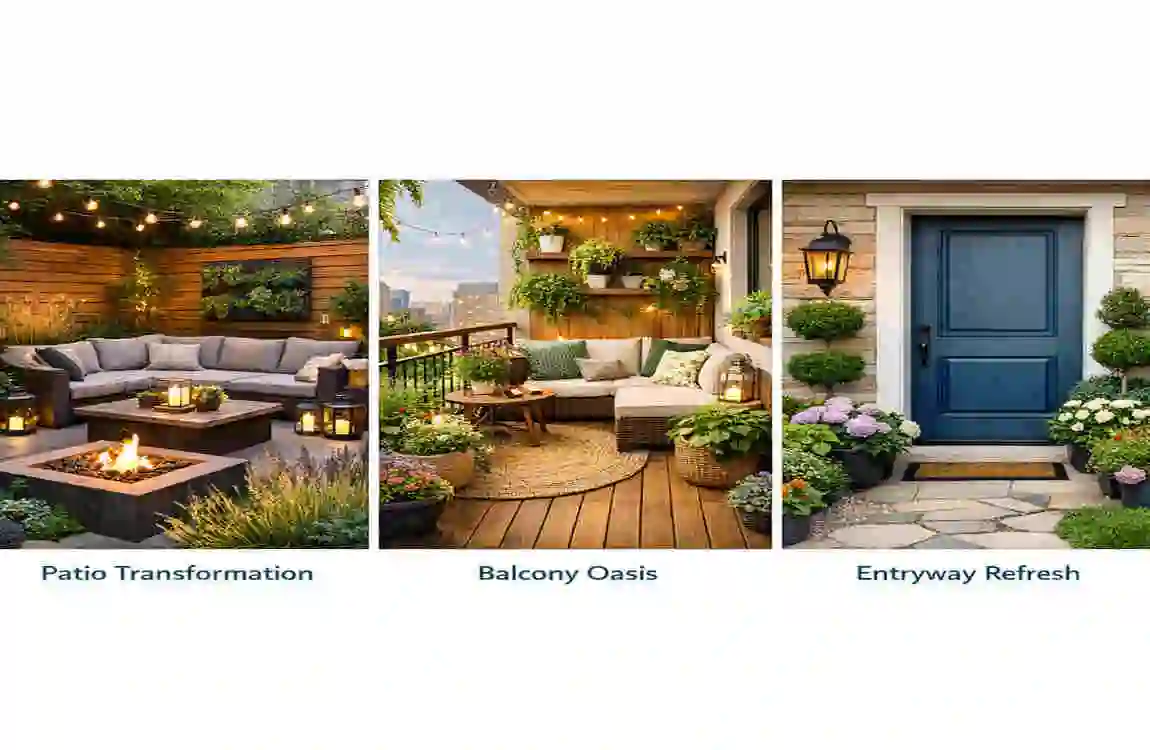
Let’s look at how these principles work in real life.
Case Study 1: The “Concrete Box” Balcony
- The Problem: A renter had a 4×8-foot concrete balcony overlooking a parking lot. It was grey, loud, and uninviting.
- The Solution: She covered the floor with snap-together acacia wood tiles. She zip-tied a reed screen to the railing for privacy. She added a small outdoor beanbag chair and a low table.
- The Greenery: She used three large railing planters filled with tall ornamental grasses to block the view of the cars below.
- The Result: A private, warm reading nook that felt completely separated from the parking lot.
Case Study 2: The Narrow Entryway
- The Problem: A homeowner had a front door that opened almost directly onto the sidewalk. There was no “yard,” just a skinny strip of concrete.
- The Solution: Verticality. He installed wall-mounted flowerpot rings on the brick facade, one on either side of the door.
- The Greenery: He planted trailing ivy and bright impatiens in the wall pots. He added a high-quality coir doormat and a sleek, modern light fixture.
- The Result: The house instantly looked cared for and higher-value, creating a “garden” feel without using any ground space.
As a real estate agent and owner of homeimprovementcast.co.uk, you likely know that maximizing outdoor space is crucial for property value. Here are some short FAQ-style ideas for small garden makeovers that would be excellent content for your website or advice for clients looking to stage a home.
FAQ: Small Garden Makeover Ideas
How can I make a small garden look larger? Changing the visual perspective is a powerful trick. Instead of looking straight across the shortest dimension, orient patios, planting beds, and sight lines at a 45-degree angle to align with the diagonal axis; this creates the illusion of a much larger space . Additionally, painting fences in darker colors can help the boundary recede, making the garden feel less enclosed .
What are the best budget-friendly updates? Painting a fence is one of the most effective low-cost improvements. A fresh coat of paint in colors like lavender, cream, or burgundy can protect the wood and make foliage pop . For immediate color without landscaping costs, simply hang flower-filled planters from a porch or fences .
How do I add greenery without sacrificing floor space? Vertical gardening is ideal for small footprints. You can decorate bare exterior walls by affixing a large trellis and encouraging climbing plants like Star Jasmine or Wisteria to grow upward . Wall-mounted water features are another great way to save space while adding a sensory element to block out neighborhood noise .
Can I grow vegetables in a tiny garden? Yes, by using containers. You can sow salad successionally or grow fast-cropping plants like spring radishes and short carrot varieties directly in pots, keeping the ground clear for seating .