
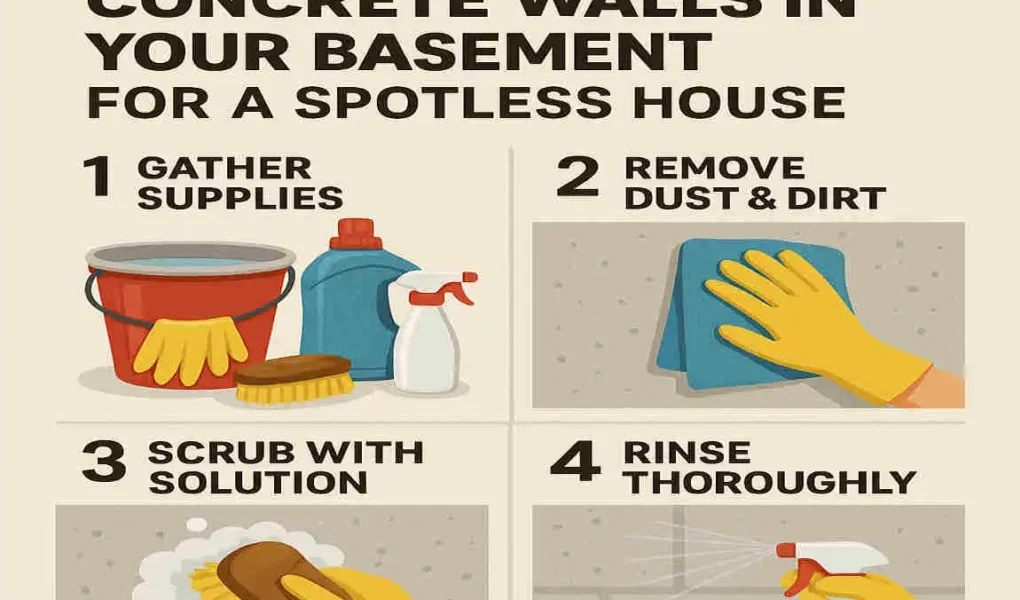
Damp, stained basement walls can really put a damper on your home’s overall vibe. If you’ve ever stepped into your basement and noticed those stubborn marks or a musty smell, you’re not alone. Learning how to clean concrete walls in basement spaces is a total game-changer for homeowners who want to keep their homes fresh, safe, and inviting.
Cleaning your basement walls isn’t just about appearances—it improves the air quality, helps prevent mould, and even boosts your property value. According to the Environmental Protection Agency, nearly 70% of basements suffer from moisture issues, which often lead to stains and mould growth.
Why Clean Concrete Basement Walls? Common Issues and Risks
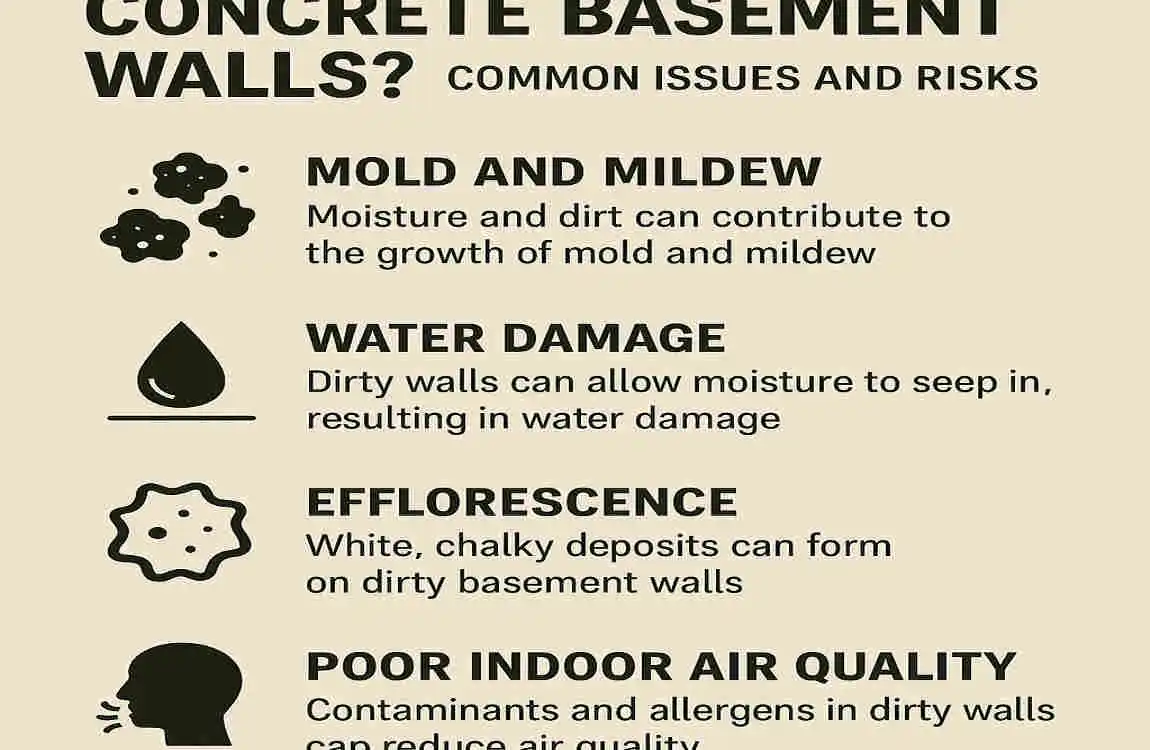
Your basement walls might seem like just a grey backdrop, but they face many challenges. Understanding these problems helps you appreciate why cleaning them is so important.
Stains and Buildup
Over time, concrete walls collect dirt, dust, and other residues. One common issue is efflorescence, a white powdery substance that appears when water seeps through the wall and leaves mineral deposits behind. You might also spot oil marks or other stubborn stains that spoil the look of your space.
Mould and Mildew
Mould is more than just unsightly—it’s a health hazard. Mould and mildew thrive in damp environments, and basements often provide the perfect breeding ground. Exposure can cause respiratory problems, allergies, and worsen asthma symptoms.
Moisture Damage and Cracks
When moisture consistently hits concrete, it can cause cracks and structural damage over time. This weakens your basement walls and might even lead to costly repairs down the road.
Top 5 Basement Wall Problems and Fixes
Problem Solution Prevention Tips
Mold Bleach or baking soda solution. Use a dehumidifier, seal walls
Efflorescence Vinegar spray improves drainage, seals cracks
Oil Stains Degreaser soak. Avoid spills, clean promptly
Rust Marks Lemon + salt scrub Address leaks quickly
Cracks, Concrete patch filler, Regular inspections
If you notice discolouration, musty smells, or peeling paint, these are signs your basement concrete walls need cleaning now to avoid bigger problems later.
Tools and Materials You’ll Need for DIY Cleaning
Before you dive in, gather your tools and materials. Having everything ready makes the process smooth and efficient.
- Pressure washer (budget-friendly models under $100 are great for beginners)
- Degreaser or trisodium phosphate (TSP) for tough stains
- Vinegar or other natural cleaning alternatives, like baking soda
- Scrub brushes with stiff bristles
- Protective gloves and goggles
- Concrete sealer to protect walls after cleaning
Budget Breakdown for Essentials (~$50 Total)
Item Approximate Cost
Pressure washer $70 (optional)
Degreaser or TSP $10
Vinegar (household) $3
Scrub brushes $10
Gloves & goggles $7
Preparation: Safety and Setup Before Cleaning
Getting ready properly is key to a safe and effective cleaning job.
Clear the Area
Remove furniture, boxes, or anything else near the walls. This gives you space to work and protects your belongings.
Test for Moisture and Hazards
Use a simple DIY moisture test kit to check dampness levels. If you suspect asbestos or lead paint, consider professional help—these hazards require special care.
Ventilate and Protect Floors
Open windows, use fans, and wear a mask to keep fresh air flowing. Cover floors and nearby areas with plastic sheets or old towels to catch drips and debris.
Safety Checklist
- Wear gloves and eye protection
- Use a mask if working with chemical cleaners
- Keep children and pets away during cleaning
- Avoid mixing bleach with vinegar or ammonia (dangerous fumes)
Step-by-Step Guide: How to Clean Concrete Walls in a Basement
This is the heart of the process. Follow these clear steps to achieve spotless basement walls.
Dry Dusting and Sweeping
Start by removing loose dirt and cobwebs. Use a broom or a vacuum with a brush attachment to sweep the wall surface.
For textured or rough concrete, take your time to reach into crevices. Removing this dust makes the next cleaning steps more effective.
Pre-Treat Tough Stains
Different stains need different treatments. Here’s how to handle the common ones:
- Oil and grease stains: Apply a degreaser directly and let it soak for 10-15 minutes before scrubbing.
- Rust stains: Make a paste of lemon juice and salt, rub it onto the stain, and leave it for about 30 minutes before rinsing.
- Efflorescence: Spray white vinegar on affected areas. The acid helps dissolve mineral deposits. Leave for 10 minutes, then scrub gently.
Stain-Specific Pre-Treatments Table
Stain Type Treatment Method Time to Soak/Wait
Oil/Grease Degreaser soak + scrub 10-15 minutes
Rust Lemon + salt paste 30 minutes
Efflorescence Vinegar spray + scrub 10 minutes
Main Cleaning with Pressure Washer or Scrub Method
Now it’s time for the big clean. If you have a pressure washer, use it at a low pressure setting (around 1200 PSI) to avoid damaging the concrete—work from top to bottom, keeping the nozzle about 12 inches away.
No pressure washer? No problem! Use a stiff brush and a bucket of warm, soapy water or cleaning solution. Scrub in circular motions for best results.
Tackle Mould and Mildew on Basement Walls
A homemade, eco-friendly mould cleaner works wonders. Mix:
- 1 cup baking soda
- 1/2 cup
- 1 teaspoon liquid soap
Spray on mouldy areas, let sit for 15 minutes, then scrub and rinse.
Rinse, Dry, and Inspect
After cleaning, rinse walls with clean water and dry thoroughly. Using fans or a dehumidifier speeds this up.
Inspect walls for cracks or damage. Small cracks can be filled with concrete patch filler to prevent future moisture problems.
Natural vs. Chemical Cleaners: Which is Best for Basement Concrete Walls?
Choosing the right cleaner depends on your priorities. Here’s a quick comparison:
Cleaner Type Pros Cons Best For
Vinegar/Baking Soda Eco-friendly, cheap Slower on heavy stains Light mould and dirt
Bleach/TSP Fast and powerful Strong fumes, harsh Deep grime and mould
Commercial (e.g., Simple Green) Versatile and ready-made Can be costly All-purpose cleaning
Reader Poll:
What’s your go-to cleaner for basement walls?
- Natural remedies
- Chemical cleaners
- Commercial products
Prevention Tips: Keep Your Basement Concrete Walls Spotless Long-Term
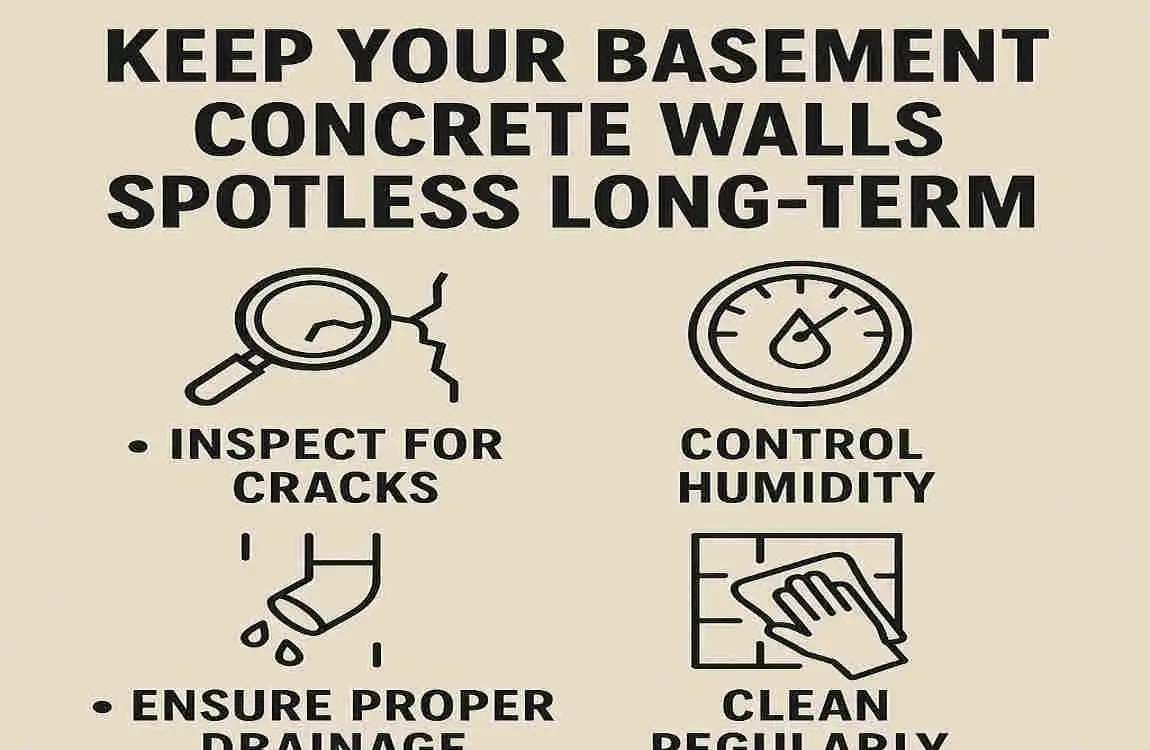
Once your walls are sparkling clean, keep them that way with these tips:
- Use a dehumidifier to reduce moisture levels
- Apply a concrete sealant to protect walls from stains and water
- Perform annual maintenance by dusting and checking for new stains or cracks