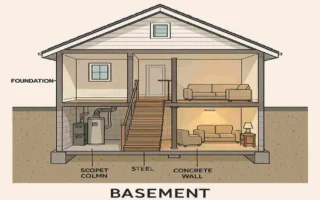
Basements can be tricky spaces to design. Whether you’re turning yours into a cozy family room, a home gym, or a sleek office space, one question always pops up: “What type of flooring is best for a basement?”
Unlike other areas of your home, basements come with their own set of challenges, particularly when it comes to moisture. From high humidity to occasional flooding, choosing the right flooring can make the difference between a functional space and a maintenance nightmare.
Why Moisture Resistance Matters in Basement Flooring
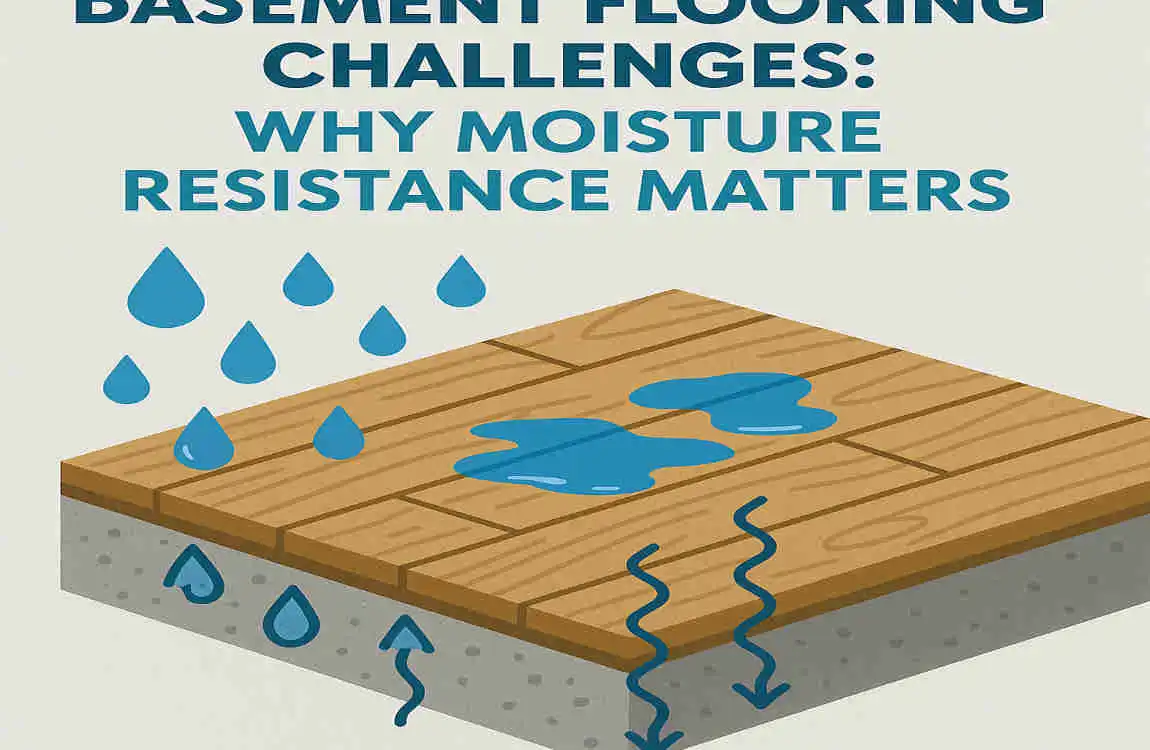
Basements are notorious for being damp. In fact, 60% of U.S. homes have humid or wet basements, according to the Environmental Protection Agency (EPA). This dampness isn’t just inconvenient—excessive moisture can lead to mold growth, warped flooring, and structural damage over time.
Common Challenges in Basement Flooring
Before diving into the best options, let’s talk about some of the key challenges homeowners face when choosing basement flooring:
- High Humidity and Flooding
- Basements often have higher humidity levels because they are below ground. Even minor flooding from leaks or heavy rain can damage traditional flooring materials, such as hardwood or laminate.
- Mold and Mildew Growth
- Moisture, combined with poor ventilation, creates the perfect environment for mold and mildew. Certain flooring materials, like carpet or untreated wood, can trap moisture and worsen the problem.
- Uneven Subfloors
- Many basements have concrete subfloors that are uneven or cracked. These imperfections can make installation more challenging and impact the longevity of your flooring.
- Budget Constraints
- Basement flooring can range from affordable DIY options to high-end finishes. Most homeowners aim to balance durability and style without breaking the bank.
What to Look for in Basement Flooring
When choosing flooring for your basement, focus on these critical factors:
- Moisture Resistance
- Opt for materials that can handle high humidity and occasional water exposure. Waterproof materials like luxury vinyl plank (LVP) or tile are ideal.
- Durability
- Basements often double as high-traffic areas, so choose flooring that can withstand wear and tear from kids, pets, or heavy furniture.
- Style and Comfort
- Your basement should feel like an extension of your home, so consider options that balance functionality with aesthetics.
- Ease of Installation
- Some materials, like LVP or carpet tiles, are DIY-friendly, while others, like epoxy, require professional installation.
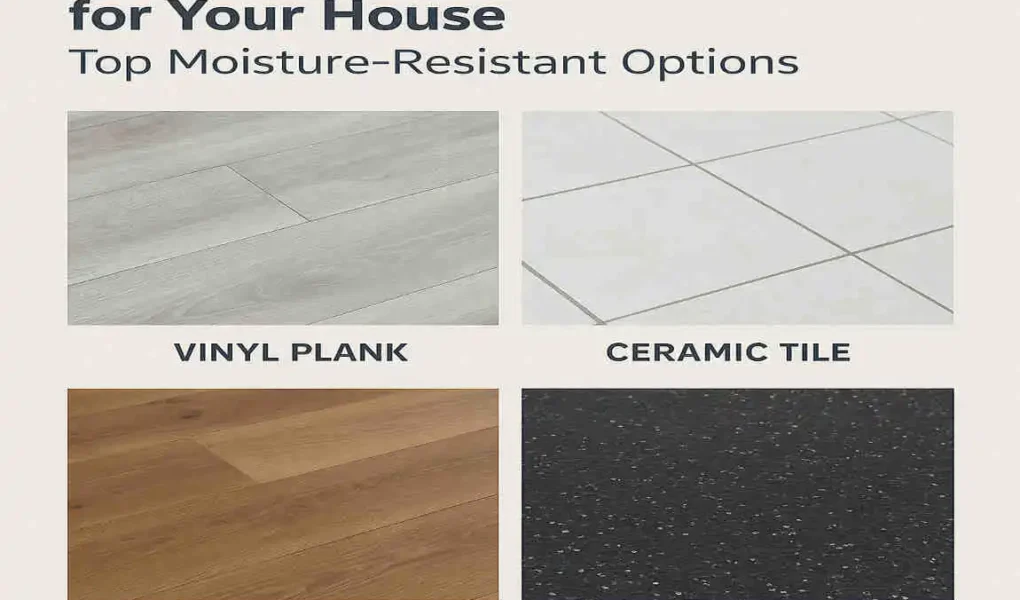
Top Moisture-Resistant Basement Flooring Options
Now that we’ve covered the challenges and key considerations, let’s dive into the six best flooring options for basements.
Luxury Vinyl Plank (LVP): The Top All-Around Choice
Why it’s excellent: Luxury vinyl plank (LVP) is a top contender for basements because it’s 100% waterproof, durable, and budget-friendly. It closely mimics the look of hardwood or stone, giving your basement a high-end feel without the high price tag.
Pros:
- Affordable ($2-7 per square foot)
- Easy to install with click-lock systems
- Quiet and comfortable underfoot
- Available in a wide range of styles
Cons:
- Can dent under heavy furniture
- Requires a smooth subfloor for a flawless finish
Best for: Family rooms, playrooms, or any basement space that needs a stylish yet practical solution.
Pro Tip: Look for brands like Coretec or Lifeproof for high-quality LVP that’s explicitly designed for damp environments.
Engineered Tile (Porcelain or Ceramic)
Why it’s excellent: Porcelain and ceramic tiles are completely waterproof, making them one of the most durable options for basements. They’re also heat-resistant, making them perfect for radiant heating systems.
Pros:
- Timeless, elegant appearance
- Resistant to water, stains, and scratches
- Long-lasting with proper maintenance
Cons:
- Cold and hard underfoot
- Grout lines require sealing to prevent moisture penetration
Best for: Wet bars, bathrooms, or gym areas in flood-prone basements.
Cost: Expect to pay $3-10 per square foot, depending on the style and brand.
Epoxy Flooring: Industrial-Strength Durability
Why it’s excellent: Epoxy flooring creates a seamless, waterproof surface over your basement’s concrete subfloor. It’s highly resistant to chemicals, moisture, and wear, making it ideal for heavy-use spaces.
Pros:
- Extremely durable and low-maintenance
- Customizable with colors and patterns
- Resistant to water, stains, and chemicals
Cons:
- Requires professional installation
- It can be slippery when wet if not textured properly
Best for: Workshops, garages, or playrooms.
Cost: $3-12 per square foot, including professional installation.
Rubber Flooring: Cushioned and Mold-Proof
Why it’s great: Rubber flooring is naturally water-resistant and provides excellent cushioning, making it a comfortable and safe choice for basements.
Pros:
- Shock-absorbent and slip-resistant
- Anti-microbial and mold-resistant
- Eco-friendly options available
Cons:
- Limited design options
- Can have a strong odor initially
Best for: Home gyms, kids’ play areas, or any space where comfort is key.
Cost: $2-8 per square foot, depending on thickness and quality.
Carpet Tiles with Moisture Barriers
Why it’s excellent: Carpet tiles are a cozy option for basements, and many modern options come with waterproof backings to protect against moisture.
Pros:
- Soft and warm underfoot
- Modular design allows for easy installation and replacement
- Available in stylish patterns and colors
Cons:
- Not fully waterproof (just water-resistant)
- Requires regular cleaning to prevent mold
Best for: Low-traffic rec rooms or home offices.
Cost: $4-10 per square foot.
Pro Tip: Avoid glue-down carpet tiles. Instead, opt for peel-and-stick options for easy removal and cleaning.
Polished Concrete: Sleek and Low-Maintenance
Why it’s great: If you’re looking for a modern, industrial look, polished concrete is a fantastic option. It’s durable, low-maintenance, and naturally moisture-resistant when appropriately sealed.
Pros:
- Affordable ($2-6 per square foot)
- Easy to clean and maintain
- Pairs well with radiant heating
Cons:
- Slippery when wet
- Can feel cold and hear an echo sound
Best for: Minimalist spaces, open layouts, or contemporary designs.
Comparison Table: Best Basement Flooring at a Glance
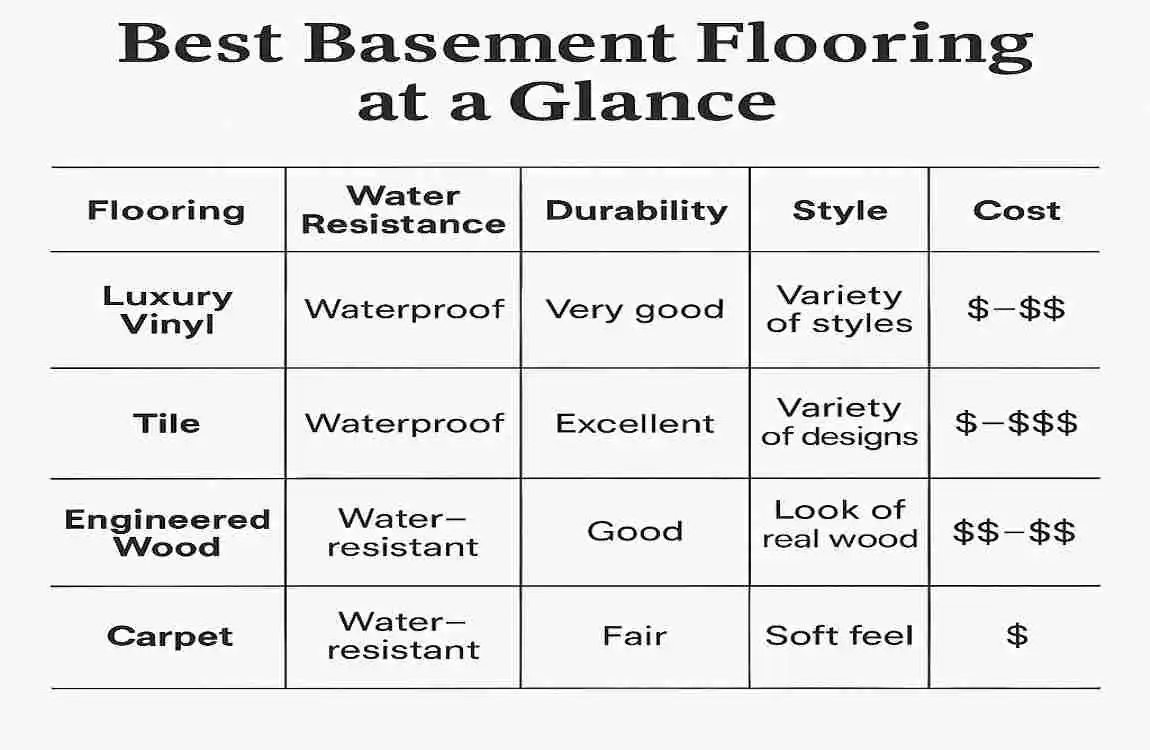
Flooring Type Waterproof Rating Cost/Sq Ft Installation Ease Best Use Case
Luxury Vinyl Plank 100% $2-7 DIY Easy Family rooms
Engineered Tile 100% $3-10 Moderate Wet areas
Epoxy Flooring 100% $3-12 Pro Only Workshops, garages
Rubber Flooring 99% $2-8 DIY Easy Home gyms
Carpet Tiles 90% $4-10 DIY Easy Rec rooms, offices
Polished Concrete 95% $2-6 Pro or DIY Modern, minimalist
Installation Tips for Basement Flooring
Whether you’re tackling the job yourself or hiring a professional, proper preparation is key to a successful installation. Follow these steps:
- Test for Moisture: Use a calcium chloride test kit to measure moisture levels in your subfloor.
- Prepare the Subfloor: Patch cracks and level uneven areas for a smooth surface.
- Use a Vapor Barrier: install a moisture barrier (like a polyethylene sheet) before laying your flooring.
- Follow Manufacturer Guidelines: Each flooring type has specific installation instructions, so be sure to follow them closely.