
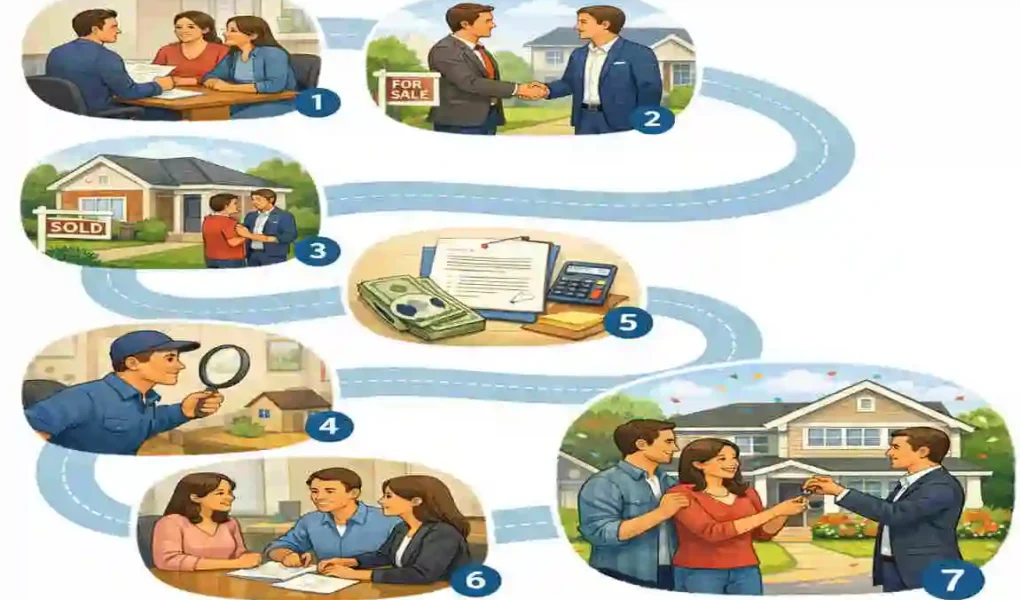
You have spent months scrolling through real estate apps, touring houses that smelled like old carpet, and finally found “the one.” You made an offer, survived the negotiations, and now your life is packed into cardboard boxes. As you sit among stacks of bubble wrap and half-taped cartons, one burning question keeps looping in your mind: When do you get the keys to your house?
It is the ultimate milestone. Those little pieces of metal represent more than just access to a building; they represent your new life, your investment, and the end of a very long journey. However, the timing isn’t always as simple as walking out of a meeting with a keychain in hand. In 2026, the homebuying process has become more streamlined thanks to technology. However, there are still several legal and financial hurdles to jump over before you can officially unlock that front door.
Homebuying Stages Overview: The Road to Your Front Door
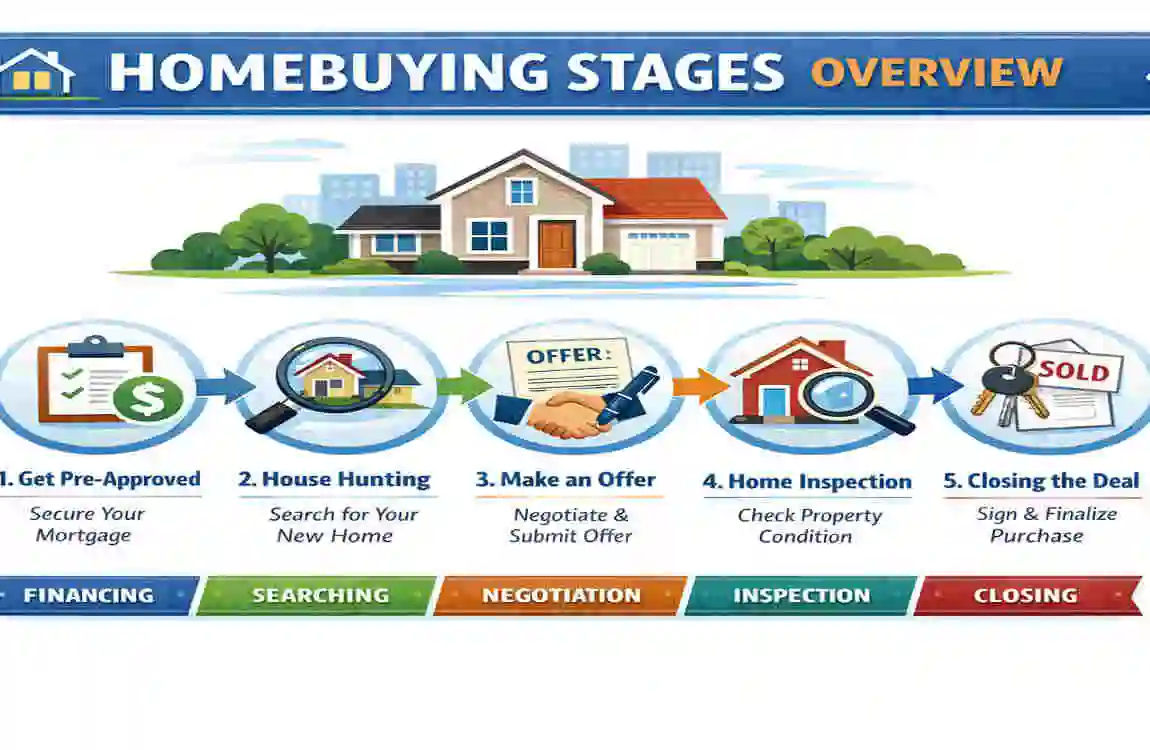
Before we dive into the nitty-gritty of key exchange, you need to see the big picture. Buying a luxury home is not a sprint; it is a marathon with several checkpoints. On average, in today’s market, the process takes about 45 to 60 days from the moment your offer is accepted to the moment you are standing on your new porch.
Understanding these stages answers when you get the keys to your house because each stage acts as a gatekeeper. If one stage stalls, the keys stay in the seller’s pocket a little longer.
The Typical 2026 Homebuying Timeline
To give you a bird’s-eye view, here is a breakdown of the typical journey for a modern homebuyer.
StageTypical DurationKey Milestone
Offer Acceptance: 1–7 Days. Both parties sign the contract.
Inspection & Appraisal 2–3 Weeks. You ensure the house is safe and worth the price.
Loan Underwriting 2–4 Weeks. The bank double-checks your finances.
The Closing Table: 1 Day. You sign a mountain of paperwork.
Funding & Recording 2–24 Hours. The money moves, and the county is notified.
Key Handover: The Big Moment. You finally get the keys!
As you can see, the “Closing” stage is where the magic happens. But don’t let that one-day estimate fool you. There is a lot of “hurry up and wait” involved in those final hours.
Why Does It Take This Long?
You might be wondering why you can’t just hand over a check and get the keys today. The reason is security. The bank wants to make sure the house is a good investment, the government wants to make sure the taxes are handled, and you want to make sure the roof isn’t about to collapse. Each of these steps protects your money and your future home.
Pre-Closing Timeline: Setting the Stage for Success
The weeks leading up to your closing date are often the most nerve-wracking. This is when the “real” work happens. If you want to know when you’ll get the keys to your house, you have to watch these pre-closing milestones closely.
Earnest Money and Safety Nets
Once your offer is accepted, you usually have to put down “earnest money.” Think of this as a deposit that shows the seller you are serious. During this time, you have “contingencies” or safety nets. These are rules that say, “I will buy this house unless the inspection shows it’s haunted or the foundation is cracked.”
If the inspection goes well, you move one step closer to the keys. If issues come up, you might have to spend a week or two negotiating repairs. This is a common spot where timelines get pushed back.
The Mystery of Underwriting
Underwriting is the part of the process where your lender goes through your bank statements with a fine-tooth comb. They want to be 100% sure you can afford the loan. Buyers often ask when you get the keys to your house during underwriting delays because it feels like your life is on hold.
Pro Tip: Do not make any big purchases during this time! Don’t buy a new car or a fancy refrigerator on credit. This can spook your lender and delay your key day by weeks.
The Final Walkthrough: Your Last Check
About 24 to 48 hours before you are scheduled to get the keys, you will do a “final walkthrough.” This is your chance to make sure the seller actually moved out, didn’t take the appliances they promised to leave, and didn’t leave a giant hole in the wall while moving their sofa.
If the house looks good during the walkthrough, you are officially on the stunning home stretch. If there are problems, you might have to delay the closing until they are fixed.
Closing Day Explained: The Day You Get the Keys
This is it. The day you have been dreaming of. But what actually happens on closing day? Is it like the movies where you sign one paper and get a shiny new key? Not exactly, but it is close!
What Actually Happens at the Closing Table?
In 2026, many closings are “hybrid,” meaning you might sign some documents digitally and some in person. You will meet with a closing agent, an escrow officer, or an attorney. You will sign a stack of papers that basically state that you promise to repay the loan and that you understand the terms of your mortgage.
You will also need to provide your “cash to close.” This is usually done via a secure wire transfer. Once the money is sent and the papers are signed, you are almost there.
When Exactly Do You Get the Keys?
This is the part that confuses most people. Just because you signed the papers doesn’t always mean you get the keys that second. It usually depends on two things: Funding and Recording.
- Funding: The lender officially releases the funds to the seller. This can take a few hours after you sign.
- Recording: This is when the local county office records the deed, officially making you the owner of record.
In some states, you get the keys as soon as you finish signing (this is called “wet funding”). In other states, you have to wait until the deed is recorded at the courthouse, which might be the next business day.
Regional Variations and Buyer Types
The timing can also change based on how you are paying for the house.
Buyer Type: Typical Key Handover Time
Cash Buyer Often immediate. Once the wire hits, you get the keys.
Financed Buyer (Mortgage) Usually 2–6 hours after signing, once the bank confirms funding.
Friday Afternoon Buyer Might have to wait until Monday if the bank or courthouse closes early!
Direct Appeal to You: If you are planning your move, try to schedule your closing for a Tuesday or Wednesday morning. This gives you plenty of “daylight” for the bank to fund the loan and the county to record the deed, ensuring you get your keys before the sun goes down!
Post-Closing: What to Do Once You Have the Keys
The moment the agent drops those keys into your palm is magical. But don’t just stand there staring at them! There are a few things you need to do immediately to make your new house a home.
Immediate Steps for New Homeowners
First, change the locks. You have no idea how many copies of those old keys are floating around among neighbours, contractors, or the seller’s former relatives. For your peace of mind, start fresh with new deadbolts or a smart lock system.
Second, check your utilities. Hopefully, you called the electric, water, and gas companies a few days ago to switch the accounts into your name. If not, do it now! You don’t want to spend your first night in your new home in the dark.
Dealing with Common “Key Day” Hiccups
Sometimes, even when you have the keys, things aren’t perfect. Maybe the seller left some junk in the garage, or they forgot to give you the code to the garage door opener.
If you are wondering when you will get the keys to your house, and the seller is asking for an extra day to move out, this is called a “rent-back” or “post-settlement occupancy.” Make sure you have this in writing before closing day, so you aren’t surprised when you show up with a moving truck and find someone else still eating breakfast in your kitchen.
Factors That Can Affect Your Key Timing
Even with the best planning, life happens. Several factors can speed up or slow down the moment you get those keys.
The Type of Loan You Choose
Different loans have different “hoops” to jump through. For example, a VA loan or an FHA loan might have stricter inspection requirements. If the inspector finds a minor issue, it must be fixed before the bank will allow the closing to proceed. This can push your key day back by a week or more.
Seller Readiness
Sometimes the delay isn’t on your end; it’s the seller’s. If their new home isn’t ready, they might drag their feet. Always stay in close contact with your real estate agent to ensure the seller is on track to vacate the property by the agreed-upon date.
The “Weekend Effect”
Banks and government offices usually don’t work on weekends or federal holidays. If you close on a Friday at 4:00 PM, there is a very high chance the bank won’t “fund” the loan until Monday morning. That means you might be staring at your new house through the window all weekend without a way to get inside. When do you get the keys to your house? In this scenario, not until Monday!
Title Issues
Now and then, a “cloud” shows up on the title. This could be an old, unpaid tax bill from three owners ago or a dispute over a fence line. These must be cleared up before the house can officially change hands.
Trends: How Technology is Speeding Up the Keys

We are living in an exciting time for real estate. In 2026, the “digital closing” has become the standard in many areas. This is great news for you because it means less waiting.
Blockchain and Digital Deeds
Some forward-thinking counties are now using blockchain technology to record deeds. Instead of a clerk manually typing in data, the transfer happens almost instantly. This means the gap between “signing” and “getting keys” is shrinking every year.
Remote Online Notarization (RON)
You no longer have to sit in a stuffy office for three hours. With RON, you can sign your closing documents from your laptop while sitting in your current living room. This flexibility makes it much easier to coordinate the timing of your move.
While technology is making things faster, the human element still matters. You still need a great real estate agent and a responsive lender to make sure all the digital gears are turning in the right direction.
Frequently Asked Questions (FAQs)
As you get closer to your closing date, you may have some very specific questions. Here are the most common things buyers ask about getting their keys.
When do you get the keys to your house with a VA loan?
The process for a VA loan is very similar to a conventional loan. Once the loan is funded and recorded, you get the keys. However, because VA loans require a specific “VA Appraisal,” any repairs flagged during that appraisal must be finished before you can close.
Can I get the keys a few days before closing?
Technically, yes, but it is highly discouraged. This is called “early possession.” Most lawyers and real estate agents will tell you not to do this. If you move in and then the loan falls through at the last minute, you are essentially a squatter in the seller’s house. It creates a legal nightmare for everyone.
What if the closing is delayed?
Don’t panic! Closing delays are very common. They occur due to paperwork errors, slow wire transfers, or last-minute credit checks. If your closing is delayed, your agent will work with the seller to reschedule. Just make sure your moving truck company has a flexible cancellation policy!
Do I get the keys from my lawyer or my real estate agent?
Usually, your real estate agent will hand you the keys once they get the “clear to close” and confirmation of recording. Sometimes, the keys are left in a lockbox on the front door, and your agent will give you the code.
What if the seller doesn’t leave on time?
Your contract should specify when the seller must be out. If they are still there when you arrive with your keys, call your agent immediately. You may be entitled to “per diem” payments (a daily fee) for every day they stay past the deadline.
Do I get all the keys at once?
You should receive all front, back, and side door keys, as well as garage door openers and any shed or gate keys. If the seller doesn’t have them all, don’t worry—you should be changing the locks anyway!