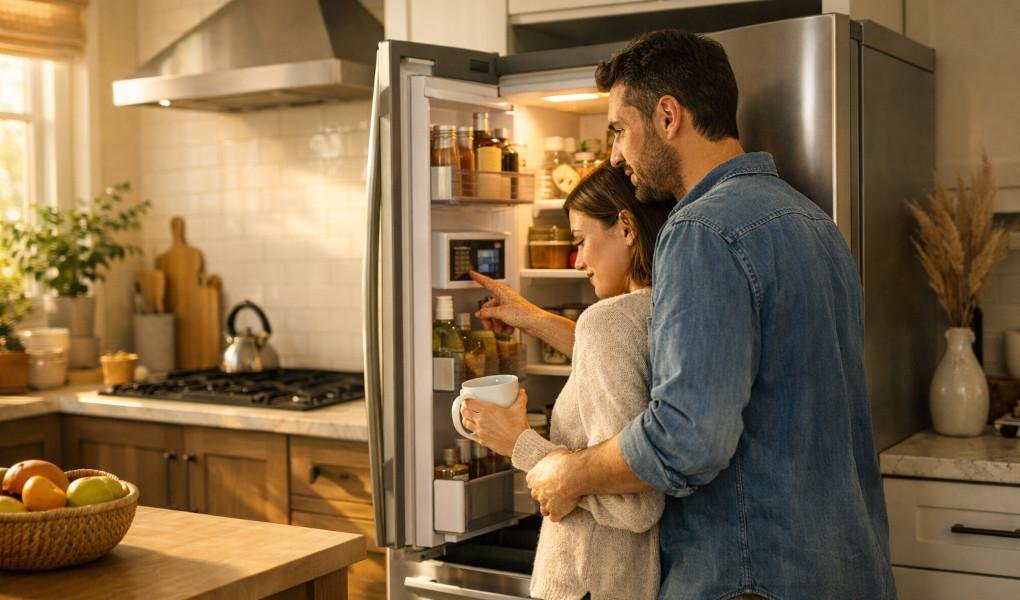
Alt text: A couple stands together in a sunlit modern kitchen, looking into an open stainless steel refrigerator. One person holds a coffee mug while the other points at the temperature display inside, both appearing mildly concerned in the warm morning light.
Key Takeaways
- A refrigerator that stops cooling requires immediate attention to prevent food loss
- Check power, thermostat settings, and airflow before assuming major failure
- Strange noises, leaking water, or heavy frost are early warning signs
- Atlanta’s heat and humidity can accelerate wear on cooling systems
- Electrical, compressor, and refrigerant issues should always be handled by a professional
- Fast action can save you from costly replacement
It can be quite frustrating if you open your refrigerator and notice warm air instead of the usual coolness. In Atlanta, where summer heat pushes appliances to their limits, a broken refrigerator can quickly become an inconvenience. It can mean hundreds of dollars in spoiled groceries and a major disruption to your routine.
A recent article on refrigerator repair highlights how quickly a small appliance issue can escalate into a stressful household situation. The same applies here in Atlanta. Acting quickly makes the difference between a simple repair and a full appliance replacement.
This guide will walk you through what to do when your refrigerator stops working, what you can safely check yourself, and when to call a professional.
Step 1: Do Not Panic, But Act Quickly
The first hour after a refrigerator stops cooling is critical.
If your fridge stops working:
- Keep the doors closed
- Avoid repeatedly checking the temperature
- Move high-value or perishable items to a cooler if needed
A closed refrigerator can keep food cold for about 4 hours. A full freezer can maintain temperature for up to 48 hours if unopened.
Homeowners often lose hundreds of dollars in groceries simply from repeatedly opening the door. Every opening allows cold air to escape, accelerating spoilage.
Step 2: Check These First Before Calling for Refrigerator Repair
Before assuming the worst, run a few basic checks.
1. Confirm Power
- Is the unit plugged in securely?
- Did a breaker trip?
- Is the outlet working?
Atlanta thunderstorms frequently cause brief power surges that can trip breakers or reset outlets.
2. Check the Thermostat Setting
Sometimes the temperature dial is bumped during grocery loading. Make sure it is set between:
- 37 to 40 degrees Fahrenheit for the fridge
- 0 degrees for the freezer
3. Inspect Airflow
Blocked vents restrict cold air movement.
- Do not overload shelves
- Make sure items are not pressed against the rear vents
- Leave space between containers
Atlanta families often pack refrigerators before holidays or gatherings. Overloading is a common cause of cooling issues.
Common Refrigerator Problems in Atlanta Homes
Refrigerator Not Cooling, but Freezer Works
Common causes include:
- Evaporator fan motor failure
- Blocked air damper
- Defrost system problem
If the freezer is cold but the fridge compartment is warm, airflow is likely restricted.
Heavy Frost or Ice Buildup
Ice accumulation on the back freezer wall usually indicates:
- Defrost heater failure
- Defrost thermostat malfunction
- Control board issue
Scraping frost may temporarily improve airflow, but the underlying problem will return without proper repair. However, you should leave electrical testing to a professional when the problem requires it.
Loud Buzzing or Clicking
Unusual noises can signal:
- Failing compressor
- Faulty start relay
- Condenser fan motor issues
If your refrigerator clicks repeatedly but does not start, turn it off and call a professional. Continued attempts can damage the compressor.
Refrigerator Leaking Water
In Atlanta’s humid climate, clogged defrost drain lines are common. Water pooling under the crisper drawers usually points to:
- Blocked drain tube
- Cracked water line
- Ice maker connection issue
Some drain clogs can be cleared safely, but repairs to water lines and ice makers require caution.
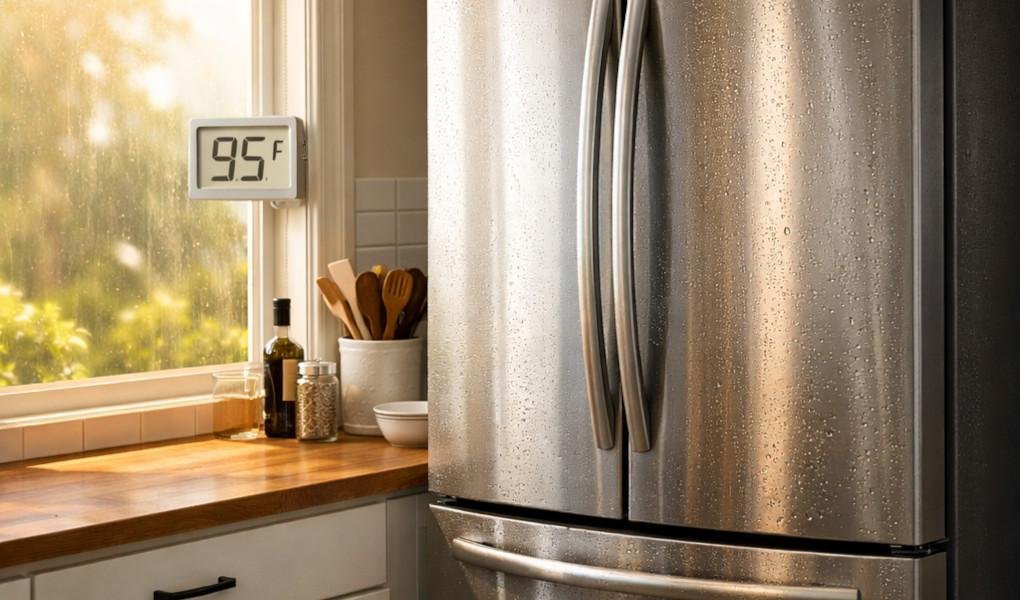
Alt text: Modern refrigerator running in a sunlit Atlanta kitchen during summer heat, highlighting how high temperatures affect refrigerator performance.
How Atlanta’s Climate Affects Refrigerators
Atlanta summers are no joke. High temperatures and humidity force refrigerators to work harder and run longer cycles.
This extra strain can accelerate:
- Compressor wear
- Fan motor fatigue
- Condenser coil overheating
Homes with garages are especially vulnerable. If your refrigerator is located in a non-climate-controlled space, it may struggle even more.
In the Southeast, appliance lifespans are often shorter due to prolonged heat and humidity. That’s why preventive maintenance matters here.
When DIY Is Safe and When It Is Not
Before scheduling professional refrigerator repair in Atlanta, you can safely check a few basic items. Many cooling issues stem from airflow restrictions, thermostat adjustments, or simple maintenance concerns.
Safe DIY Steps
- Cleaning condenser coils
- Checking door seals
- Adjusting thermostat settings
- Confirming breaker and outlet function
Do NOT Attempt DIY If It Involves
- Refrigerant handling
- Compressor replacement
- Electrical component testing
- Sealed system repair
Refrigerant systems operate under pressure. Mishandling can cause injury and permanent damage to the appliance. Electrical components also carry shock risks.
If troubleshooting does not resolve the issue, scheduling professional refrigerator repair in Atlanta ensures the problem is diagnosed safely and accurately.
What to Expect During a Refrigerator Repair Service Visit
When you schedule a refrigerator repair, here is what typically happens:
- Diagnostic evaluation
- Temperature testing
- Electrical component inspection
- Airflow and defrost system check
- Clear repair estimate
Most common refrigerator repairs in Atlanta can be completed the same day, provided parts are available.
Common repair costs depend on:
- Type of failure
- Brand and model
- Age of appliance
- Part availability
In many cases, repairing a refrigerator under 10 years old is significantly more cost-effective than replacing it.
Repair or Replace: How to Decide
A general rule many technicians follow:
- If the repair cost is less than 50 percent of the replacement cost, the repair is usually worth it
- If the unit is over 12 to 15 years old and needs a major component, replacement may make more sense
Every situation depends on age, condition, and repair cost.
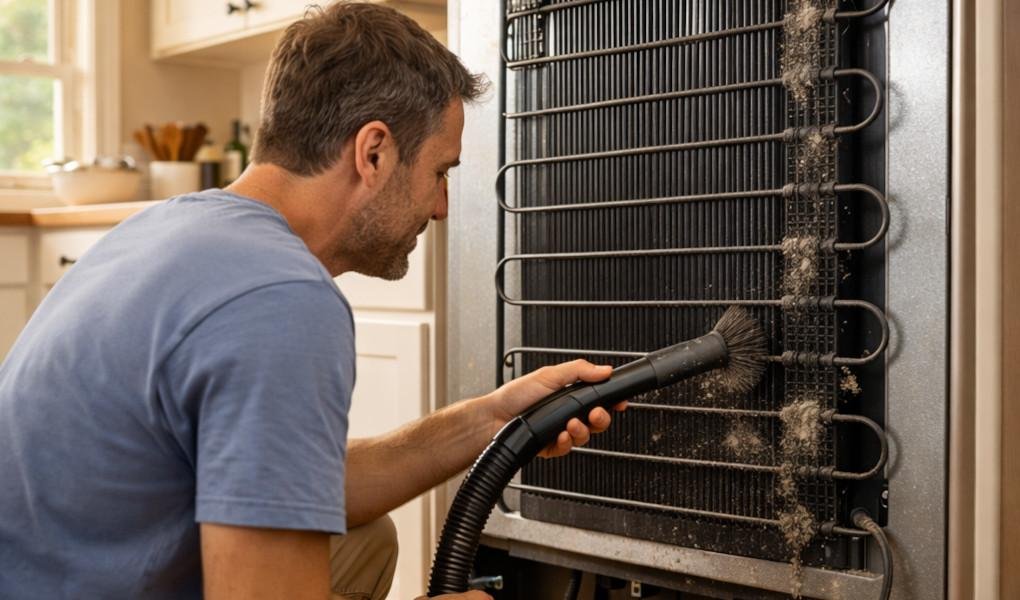
Alt text: Homeowner cleaning refrigerator condenser coils in an Atlanta kitchen to prevent cooling problems and extend appliance lifespan.
How to Prevent Refrigerator Problems in Atlanta
Preventive maintenance is the most overlooked part of appliance ownership.
Clean Condenser Coils Twice Per Year
Dust buildup causes overheating and strain on the compressor.
Check Door Gaskets
Close the door on a dollar bill. If it slides out easily, the seal may need replacement.
Avoid Overloading
Cold air must circulate freely.
Schedule Routine Service
A professional inspection every few years can catch small issues before they escalate.
The Cost of Waiting Too Long
Delaying repair often leads to:
- Higher utility bills
- Food spoilage
- Secondary component damage
- Complete compressor failure
Small appliance issues rarely fix themselves. The earlier you act, the more you save.
In Atlanta’s climate, that timeline is even shorter during the summer months.
Emergency Refrigerator Situations
Call for immediate service if:
- The unit smells like burning
- The breaker repeatedly trips
- There is visible sparking
- The compressor is extremely hot
- Refrigerant odor is present
These situations carry safety risks and should not be ignored.
Frequently Asked Questions
How long can food stay safe if my refrigerator stops working?
Food typically stays safe for about 4 hours if the door remains closed. A full freezer can hold temperature for up to 48 hours.
Why is my freezer cold but my fridge is warm?
This usually indicates an airflow problem, evaporator fan issue, or defrost system failure.
Is it worth repairing a 10-year-old refrigerator?
Often yes, especially if the repair cost is less than half the price of replacement and the issue is not compressor-related.
Why does my refrigerator keep running constantly?
Dirty condenser coils, poor door seals, or high ambient temperatures in Atlanta can cause constant cycling.
Can I fix a refrigerant leak myself?
No. Refrigerant repairs require specialized tools, EPA certification, and professional training. Attempting this yourself is unsafe and illegal without proper certification.
Final Thoughts: Protecting Your Kitchen Investment
Your refrigerator is one of the hardest-working appliances in your home, especially in Atlanta’s climate. When it stops working, fast action is critical.
Start with safe basic checks. Keep doors closed. Do not attempt any risky electrical or sealed-system repairs. And if the issue goes beyond simple troubleshooting, contact a trusted local professional.
Timely repairs not only protect your groceries but also extend your appliance’s lifespan and reduce long-term costs.
If your refrigerator is not cooling or showing warning signs, scheduling professional service promptly can prevent food loss and further damage.