
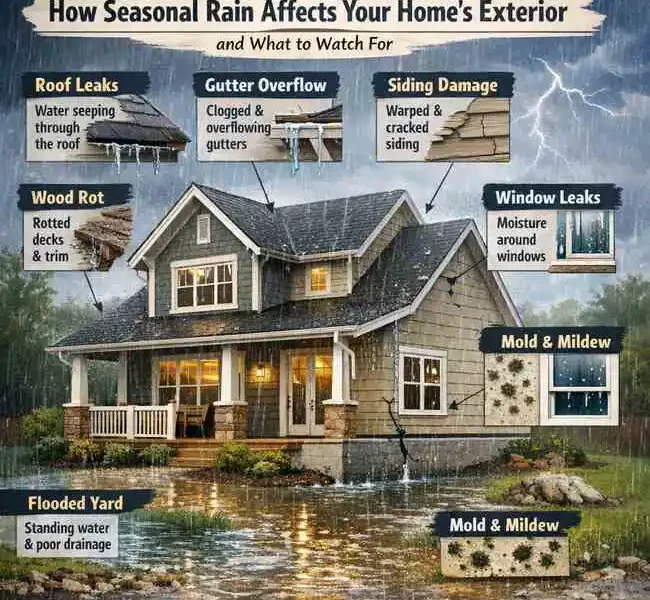
Seasonal rain plays an important role in keeping landscapes green and outdoor spaces fresh, but it can also quietly damage a home’s exterior over time. Continuous exposure to moisture encourages dirt buildup, algae growth, and staining on outdoor surfaces that many homeowners fail to notice until problems become difficult to remove.
Understanding how rainfall impacts siding, patios, and walkways allows homeowners to take preventive maintenance steps before small issues turn into costly repairs or safety concerns.
Moisture Buildup on Siding and Exterior Walls
Rainwater regularly hitting exterior walls leaves behind moisture that combines with dust, pollen, and airborne debris. In shaded or poorly ventilated areas, this dampness often leads to algae, mildew, or mold buildup on siding.
These dark streaks or green patches not only make homes appear older and poorly maintained, but they can also slowly wear down surface materials if ignored. Homes surrounded by trees or those with limited sunlight exposure are particularly vulnerable because surfaces stay wet longer after rainfall.
Regular inspections help homeowners notice these early warning signs before staining becomes permanent.
Patios and Walkways Become Slippery Over Time
Another common issue caused by seasonal rain is the buildup of slippery residue on patios, driveways, and walkways. Moisture allows algae and moss to grow on concrete, stone, and brick surfaces, especially in shaded locations.
This buildup creates two major problems. First, it reduces curb appeal, making outdoor spaces look neglected. Second, slippery surfaces increase the risk of falls for residents and visitors, particularly during wet weather.
Because these surfaces are used daily, keeping them clean and safe should be part of regular home maintenance.
Hidden Areas Homeowners Often Miss
Many homeowners focus on visible spaces but overlook areas where rainwater collects unnoticed. Some commonly missed spots include:
- Side paths that receive little sunlight
- Areas beneath roof overhangs
- Sections behind shrubs or landscaping
- Corners where drainage is poor
- Spaces near gutters and downspouts
Moisture tends to remain longer in these locations, allowing grime and organic buildup to grow faster. Over time, these neglected areas contribute to an overall worn appearance of the property.
Maintenance Steps That Prevent Surface Damage
Fortunately, preventing rain-related buildup usually requires simple maintenance steps rather than expensive repairs. Homeowners often take measures such as improving drainage, trimming vegetation to allow more sunlight, and regularly cleaning outdoor surfaces.
Professional cleaning is also commonly used to remove buildup safely and quickly. Some homeowners schedule services like Warren exterior house washing to remove algae, dirt, and stains before surfaces become slippery or permanently discolored.
Combined with routine inspections and seasonal cleaning, these steps help protect both appearance and surface durability.
Protecting Your Home Through Seasonal Maintenance
Rain is unavoidable, but the problems it causes do not have to be. Regular exterior maintenance helps homeowners protect siding, patios, and walkways while keeping properties looking clean and welcoming year-round.
By watching for early signs of buildup and addressing them quickly, homeowners can prevent long-term surface wear and maintain both the safety and value of their property. Small seasonal efforts go a long way in keeping home exteriors in excellent condition.