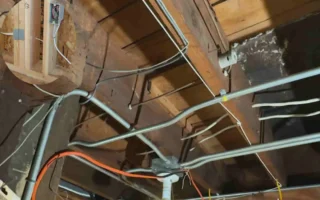

When it comes to maintaining or upgrading your home, one question that frequently arises is, “How much does it cost to wire a 4-bedroom house?” Whether you’re building a new home, upgrading old wiring, or considering a complete rewire, understanding the costs involved can help you budget effectively and avoid surprises.
A 4-bedroom house is a common size for families, and rewiring such a property can be a significant investment. Homeowners are often motivated by safety concerns, modern electrical needs (like EV chargers or smart home features), or increasing property value.
What “Wiring a 4-Bedroom House” Actually Means
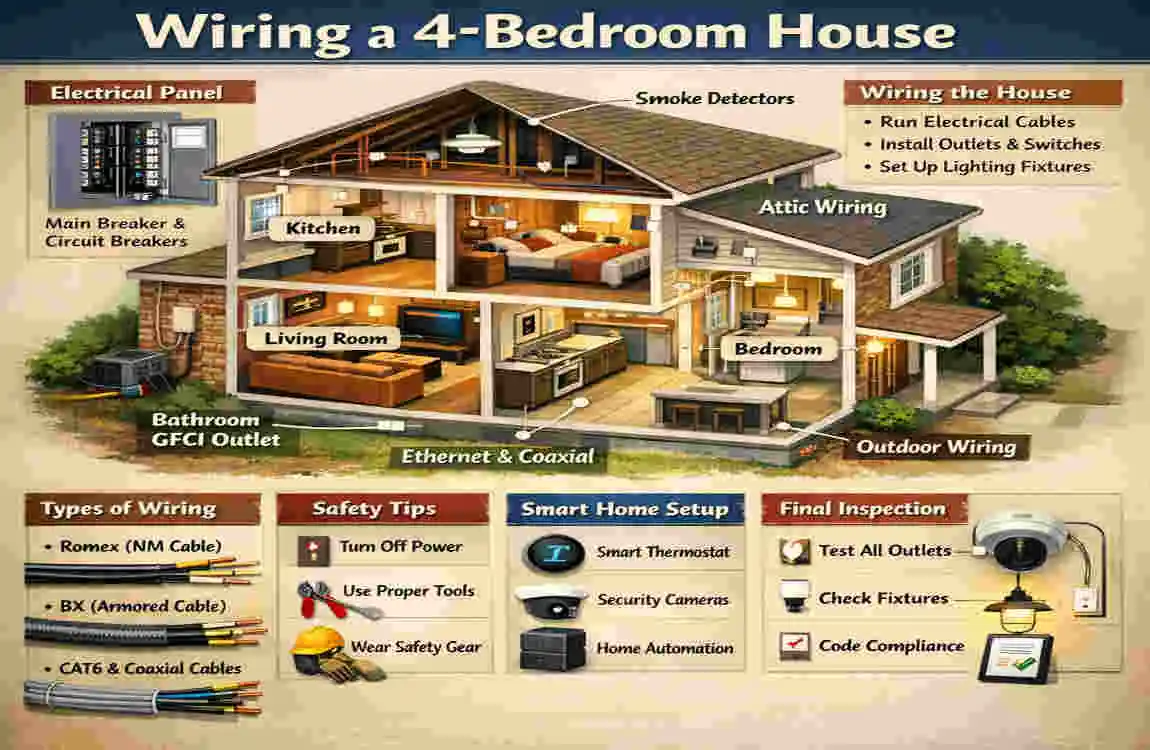
Wiring a house involves far more than simply running cables. It’s a detailed process that ensures every part of your home has safe and functional electrical access. There are two primary scenarios to consider:
New Build Wiring
For a new house, wiring typically begins during the construction phase when the walls are framed but not yet finished. Electricians install cables, sockets, switches, and the consumer unit (fuse box) from scratch. This is generally more straightforward than rewiring because there’s no need to remove old cables or navigate around existing structures.
Full Rewire or Partial Upgrade
In an existing home, rewiring involves replacing outdated or unsafe wiring and installing new circuits that meet modern standards. Partial upgrades involve adding sockets, upgrading the consumer unit, or installing new circuits for specific areas, such as kitchens or EV chargers.
Key Components of Electrical Wiring
Whether it’s a new build or a rewire, the following components are standard in a domestic wiring job:
- Main Cable: Connects the property to the power grid via the consumer unit.
- Ring Circuits: Provide power to sockets in each room.
- Radial Circuits: Power lighting and fixed appliances.
- Dedicated Circuits: For high-demand areas such as kitchens, bathrooms, or EV charging stations.
Why Standards Matter
In the UK, wiring must comply with BS 7671, the British Standard for electrical safety. Similarly, in the US, the National Electrical Code (NEC) governs installations. Adhering to these standards is not only essential for safety but also impacts cost since higher standards often mean higher-quality materials and labour.
Average Cost to Wire or Rewire a 4-Bedroom House
The cost of wiring a 4-bedroom house can vary significantly depending on factors such as location, house condition, and job complexity. Below is an approximate breakdown for the UK and the US.
Table: Average Wiring Costs
ScenarioSize/TypeApprox. Cost Range Notes
Full Rewire (UK) 4-bed detached/semi-detached £6,000–£9,500+ Higher for older homes or Premium features.
High-End Rewire (UK) 4-bed with modern extras £8,500–£12,000+ Includes EV chargers, smart lighting, etc.
New Build Wiring (UK) 4-bed new construction £5,000–£8,000. Typically cheaper than rewiring.
New Wiring (US) 4-bed (2,000 sq ft) $8,000–$18,000+ Based on $4–$9 per sq ft.
Rewire (US) 4-bed older home (2,000 sq ft) $10,000–$22,500 More complex due to existing structures.
Typical UK Cost Ranges for a 4-Bedroom House
For a full rewire in the UK, costs typically range between £6,000 and £9,500. Larger homes or properties with additional features, such as EV chargers or smart home systems, may see costs rise to £12,000+. Vacant homes tend to be cheaper to rewire, as electricians can work more efficiently without furniture or residents in the way.
US-Style Costs Per Square Foot
In the US, electricians often calculate costs based on square footage. For a 4-bedroom house of around 2,000 square feet, wiring costs typically range from $8,000 to $18,000, with higher prices for rewiring older homes.
Key Factors That Affect Wiring Cost
Several factors influence the cost of wiring or rewiring a 4-bedroom house. Let’s break down the most significant ones.
Size, Layout, and Accessibility
Larger homes with more rooms require additional circuits and cabling. Complex layouts, high ceilings, and thick walls can increase labour time and material costs.
Age and Condition of the House
Older homes often have outdated wiring, such as knob-and-tube or aluminium wiring, which not only requires replacement but also careful removal. Hidden issues like asbestos or damaged insulation can further raise costs.
Rewire vs Partial Upgrade
- Full Rewire: Replacing all circuits, installing a new consumer unit, and ensuring the entire system complies with regulations. A full rewire is more expensive upfront but offers long-term safety and reliability.
- Partial Upgrade: Adding circuits or replacing specific elements like sockets or light fittings. This is cheaper but may not address underlying issues in older wiring systems.
Property Type
Detached homes usually cost more to wire due to their size and the number of circuits required. Terraced or older properties may pose challenges like limited loft space, shared walls, or difficult access points.
Extras and Modern Features
Popular add-ons that increase costs include:
- EV Chargers: Installation costs range from £800 to £1,500+ in the UK.
- Smart Home Wiring: Structured cabling for smart lighting, thermostats, and speakers.
- Security Systems: Additional circuits for CCTV, alarms, and outdoor lighting.
Breaking Down the Wiring Cost: Labour vs Materials
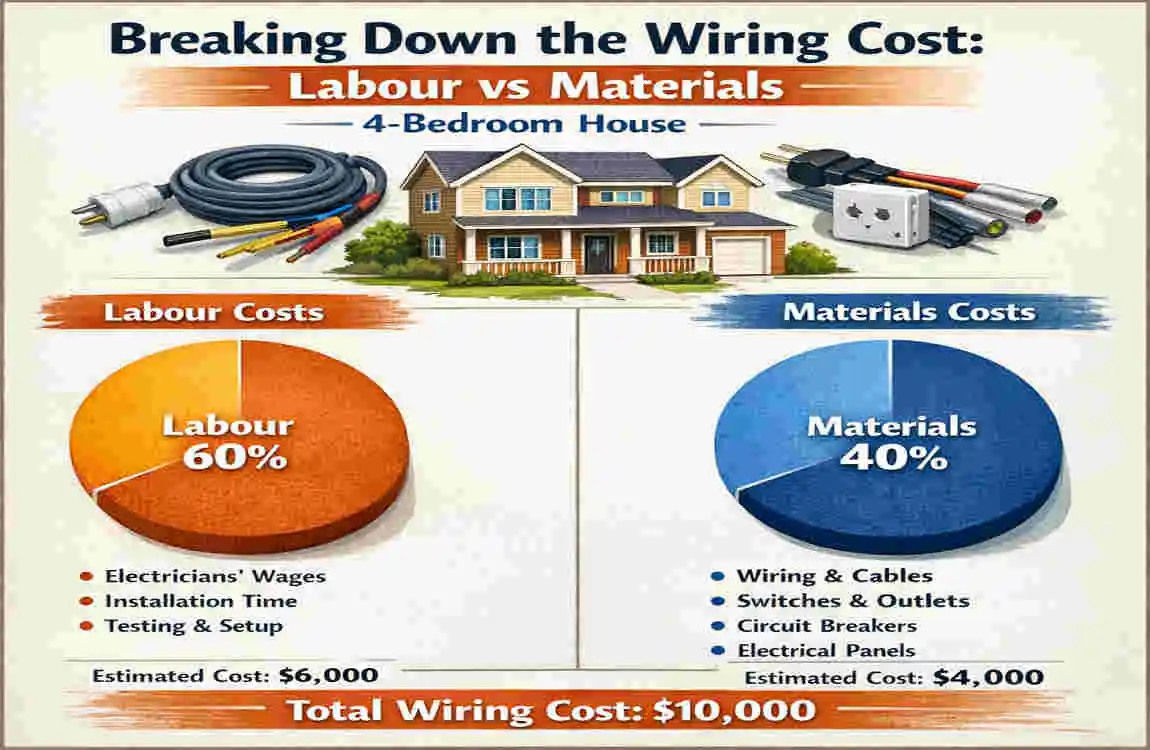
Wiring costs can be divided into two main categories: labour and materials.
Labour Costs
Electricians typically charge by the project or day. In the UK, labour for a full rewire can range from £3,000 to £6,000+, depending on the project’s complexity. In the US, labour costs often account for 50–60% of total costs.
Material Costs
Common materials include:
- PVC-insulated cable for circuits.
- Consumer units, switches, sockets, and light fittings.
- Conduits or trunking for cable protection.
Material costs for rewiring a 4-bedroom house in the UK generally range from £1,500 to £4,000+, depending on the specifications.
Testing and Certification
After installation, electricians perform safety tests and issue an Electrical Installation Certificate (EIC). This is essential for future sales, insurance, and regulatory compliance.
When Should You Rewire a 4-Bedroom House?
It’s not always necessary to rewire your entire house. However, certain situations call for a full rewire:
Warning Signs
- Flickering lights or warm sockets.
- Frequent circuit breaker trips.
- Outdated wiring materials like cloth-sheathed cables.
Major Renovations
If you’re remodeling your kitchen, adding an extension, or upgrading your bathroom, it’s often more cost-effective to rewire the property at the same time.
Buying or Selling
Modern wiring with a recent EIC can boost your home’s value and appeal to potential buyers or tenants.
How to Estimate Your Personal Wiring Cost
Square Foot or Per-Room Estimates
In the US, use the benchmark of $4–$9 per square foot. For a UK estimate, start with £6,000–£9,500+ for a 4-bedroom house.
Getting Local Quotes
To get the most accurate estimate, request quotes from at least three local electricians. Ensure each quote includes a detailed breakdown of labour, materials, and testing.
How to Choose the Right Electrician
Qualifications
Hire registered electricians who are members of organisations like NICEIC (UK) or licensed contractors (US). Request proof of insurance and certification.
Questions to Ask
- How long have you been rewiring 4-bedroom homes?
- Will you issue a compliance certificate?
- What measures will you take to minimise disruption?
FAQs on Wiring Costs
- Q: How much does it cost to rewire a 4-bedroom house in the UK?
- Most fall between £6,000 and £9,500, with larger or high-spec homes costing more.
- Q: Can I save money by rewiring only certain rooms?
- Yes, but it may not address old wiring issues throughout the house.