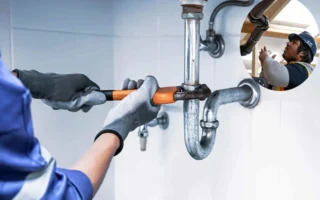

Picture this familiar scenario. You are finishing up the evening dishes after a lovely family dinner. You open the cabinet beneath your kitchen sink to put away the dish soap, and your hand brushes against something cold and wet. You look down, and your heart sinks. A growing puddle of water is ruining the bottom of your wooden cabinet, and a steady drip is coming from the maze of pipes above.
If you own a home, you know this feeling all too well. Kitchen sink plumbing issues like unexpected leaks, stubborn clogs, and outdated, rusty pipes are some of the most common headaches homeowners face today. The kitchen is the beating heart of your home, and the sink is its most utilized feature. When it stops working, your entire daily routine comes to a grinding halt.
Suddenly, you are faced with a very important question: how much does it cost to replumb a kitchen sink?
Understanding these costs is absolutely vital for managing your home repair budget. Plumbing surprises can easily derail your finances if you are not prepared. By knowing what to expect in the current 2026 market, you can make smart, informed decisions without falling victim to overpriced emergency services.
When to Replumb Your Kitchen Sink
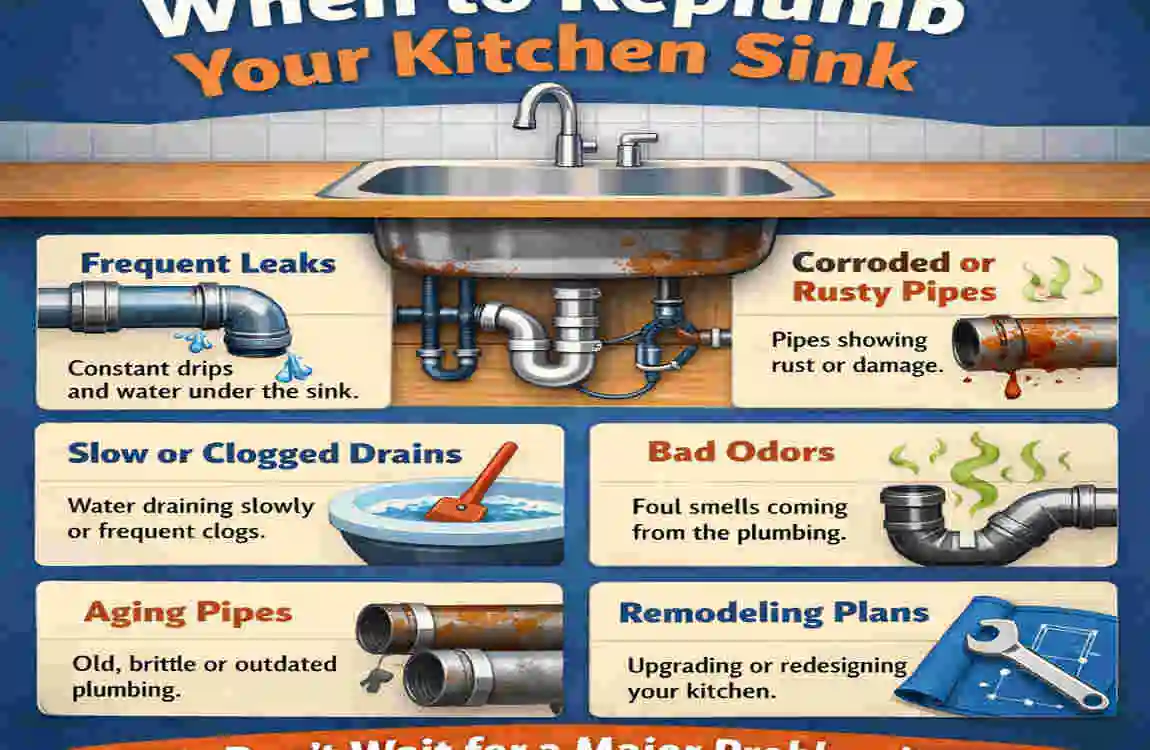
How do you know when a simple wrench tightening is enough, and when you need to tear out and replace your pipes completely? It is not always obvious. Sometimes, the signs creep up on you slowly.
You need to pay close attention to what your sink is telling you. If you notice persistent leaks that keep coming back even after you fix them, you have a problem. If your water pressure suddenly drops to a sad trickle, or if you are constantly battling frequent clogs that no amount of liquid drain cleaner can fix, your pipes are likely failing from the inside out. Furthermore, if you see visible rust on the outside of your pipes or if your tap water has a strange, metallic discoloration, it is time to act immediately.
Full Replacement Versus Partial Fixes
You have a couple of different paths you can take depending on your situation. Sometimes, you only need a partial fix. If your drain trap (the U-shaped pipe under the sink) is the only thing leaking, you can easily replace that single piece.
However, a full replumb is a different story. If you are doing a massive kitchen remodel, installing a brand-new, deep farmhouse sink, or moving your sink entirely, you will need a full replacement. You must also consider a full replumb if your home still has ancient galvanized steel pipes that are rusting away. It is always better to replace everything while the walls and cabinets are already open during a remodel.
The Hidden Dangers of Ignoring the Problem
Please do not ignore a leaking sink, even if it is just a tiny drip. Small leaks create massive safety risks in your home.
Water damage silently rots away your wooden cabinets, your floorboards, and the structural joists of your house. Worse yet, trapped moisture in dark, warm cabinets creates the perfect breeding ground for toxic black mold. Mold can cause severe respiratory issues for your family and pets. Fixing your plumbing is not just about convenience; it is about protecting your household’s health and safety.
Average Costs Breakdown
Let us get straight to the numbers. You want to know how much it costs to replumb a kitchen sink right now, in 2026. Because of recent changes in material manufacturing and localized labor rates, pricing has shifted slightly over the past few years.
Currently, the national average to completely replumb a kitchen sink ranges from $500 to $1,500. However, your specific situation will dictate where you land on that spectrum.
If you are doing a basic replumb—meaning you are only replacing the accessible water supply lines and the drain pipes directly under the cabinet—you can expect to pay between $300 and $800.
If your project includes installing a brand-new, high-end faucet, a new sink basin, and a new garbage disposal alongside the fresh pipes, your costs will range from $700 to $1,500.
Finally, if you have a complex job that requires the plumber to cut into your drywall to move the main water lines or reroute the main drain, you are looking at a Premium cost of $1,200 to $2,500 or more.
Quick Cost Reference Guide
To help you visualize these numbers, take a look at this simple breakdown table:
Job Type: Low-End Cost, Average Cost, High-End Cost
Pipe Replacement Only $300 $500 $800
Full Sink Replumb (with fixtures) $700 $1,250 $2,500
Emergency Call-Out $150 $275 $500
Understanding the Labor to Material Ratio
When you look at your final plumbing bill, you might be surprised to see how the costs are divided. In the plumbing world, materials are usually the cheap part.
You are mostly paying for the plumber’s expertise, time, and specialized tools. Typically, labor accounts for 50% to 70% of your total bill. The physical pipes, connectors, and glue account for only 30% to 50% of the total. This is why an emergency plumber who comes to your house at two in the morning on a Sunday will cost significantly more than a plumber scheduled for a typical Tuesday afternoon.
Cost Factors Affecting Your Bill
Why does your neighbor pay $400 for a plumbing job while you get quoted $1,200 for what seems like the same thing? Plumbing is highly customized, and several major factors influence your final price tag. Let us break down the main culprits that dictate your costs.
Pipe Material Changes Everything
The physical material you choose for your pipes heavily influences your total cost.
For instance, modern plumbers love using PEX (cross-linked polyethylene). It is a flexible, highly durable plastic tubing that is incredibly easy to work with. PEX is very affordable, usually costing between $0.40 and $1.00 per linear foot.
On the other hand, traditional copper piping is much more expensive. Copper requires specialized welding tools and significantly more time to install. Copper materials will run you anywhere from $2.00 to $5.00 per linear foot. If you demand copper pipes, your bill will automatically be higher.
Location and Access Challenges
Plumbers charge by the hour. Therefore, if they have to spend two hours just trying to reach your pipes, you will pay for that time.
If your pipes are easily accessible right under an open sink cabinet, the job will be fast and cheap. However, if the plumber needs to tear down your drywall, remove your custom kitchen island, or crawl into a tight, spider-filled crawlspace under your floor to reroute the main lines, the difficulty level skyrockets. Moving pipes or opening walls can easily add $500 or more to your final bill.
The Age and Size of Your Home
Older homes carry hidden surprises. If your house was built before the 1980s, you might still have outdated galvanized steel pipes hidden in your walls.
When a plumber tries to connect a modern plastic pipe to a rusty, sixty-year-old steel pipe, the old pipe often crumbles or cracks. What started as a simple under-sink job suddenly becomes a massive project to replace rotting pipes deep inside your walls. Older homes need more delicate, time-consuming work, which drives up the price.
Local Labor Rates
Where you live matters just as much as what you are fixing; plumbers in busy, high-cost-of-living metropolitan areas charge significantly more than plumbers in quiet, rural towns.
Depending on your region, professional plumbing labor rates range from $75 to $150 per hour. If you live in a dense city with high taxes and heavy traffic, expect to pay on the higher end of that scale.
Unexpected Extras and Fees
Finally, do not forget about the extra fees that sneak onto your bill.
If you are changing the layout of your kitchen, your local city government will likely require a building permit to ensure the plumbing is up to code. Permits generally cost between $50 and $200. Additionally, if the plumber has to haul away a heavy, rusted cast-iron sink or a broken garbage disposal, they will charge you a disposal fee for taking it to the local dump.
DIY vs. Professional Replumbing
When you see a quote for $800 to fix the pipes under your sink, your first instinct might be to rush to the local hardware store, buy a wrench, and do it yourself. But is that really a smart idea?
You need to carefully weigh the pros and cons of tackling this job on your own. Let us look at how the do-it-yourself route compares to hiring a licensed professional.
Comparing Your Options
AspectDIY ApproachProfessional Service
Total Cost $100–$400 (paying for materials only) $500–$2,000 (paying for full service and labor)
Time Commitment 4 to 8 hours (plus multiple trips to the hardware store) 2 to 4 hours (fast and efficient)
Potential Risks: Voiding product warranties, severe water damage, and failing local building codes. None. You get licensed, insured, and guaranteed work.
When You Should Try It Yourself
If you are handy and enjoy weekend projects, you can absolutely handle minor plumbing tasks.
If you need to swap out the plastic P-trap (the curved pipe that catches debris under the drain) or replace the braided metal water supply hoses that connect to your faucet, you can do it yourself for under $50. These are simple, screw-on tasks that do not require welding or cutting into walls.
When You Must Call a Professional
However, you must know your limits. If you need to cut out old copper pipes, install new shut-off valves, move the drain line to a different wall, or tie a new garbage disposal into your dishwasher line, you should call a professional.
If you make a mistake during major plumbing work, the consequences are catastrophic. A poorly sealed pipe can burst while you are at work, flooding your entire kitchen and causing tens of thousands of dollars in water damage. Furthermore, amateur work often violates local building codes, making it incredibly difficult to sell your house in the future.
For complex jobs, paying a professional is a way to gain peace of mind and insurance.
Material Options for Kitchen Sink Plumbing
If you decide to hire a plumber, they will likely ask you what kind of pipes you want to use. You do not need to be a chemical engineer to understand your options. Let us look at the three most common materials used for kitchen plumbing today, utilizing everyday language.
The Modern Marvel: PEX
As mentioned earlier, PEX stands for cross-linked polyethylene. Think of it as a heavy-duty, highly flexible plastic hose.
PEX is the reigning champion of modern plumbing. Because it is flexible, plumbers can bend it around corners inside your walls without having to cut and glue multiple joint pieces. It expands slightly, making it highly resistant to bursting if your pipes ever freeze in the winter. Best of all, it does not corrode or rust. It is affordable, fast to install, and lasts for 50 years.
The Budget Option: CPVC
CPVC (chlorinated polyvinyl chloride) is a rigid, cream-colored plastic pipe. It is the tougher, heat-resistant cousin of the standard white PVC pipes you often see used for lawn sprinklers.
CPVC is very cheap and easy to cut. Plumbers connect it using a special, strong-smelling glue that melts the plastic pieces together. While it is a great budget option, it is entirely rigid. This means installing it requires more time because the plumber has to carefully measure and glue elbow joints to get the pipe to turn corners. Over the decades, CPVC can also become brittle.
The Classic Heavyweight: Copper
Copper has been the gold standard in plumbing for nearly a century. It is a sturdy, reddish-brown metal that looks great and performs beautifully.
Copper is naturally antibacterial, incredibly durable, and can handle extreme heat without warping. It easily lasts 70 to 100 years. However, copper is very expensive. Installing it requires a plumber to use a blowtorch to solder and melt metal joints, which takes extreme skill and time. Today, copper is mostly used for exposed pipes where you want things to look visually appealing, or in historical homes trying to maintain original materials.
Step-by-Step Replumbing Process
Are you curious about what actually happens when someone replumbs a sink? Whether you are attempting a minor repair yourself or want to understand what you are paying the plumber to do, knowing the process removes the mystery.
Here is the straightforward, step-by-step journey of bringing a kitchen sink back to life.
Shut Off the Water and Clear the Area
This is the most crucial step of all. Before anyone touches a wrench, you must turn off the water supply. Usually, there are two small oval-shaped knobs under the sink—one for hot water and one for cold. Turn them clockwise until they stop. If those valves are broken, you must turn off the main water valve for the entire house.
Once the water is off, open the faucet to let the remaining water drain out. Then, empty the cabinet under the sink. Pull out all the cleaning supplies, sponges, and trash cans. The plumber needs a wide-open workspace.
Remove the Old Pipes and Fittings
Next, it is time for demolition. Using an adjustable wrench or channel-lock pliers, carefully unscrew the nuts holding the plastic drain pipes together. You will want to keep a small bucket and a few old towels directly underneath, because a splash of gross, murky water will inevitably spill out of the old traps.
The old supply lines are detached from the shut-off valves, and the garbage disposal is carefully unhooked and lowered out of the way.
install the New Pipes
With a clean slate, the new plumbing goes in. If you are using flexible PEX tubing, the plumber will measure the distance from the wall valves to the faucet, cut the tubing to size, and use a specialized crimping tool to lock the brass fittings onto the ends.
If they are working on the drain side, they will cut new pieces of PVC pipe, dry-fit them together to ensure the angles are correct, and then secure them tightly. They ensure everything slopes gently downward so gravity can carry the wastewater away efficiently.
Reconnect the Sink, Faucet, and Disposal
Now, the puzzle pieces come together. The new water supply lines are screwed securely onto the bottom of the kitchen faucet. The drain pipe is reconnected to the bottom of the sink basin. If you have a garbage disposal, it is locked back into its mounting ring, and the dishwasher drain hose is clamped securely to the disposal.
Test for Leaks and Insulate
The final step is the moment of truth. You slowly turn the water supply valves back on and watch carefully. You turn on the faucet, let the water run for a few minutes, and run your dry hand along every single new joint and connection.
If your hand comes away perfectly dry, the job is a success! Finally, if your kitchen sink is located against an uninsulated exterior wall in a freezing climate, the plumber might wrap the new water lines in foam insulation tubes to protect them from winter freezes.
Always ensure this entire process complies strictly with your local municipal building codes.
Savings Tips for Homeowners

Plumbing work is never cheap, but you do not have to empty your savings account to get a leak fixed. If you are smart about how you hire and manage the project, you can easily shave 20% to 30% off your final bill.
Here are some highly effective strategies to keep your money in your pocket.
- Always Get Three or More Quotes: Never accept the very first estimate you receive. Call at least three highly rated local plumbers, explain your exact situation, and ask for a detailed, written quote. You will be shocked at how wildly prices can vary from one company to the next. Use the lowest quote to negotiate with the plumber you actually want to hire.
- Bundle Your Projects Together: Remember how we talked about labor costs? Every time a plumber drives to your house, they charge a “trip fee” or a minimum hourly rate. If you know your kitchen sink needs work, take a walk around your house. Do you have a running toilet upstairs? A dripping showerhead in the guest bathroom? Have the plumber fix all of them in one single visit. You will save a massive amount on trip fees.
- Schedule During Off-Peak Hours: Plumbers charge outrageous Premium rates for nights, weekends, and holidays. Unless water is actively spraying violently across your kitchen and flooding your house, turn off the water valves beneath the sink and wait. Schedule the repair for a standard Tuesday morning.
- Clear the Area Yourself: Time is money. Do not pay a master plumber $150 an hour to move your boxes of dish soap and scrub brushes out of the cabinet. Clear the workspace completely before they arrive so they can get straight to work.
- Look for Energy-Efficient Upgrades and Rebates: If you are doing a full replumb and replacing your fixtures, ask about water-saving faucets or high-efficiency dishwashers. In 2026, many local utility companies and state governments will offer cash rebates or tax credits for installing environmentally friendly, low-flow plumbing fixtures.
FAQs: Kitchen Sink Replumbing Costs
When facing a plumbing project, you likely have a dozen questions swirling in your head. Let us answer some of the most common questions homeowners ask when planning this type of repair.
How long does it actually take to replumb a kitchen sink?
If you hire a professional, a standard replacement of the pipes immediately under the sink usually takes between 2 and 4 hours. However, if they need to open up your walls, reroute pipes, or replace the sink basin, the project can take 6 to 8 hours, tying up your kitchen for the entire day.
Do I really need to get a building permit for this?
It heavily depends on the scope of the work. If you are swapping out a broken drain pipe or replacing an old faucet, you generally do not need a permit. However, if you are moving the plumbing to a different wall, changing the main drain lines, or doing a full kitchen remodel, most city governments will absolutely require a permit and a final inspection. Always call your local code office to double-check.
What kind of warranty should I expect on this work?
A reputable, licensed plumber will always guarantee their work. You should expect at least a one-year warranty on the physical labor, meaning if a joint they glued starts leaking six months later, they will return and fix it for free. The materials themselves (such as the faucet or PEX pipes) usually carry separate manufacturer warranties that last 5 to 25 years.
Can I use chemical drain cleaners instead of replacing my pipes?
Chemical drain cleaners are a temporary bandage, not a cure. In fact, if you have older metal pipes, pouring harsh, corrosive chemicals down your sink can actually eat away at the metal, causing severe leaks and forcing you to replace the pipes much sooner. If you have chronic clogs, it is safer to have a plumber snake the drain or replace the corroded section.
Will my homeowners’ insurance cover the cost of replumbing?
Usually, no. Standard homeowners insurance covers sudden, accidental damage—like a pipe freezing and bursting without warning. They will often pay to clean up the water damage, but they rarely pay to fix the pipe itself. They consider routine plumbing deterioration to be standard home maintenance, which is entirely your financial responsibility.