
Imagine this: You’re relaxing at home when you notice a crack zigzagging across your living room wall. Maybe a window suddenly starts sticking, or your floors feel just a little less level than they used to. Instantly, your stomach drops. You can’t help but wonder—how much does it cost to repair a house foundation?
This question is on the minds of countless homeowners every year. In fact, more than 60% of U.S. homes will face some foundation issue during their lifespan. Foundation problems can be subtle at first, but often escalate quickly, leading to major headaches and bigger bills if ignored.
Common Signs Your Foundation Needs Repair
Recognizing Early Warning Signs
Foundation issues rarely appear overnight. They start with subtle clues that are easy to overlook. Spotting these early can save you thousands and prevent further headaches.
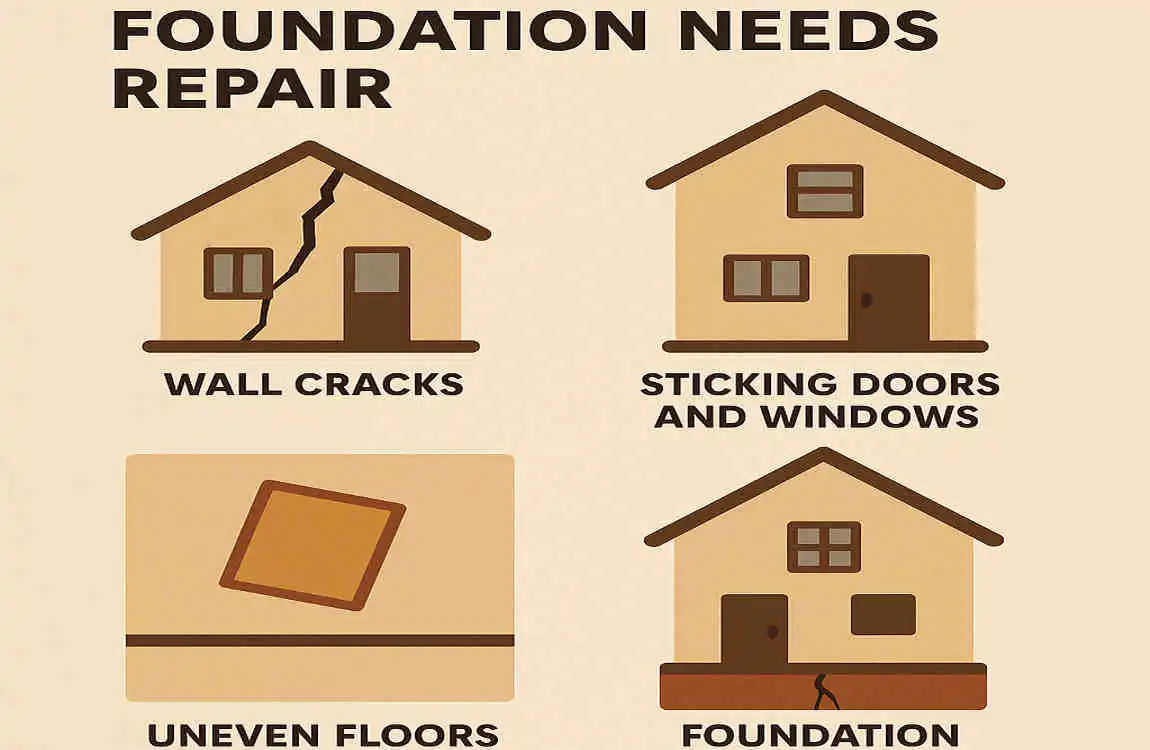
Horizontal or Stair-Step Cracks
Do you see horizontal cracks or “stair-steps” climbing up your interior or exterior walls? This is one of the most common—and severe—signs of foundation movement. While small, vertical hairline cracks can be harmless, larger horizontal or jagged cracks often indicate pressure from shifting soil or settling.
Uneven Floors and Sticking Doors or Windows
Have you tripped over a spot on your floor that seems “off”? If your floors slope or feel bouncy in certain places, your foundation may be settling unevenly. Similarly, if doors or windows suddenly stick, jam, or won’t close properly, it could be a sign that your home’s frame is shifting.
Water Pooling Near the Base or Indoor Mold
Excess water pooling around your foundation is a red flag. Water seeps into cracks, expanding and contracting with temperature changes, which weakens the foundation over time. Indoors, musty odors or visible mold near the baseboards may signal hidden moisture and foundation cracks.
DIY Checks vs. Professional Assessment
You can perform a few simple checks yourself:
- Measure crack width with a ruler (cracks wider than 1/4 inch are concerning).
- Use a ball to see if it rolls on your floor, indicating a slope.
- Look for gaps between walls, ceilings, or between walls and floors.
However, a professional foundation inspection provides peace of mind. Pros use specialized tools to assess damage, determine root causes, and recommend fixes. Expect to pay $100–$500 for an expert assessment—an investment that could save you thousands in the long run.
Curious about more early warning signs? Visit our related blog post, “Early Foundation Warning Signs,” to dive deeper into what to watch for in your home.
Average Foundation Repair Costs in 2026
The National Picture: What Homeowners Pay
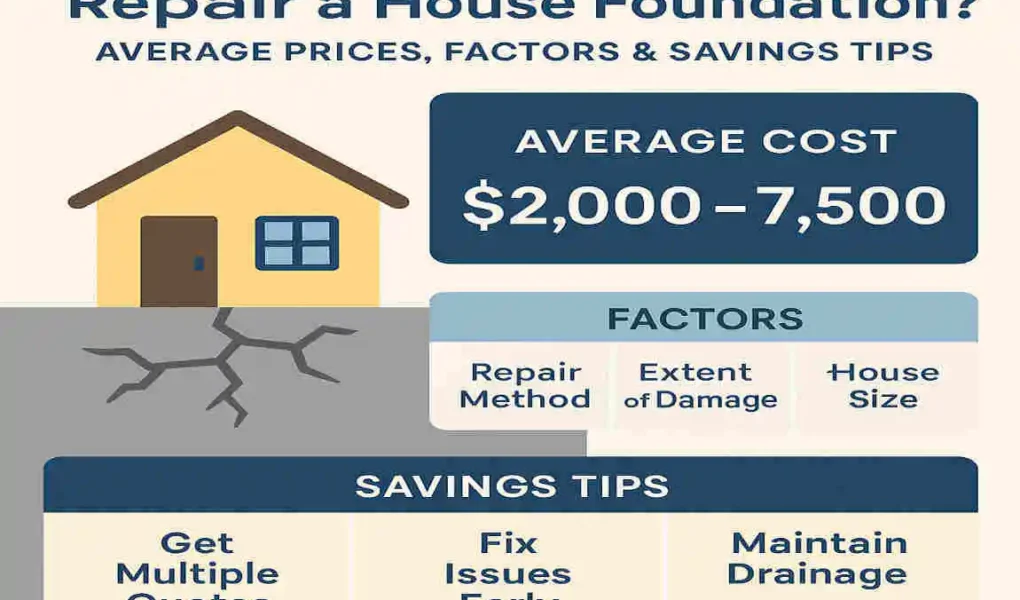
Let’s answer your core question upfront: How much does it cost to repair a house foundation? In 2026, the average homeowner in the U.S. pays about $4,800 for foundation repairs. Most repairs fall within the $2,100 to $8,400 range, but prices can swing much higher for severe damage or unique homes.
Typical House Foundation Repair Costs: Quick Table
Here’s a helpful table to break down the most common repair types and their average national costs:
Repair Type Average Cost Details
Crack Sealing $250–$800 Hairline crack repairs with epoxy
Slab Jacking $500–$1,300 Mud or polyurethane injection to level sunken slabs
Piering/Underpinning $1,000–$3,000 per pier Steel or concrete piers installed below the foundation
Wall Reinforcement $4,000–$12,000 Carbon fiber strips or anchors
Full Lifting $20,000–$23,000 Hydraulic jacking for significant settlement
Pro Tip: The type of issue and repair method will significantly affect your final bill. For example, simple crack sealing is far less expensive than underpinning or complete lifting.
Regional Price Variations
Where you live matters—a lot! For example, homeowners in high-cost-of-living areas like California or the Northeast can see foundation repair costs 20% higher than the national average. Factors like local labor rates, soil types, and permit fees all play a part.
Let’s not forget that foundation crack repair costs and underpinning prices can vary even from neighborhood to neighborhood, depending on soil conditions and home design.
Real Homeowner Stories
Consider Susan in Houston, who spent just $1,200 on slab jacking after catching a small sink in her kitchen floor early. Meanwhile, Mark in Los Angeles faced a $17,000 bill for underpinning after letting wall cracks go unchecked for years.
The moral? Early detection and swift action can make all the difference in your wallet!
Key Factors Affecting House Foundation Repair Costs
Understanding the significant factors that influence house foundation repair costs can help you anticipate your project’s price tag and budget accordingly.
Foundation Type: Slab, Basement, Pier & Beam
Not all foundations are created equal. The type beneath your home shapes your repair costs:
- Slab Foundations: Repairs can range from $350 for minor cracks to $20,000+ for severe shifting.
- Basement Foundations: Generally cost $2,300–$7,600 to fix, depending on accessibility and extent of damage.
- Pier & Beam Foundations: Cost from $750 to $25,000, especially if piers need replacement or leveling.
Damage Severity and Size
Minor problems are cheap, big ones aren’t.
- Minor cosmetic cracks can be sealed for under $1,000.
- Major structural issues—like a sinking foundation or bowed walls—can spiral to $20,000 or more, especially if underpinning is needed.
Soil Conditions: The Hidden Variable
Soil is a silent influencer. Expansive clay, common in Texas and the Midwest, swells and contracts with moisture, causing foundations to shift. If your home sits on this type of soil, expect to pay 30–50% more for repairs due to the extra engineering required.
Location and Accessibility
Urban homes usually cost more to repair. Labor rates in cities are higher, and tight spaces or difficult access can increase costs. If your home lacks a crawl space or is surrounded by landscaping, expect extra fees for excavation or special equipment.
Repair Method: Piering vs. Helical Piers, and More
Not all fixes are equal.
- Piering/Underpinning involves installing steel or concrete piers beneath your foundation. It’s more expensive but provides a permanent solution.
- Helical piers are screw-like supports ideal for lighter structures and can be installed quickly, sometimes at a lower cost.
Cost Breakdown: Materials, Labor & Hidden Fees
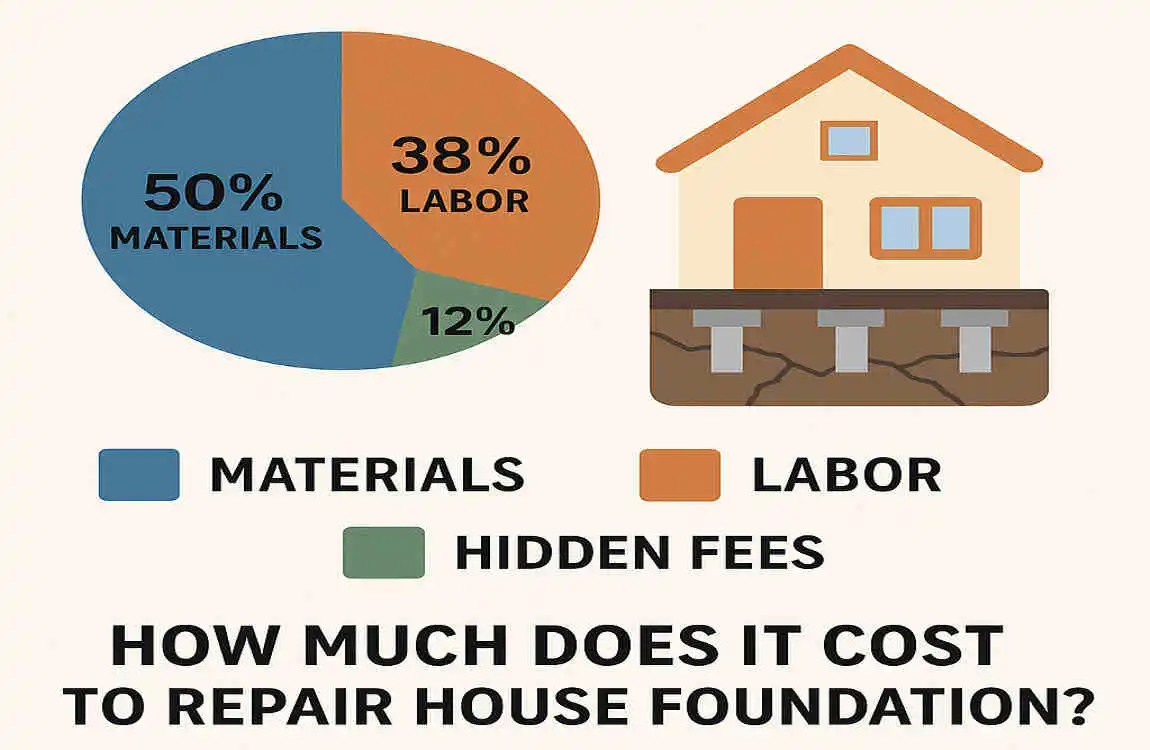
Understanding the breakdown of house foundation repair costs helps you spot a fair quote and avoid surprises.
Materials: 40% of the Bill
Materials account for a significant chunk of your repair cost.
- Steel or concrete piers: $300+ each
- Epoxy for crack repairs: $100/gallon
- Carbon fiber strips: $350–$500 each
Labor: 50% of the Bill
Skilled labor is essential for a safe, lasting repair.
- Hourly rates: $50–$150 per hour, depending on region and complexity
- Team size: Most jobs require 2–5 workers over several days
Permits and Inspections
Local rules often require permits and inspections for foundation work.
- Permit fees: $200–$1,000, depending on your municipality
- Inspection fees: May be included or billed separately
Warranties: Assurance for the Future
Many reputable contractors offer lifetime or 20-year warranties—a significant value-add. This coverage can add $500–$2,000 to the price but provides peace of mind.
Comparing Quotes: The Smart Way
Always request an itemized quote showing labor, materials, permits, and warranty costs. This transparency helps you compare apples to apples and avoid hidden fees.
Ways to Save on Foundation Repairs
Who doesn’t love saving money? With foundation repairs, intelligent decisions can save you thousands.
10 Proven Tips to Lower Your Foundation Repair Bill
- Detect issues early. Fixing problems when they’re small can save you up to 50% versus waiting for significant repairs.
- Get at least 3–5 quotes. Don’t settle for the first estimate—competition leads to better pricing.
- Beware of lowball bids. Low prices often signal poor-quality work or hidden fees.
- Tackle minor sealing yourself. If you’re handy, hairline crack sealing kits cost under $500. For anything bigger, call the pros.
- Check your insurance coverage. Some policies cover foundation damage from flooding or earthquakes.
- Ask about financing. Many contractors offer payment plans or seasonal discounts.
- Schedule in the off-season. Repairs may cost less during winter or slow months.
- Bundle repairs. If you need other home repairs, bundling can lead to discounts.
- Maintain drainage. A simple gutter cleaning or grading project can prevent future issues.
- Use our free cost estimator tool to benchmark your project and avoid overpaying.
CTA: Try Our Free Cost Estimator Tool
Not sure where to start? Get our free cost estimator tool to receive a personalized quote and see what homeowners like you are paying in your neighborhood.
When to Call a Professional & Next Steps
Some foundation problems are too risky for DIY. Call a professional immediately if you notice:
- Shifting walls or floors
- Large, widening cracks
- Sudden water leaks or flooding
- Doors and windows that won’t budge
What to Expect: Inspection to Repair Timeline
- Inspection: Usually within a week of your call
- Quote & plan: 2–3 days after inspection
- Repairs: Scheduled within 1–4 weeks, depending on scope
Our team offers free quotes and 20-year transferable warranties to give you peace of mind. Don’t wait—protect your home’s value today.