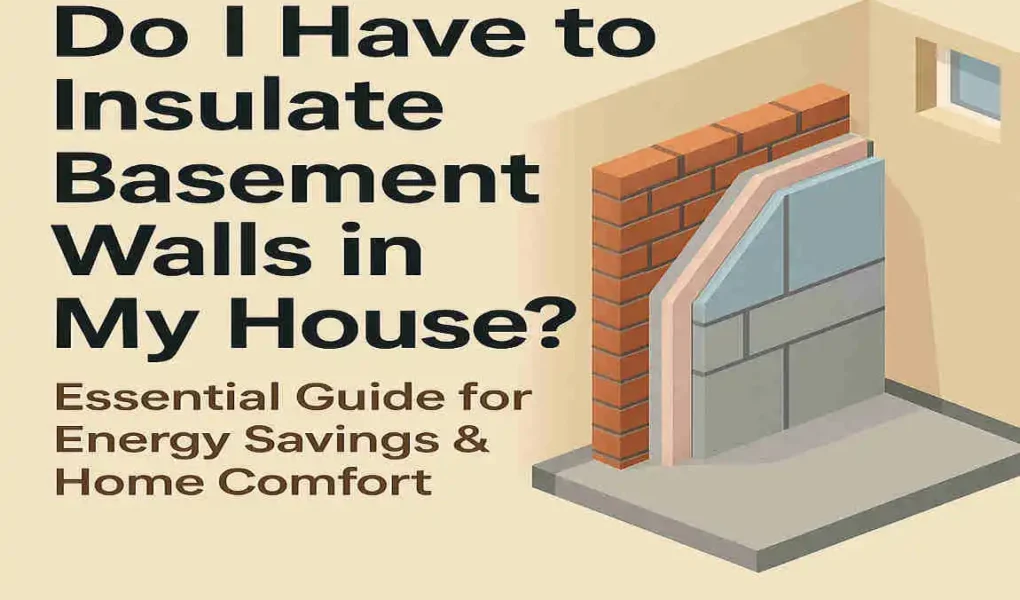
If you’re asking yourself, “Do I have to insulate basement walls?”, you’re not alone. Many homeowners are curious about whether this step is necessary or just a nice-to-have. The answer depends on factors such as your climate, local building codes, and your personal goals for energy efficiency and home comfort.
Why Insulating Basement Walls Matters

Basement walls are often overlooked when it comes to home insulation. But did you know that an uninsulated basement can account for 10-30% of your home’s heat loss? This means higher energy bills, chilly floors, and even the potential for mold due to moisture. Insulating your basement walls helps:
- Reduce energy costs by improving overall home efficiency.
- Maintain comfort with more consistent indoor temperatures.
- Protect against moisture and mold development.
Legal Requirements for Insulating Basement Walls
When it comes to insulation, one question often arises: “Is it legally required to insulate basement walls?” The answer isn’t straightforward because it depends on your location, climate, and the intended use of the basement. Here’s a breakdown of the key considerations:
Building Codes on Insulation
Local building codes vary by climate zone. For example, colder regions (International Energy Conservation Code, or IECC zones 5-8) often require insulation, while warmer areas may not. Below are some general guidelines:
- Cold Climates (Zones 5-8): Insulation is typically mandatory, with R-values ranging from R-10 to R-15.
- Warm Climates (Zones 1-4): Insulation is often optional for unfinished basements but recommended for comfort and efficiency.
To find out what’s required in your area, check with your local permit office or consult resources like the International Code Council (ICC).
When Insulating Basement Walls Is Mandatory
While insulation isn’t always legally required, there are specific situations where it becomes mandatory:
- Finished Basements: If you’re converting your basement into a living space, insulation is usually required to meet occupancy and energy-efficiency standards.
- New Construction: New homes in colder climates often require insulated basement walls to comply with energy codes.
- Energy Incentives: Even if not mandatory, insulation might be encouraged through tax credits or rebates, such as those offered under the Inflation Reduction Act.
Insulation R-Values by Climate Zone
To simplify, here’s a table summarizing recommended R-values for basement walls based on climate zones:
Climate Zone Recommended R-Value for Walls
Zone 1-4 R-5 to R-10
Zone 5-6 R-10 to R-15
Zone 7-8 R-15+
Make sure to consult local codes to confirm these numbers, as they can vary slightly by location.
Benefits of Insulating Basement Walls
Now that we’ve covered the legalities, let’s dive into the benefits of insulating basement walls. Whether required or not, insulation offers multiple advantages that can improve your home’s energy efficiency, comfort, and value.
Energy Savings
One of the main reasons homeowners insulate their basement walls is to save energy. According to the U.S. Department of Energy, up to 50% of a home’s heat loss can occur through uninsulated basement walls. Insulation acts as a thermal barrier, reducing heat transfer and lowering energy consumption.
- Lower Energy Bills: Proper insulation can reduce heating and cooling costs by 10-30%.
- Thermal Break: Basement walls often come into direct contact with the cold ground, which pulls heat from your home. Insulation creates a barrier that prevents this.
Improved Comfort
If you’ve ever experienced chilly floors or drafts upstairs, your basement might be to blame. Insulating the walls helps:
- Maintain consistent temperatures: Insulated basements stay between 65-70°F year-round.
- Eliminate drafts: No more cold air seeping into your living spaces.
Other Gains
Beyond energy efficiency and comfort, insulating basement walls offers additional benefits:
- Moisture Control: Insulation, when paired with a vapor barrier, helps prevent condensation and mold growth.
- Noise Reduction: Insulation dampens sound, making your home quieter.
- Increased Home Value: Finished, insulated basements add resale value to your property.
Quick Stats on Insulation Benefits:
Here’s a quick list of facts that highlight the benefits:
- “Homes with insulated basements save an average of $300/year on energy.”
- “Insulation can extend the lifespan of your HVAC system by reducing strain.”
- “Proper insulation decreases the risk of mold by up to 50%.”
- “Noise reduction improves by 20-40% with insulated walls.”
- “Home value increases by 5-10% with a finished and insulated basement.”
Adding insulation is clearly a worthwhile investment—but it’s not without drawbacks. Let’s explore some potential downsides next.
Drawbacks and Common Myths About Basement Wall Insulation
Like any home improvement project, insulating basement walls has its challenges. Additionally, several myths about insulation can lead to confusion. Let’s separate fact from fiction and weigh the pros and cons.
Addressing Common Myths
- “The Earth Acts as Insulation.”
- False. While the ground does provide some thermal mass, it still allows heat to escape from your home.
- “Insulation Causes Mold.”
- Insulation itself doesn’t cause mold, but improper installation (e.g., no vapor barrier) can create moisture issues.
Cons of Insulation
- Cost: Insulating basement walls can be expensive, ranging from $3 to $7 per square foot, depending on the material.
- Installation Challenges: DIY insulation can be tricky, especially in older homes with uneven walls or existing moisture issues.
- Moisture Risks: Without proper waterproofing, insulation can trap moisture, leading to mold or rot.
Pros vs. Cons Table
Pros Cons
Lowers energy bills , High upfront cost
Improves home comfort. Requires proper installation
Reduces noise. May need professional help
Prevents moisture/mold (if done right). Risk of moisture if poorly done
Best Materials and R-Values for Basement Wall Insulation
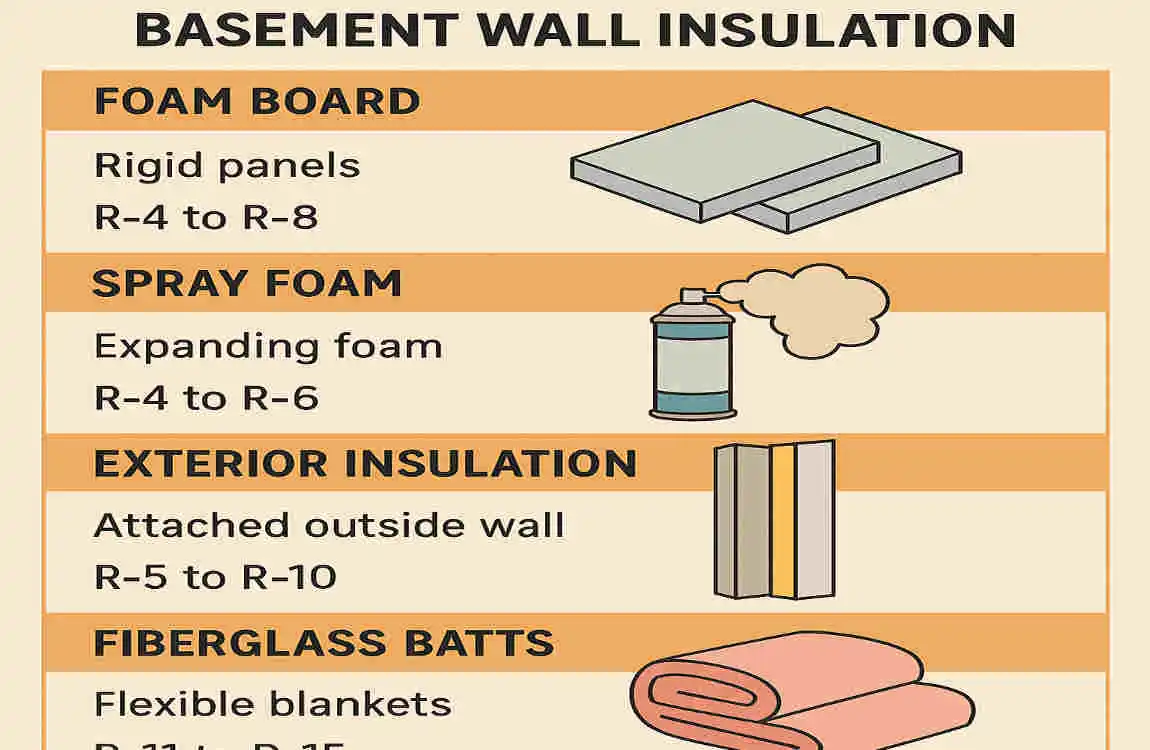
Choosing the right insulation material is crucial for success. Here’s a comparison of the most popular insulation types:
Material R-Value/inch Pros Cons Cost (per sq ft)
Rigid Foam (XPS) R-5 to R-6.5 Moisture-resistant, durable Expensive $1-2
Fiberglass Batts R-3.1 to R-4.3 Affordable, easy to install, Absorbs moisture $0.50-1
Spray Foam R-6 to R-7 Air-sealing, high R-value. Requires pro install $2-4
Mineral Wool R-4.2 Fire-resistant, eco-friendly Heavier, pricier $1-1.50
For most homes, rigid or spray foam is recommended for its high R-value and moisture resistance. Make sure to pair insulation with a vapor barrier to prevent condensation.
Installation Guide: DIY vs. Professional Help
Preparation Steps
Before installing insulation, follow these steps:
- Inspect for Water Issues: Fix leaks or cracks in your basement walls.
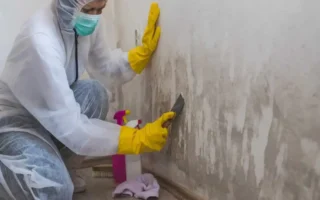
- Clean the Walls: Remove dirt, mold, and debris.
- Add a Vapor Barrier: This prevents moisture from reaching the insulation.
Tools You’ll Need
- Hammer
- Adhesive
- Utility Knife
- Safety Gear (e.g., gloves, goggles)
While DIY installation is possible for some materials like fiberglass, professional help is recommended for spray foam or larger projects.
Cost Analysis
The cost of insulating basement walls varies based on material, labor, and square footage. Here’s a quick breakdown:
- Average Costs: $1,500-5,000 for a 1,000 sq. ft. basement.
- ROI: Most homeowners recoup costs in 3-5 years through energy savings.
- Rebates: Check for incentives like federal tax credits or local rebates.