Designing a 1-acre home is exciting because it gives you something many homeowners only dream of: space. Space to breathe. Space to build. Space to create a home that feels personal, private, and practical at the same time.
| Topic | Action (what to do) | Quick tip |
|---|---|---|
| Site analysis | Map slopes, sun path, wind, views, and setbacks before placing house and outbuildings. | Place main living areas to face best views and sunlight; locate service areas (garage, septic) where slope/drainage is easier. |
| Zoning & utilities | Check local zoning, septic/well rules, and utility access; plan for future hookups. | Confirm buildable envelope and permit needs early to avoid redesigns. |
| Footprint & orientation | Choose compact footprint with orientation for passive solar (long axis east–west). | Orient large windows to the south for winter sun and protect west glazing from late-afternoon heat. |
| Floor plan & flow | Prioritize an open-plan main level, clear circulation, and flexible rooms (office/guest/bedroom). | Use multifunctional spaces so rooms adapt as needs change. |
| Outdoor living & landscaping | Allocate zones: garden, orchard, play/recreation, privacy buffer, and wildlife/wild area. | Put garden near kitchen and water source; use trees as windbreaks and privacy screens. |
| Access & driveways | Design a primary driveway and secondary service access, consider sightlines and snow/maintenance. | Keep turning radius for delivery/construction and emergency vehicles in mind. |
| Water & waste planning | Plan rainwater catchment, irrigation, and septic or sewer placement with runoff control. | Position septic downhill from the house and away from gardens; consider storage for irrigation. |
| Energy & systems | Specify insulation, efficient HVAC, solar-ready roof, and LED-friendly lighting. | A larger roof area on one face simplifies future solar installation. |
A larger lot changes everything. You are not just planning a house. You are planning how your family will live, relax, grow, and enjoy the outdoors for years to come. That extra land gives you room for a bigger yard, a garden, a pool, a guest space, a play area, or even future expansion. It also gives you more freedom to design a property that matches your lifestyle, rather than forcing your lifestyle to fit a small lot.
Understanding the Potential of a 1 Acre Home
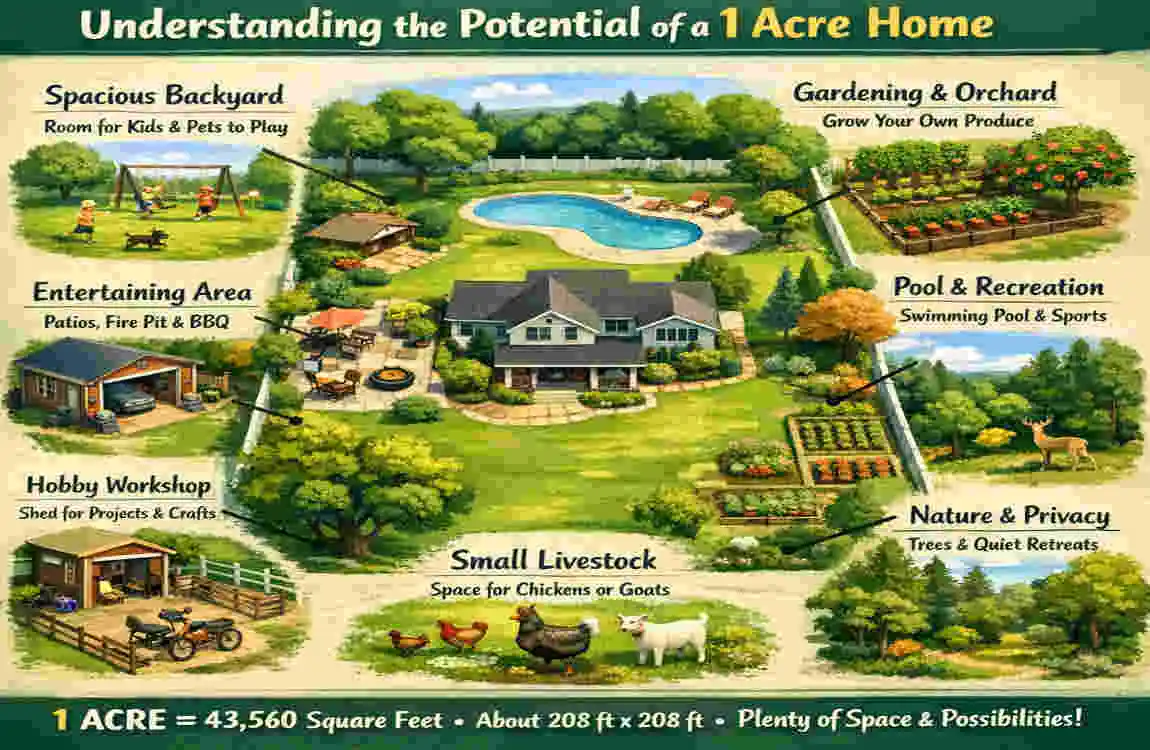
A 1 acre home offers far more flexibility than a typical city lot. Before you start sketching ideas, it helps to understand exactly what one acre gives you and what it can hold.
How Big Is 1 Acre?
One acre is equal to 43,560 square feet. That sounds technical, but it becomes easier to understand when you compare it with everyday things.
Think of it as a lot of space. In practical terms, one acre is often close to the size of a football field without the end zones. That means you have enough land to create separate zones for living, entertaining, gardening, parking, and relaxing.
The real beauty of a 1-acre home is not just its size. It is the freedom that comes with it. You are not squeezed into a tiny footprint. You can plan with comfort in mind.
What Can Fit on a 1 Acre Home Lot?
A lot of people underestimate how much can fit on one acre. With the right plan, you can include many features without making the property feel crowded.
On a 1 acre home lot, you may be able to fit:
- A main house with a spacious floor plan
- A garage or detached garage
- A long or circular driveway
- A front lawn and landscaped entry
- A backyard patio or deck
- A pool with seating space
- A garden or greenhouse
- A guest house or in-law suite
- A play area for children
- Outdoor entertainment spaces
The key is balance. You do not need to use every inch. In fact, leaving open space often makes the property feel more elegant and breathable.
Benefits of Designing a Home on 1 Acre
A 1-acre home offers several clear advantages.
First, you get more privacy. With more land around you, neighbors are not right on top of you. That can make daily life feel calmer and more personal.
Second, the property often has better resale appeal. Many buyers like the idea of more land because it offers flexibility and a sense of luxury.
Third, you have room for future expansion. Maybe you want to add a guest house later. Maybe you want a larger deck, a workshop, or a pool. One acre gives you that kind of freedom.
Finally, a larger lot gives you lifestyle flexibility. You can design the property to fit your hobbies, your family size, and your long-term plans. That is a big advantage, especially if your needs may change over time.
Define Your Vision for Your Dream 1 Acre Home
Before you draw a floor plan or hire a builder, you need a clear vision. A beautiful property starts with a clear purpose. The best 1 acre home design is not the one with the most features. It is the one that matches how you live.
Determine Your Lifestyle Needs
Start with your daily life.
Ask yourself simple questions:
- How many people will live in the home?
- Do you work from home?
- Do you need space for children, pets, or guests?
- Do you like entertaining?
- Do you enjoy gardening, sports, or outdoor meals?
- Do you want quiet spaces for rest?
Your answers will shape everything. A family with young children may need a safe play area and access to an open backyard. A couple who works remotely may need office space and a quiet outdoor retreat. Someone who loves hosting may want an outdoor kitchen and ample seating.
A good 1 acre home should support your routine, not fight against it.
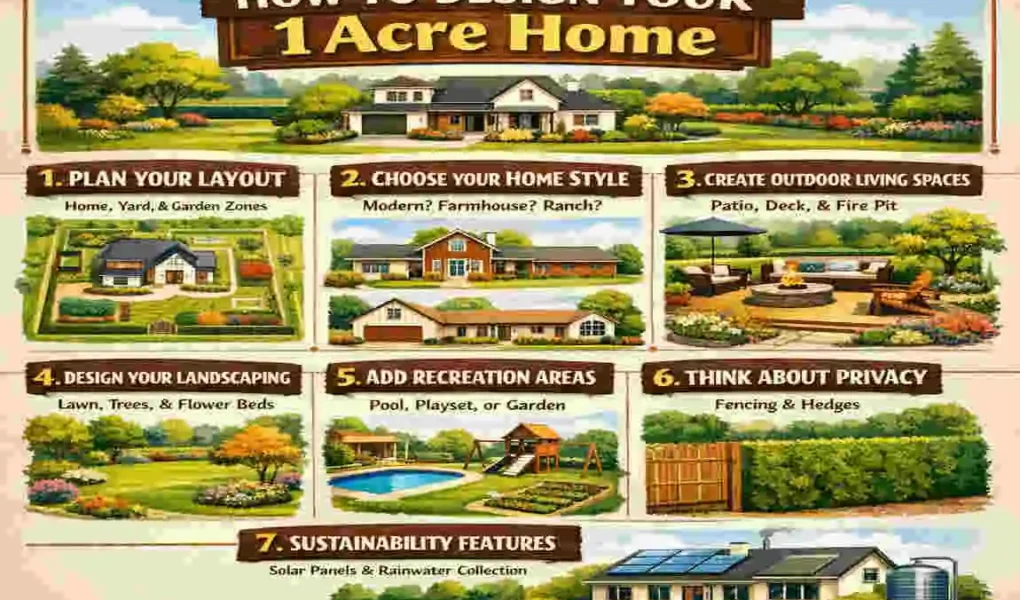
Choose Your Home Style
The style of your home should feel like you. A one-acre property gives you room to express that style more fully.
Some popular directions for a dream 1 acre home include:
- Modern farmhouse: warm, practical, and welcoming
- Minimalist: clean lines, open spaces, and simple beauty
- Luxury villa: elegant, spacious, and refined
- Contemporary: bold, sleek, and fresh
- Rustic retreat: cozy, natural, and grounded
Your style choice affects the roofline, windows, exterior finishes, landscaping, and even the feel of the driveway. A modern home may look best with straight lines and large glass panels. A farmhouse may feel right with porches, natural wood, and wide front steps.
Whatever you choose, keep the style consistent. A clear design theme makes your 1 acre home feel polished and intentional.
Set Long-Term Goals
Your home should work for you now and in the future. That is especially important on a larger property.
Think long-term. Will you need space for aging parents someday? Do you want to create rental income with a guest unit? Are you planning for retirement and want a home that is easy to manage? Do you want room to add more features in the future?
A 1 acre home can support many future goals, including:
- Multi-generational living
- Rental or guest accommodations
- Retirement-friendly design
- Future home extensions
- Hobby spaces or workshops
When you plan with the future in mind, you reduce the chance of expensive changes later.
Planning the Ideal Layout for a 1 Acre Home
Layout planning is where your dream starts becoming real. On a smaller lot, you often have limited choices. On a 1 acre home lot, you have room to think strategically.
Divide the Property Into Functional Zones
The easiest way to plan a one-acre lot is to divide it into zones.
You can think of the property in sections such as:
- Living zone: the main house and attached areas
- Outdoor recreation zone: patio, pool, fire pit, play space
- Parking zone: driveway, garage, guest parking
- Garden zone: lawn, flower beds, vegetable beds, or greenhouse
- Privacy zone: trees, hedges, fencing, or natural buffers
This method helps you avoid a random layout. Every part of the land should have a purpose. Even if a space is open, it should still feel intentional.
A well-zoned 1 acre home feels organized, easy to navigate, and pleasant to spend time in.
Best House Placement on 1 Acre Land
Where you place the house matters more than many people realize. The placement affects privacy, sunlight, outdoor flow, and how large the property feels.
There are a few common approaches.
A front-facing layout places the home closer to the front of the lot. This can create a larger backyard and is often useful if you want the rear of the property to feel more private.
A centered house plan places the home more in the middle. This can create balanced front and back yards, which works well if you want symmetry and visual harmony.
A backyard-focused design shifts the living spaces toward the back. This is great if you want the main outdoor area to feel hidden and peaceful.
The best placement depends on the shape of your land, the local climate, your privacy needs, and any building rules in your area.
Driveway and Access Planning
A driveway is more than a path for cars. It is part of the first impression of your 1 acre home.
You might consider:
- A circular driveway for a grand, elegant look
- A long private entry for a more secluded feel
- Side garage access for a cleaner front view
The driveway should also make daily life easier. If you receive guests often, make sure parking is simple and clear. If you have children or older family members, think about safe walking paths from the driveway to the front door.
Good access planning also supports emergency vehicles, deliveries, and future changes.
Utility and Infrastructure Planning
The pretty parts of a 1 acre home get the most attention, but the hidden systems matter just as much.
You need to plan for:
- Drainage
- Septic placement
- Water lines
- Electrical routing
- Internet and communication access
If drainage is ignored, water can pool in the wrong places, damaging your yard or foundation. If the septic system is poorly placed, it can limit future landscaping. Utility planning should happen early, before construction starts.
A strong infrastructure plan keeps your home safe, efficient, and easier to maintain.
Choosing the Right Home Size for a 1 Acre Home
One acre gives you plenty of room, but that does not mean bigger is always better. The best home size depends on how you want to live and how much land you want to preserve.
Small Home on Large Land
A smaller house, often around 1,500 to 2,500 square feet, can work beautifully on a 1 acre home lot.
This option is smart if you want to keep more open land for landscaping, gardens, or outdoor entertainment. It also tends to cost less to build and maintain. A smaller home on a larger lot can feel elegant and relaxed, especially if the interiors are open and well designed.
Medium Family Home
A medium home, usually around 2,500 to 4,000 square feet, is a common choice for families.
This size gives you enough space for bedrooms, a home office, a larger kitchen, and maybe a bonus room or flex space. It still leaves room for a nice yard, driveway, and outdoor features.
For many people, this is the sweet spot for a 1-acre home because it balances comfort and land use well.
Luxury Estate Style Home
A larger estate home, often 4,000 square feet or more, can also fit on one acre if the lot and local rules allow it.
This type of home may include formal living areas, multiple suites, a large kitchen, entertainment rooms, and premium finishes. But the bigger the home, the less outdoor space you will have left.
If you choose a luxury estate style, be careful not to overbuild. Your home should still feel connected to the land, not like it swallowed the property.
Balancing Indoor and Outdoor Living
One of the biggest mistakes people make is focusing too much on the house and forgetting the land. A 1-acre home should offer both indoor comfort and outdoor freedom.
Here is a simple comparison to keep in mind:
Home Size Best For Main Benefits Watch Out For
1,500–2,500 sq ft Smaller families, couples, downsizers Lower cost, more open land, easier upkeep May feel too modest if you want large gathering spaces
2,500–4,000 sq ft Growing families, remote workers Balanced size, flexible rooms, strong resale appeal Needs careful layout planning
4,000+ sq ft Luxury living, large households, estate design Spacious interiors, premium features Can reduce usable outdoor space and raise maintenance costs
A great 1 acre home should never feel cramped inside or wasted outside. Balance is the goal.
Smart Outdoor Design Ideas for a 1 Acre Home
Outdoor design is where a 1 acre home really shines. You have room to create a property that feels beautiful, useful, and enjoyable every single day.
Landscaping for Beauty and Function
Good landscaping does more than make the property look nice. It helps define spaces and makes the land easier to use.
You may want to include:
- Trees for shade and privacy
- Lawn space for play or open views
- Native plants that grow well in your climate
- Walkways that connect key areas
- Flower beds for color and charm
Native plants are especially helpful because they often need less water and less maintenance. Trees can soften the property’s edges and make the home feel more established. Walkways help guide movement and make the lot feel intentional.
For a 1 acre home, landscaping should feel layered, not crowded.
Outdoor Living Spaces
Outdoor living is one of the biggest joys of owning a 1 acre home. You can create areas that feel like an extension of the house.
Popular ideas include:
- A covered patio
- A wooden deck
- A fire pit area
- An outdoor dining space
- A full outdoor kitchen
These spaces make it easier to host family gatherings, enjoy quiet evenings, or simply relax in fresh air. If your indoor living area opens directly onto the backyard, the home will feel much larger and more connected.
Think about how you will use the space in different seasons. Shade, lighting, seating, and weather protection all matter.
Pool and Recreation Zones
With one acre, you may have room for more than a lawn. You can build fun recreation areas that turn the property into a personal retreat.
You might consider:
- A swimming pool
- A tennis court
- A basketball area
- A playground
- A putting green
These features can transform your 1 acre home into a lifestyle property. The best choice depends on who will use the space most. A family with children may want a playground and open lawn. A couple who entertains often may prefer a pool and lounge area.
Be careful not to overcrowd the lot. Recreation features should feel like part of the landscape, not random additions.
Garden and Sustainability Features
A one-acre lot is perfect for people who enjoy growing things or living more sustainably.
You could add:
- A vegetable garden
- A greenhouse
- Raised planting beds
- A composting area
- Rainwater collection systems
A garden can be both beautiful and useful. It gives you fresh produce, a sense of calm, and a hands-on connection to your land. A greenhouse can extend your growing season. Composting helps reduce waste while improving soil quality.
These features make a 1-acre home feel more personal and self-sufficient.
Privacy Enhancements
Privacy is one of the major reasons people choose a larger property. But privacy does not happen by accident. You need to plan for it.
Good privacy features include:
- Fencing
- Hedges
- Trees
- Shrubs
- Natural barriers
You can place taller trees near property edges or use layered landscaping to create a more secluded feeling. The front of the property may still be open and welcoming, while the back stays quiet and protected.
For a 1-acre home, privacy planning helps it feel like a retreat.
Interior Design Considerations for a Dream 1 Acre Home
The outside of the property may get the most attention, but the interior should reflect the same level of thought. A well-designed interior makes the home feel larger, brighter, and easier to enjoy.
Open Floor Plans
Open floor plans work especially well in a 1 acre home because they create a sense of flow. When the kitchen, dining, and living areas connect smoothly, the home feels spacious and social.
Open layouts also allow light to move through the house more easily. That can make the entire home feel brighter and more welcoming.
This design style is especially useful if you want the inside of the home to connect naturally with patios, decks, or the backyard.
Large Windows and Natural Light
Large windows can completely change the feel of a home. In a 1 acre home, they help you enjoy the views of your land instead of hiding them.
Big windows bring in natural light, which can make rooms feel cleaner, warmer, and more peaceful. They also help reduce the need for artificial lighting during the day.
If your lot has a nice backyard, garden, or wooded view, place windows where you can enjoy those sightlines. That simple choice can make daily life feel much more special.
Functional Luxury
A dream home is not just about looks. It is about daily convenience. Functional luxury means adding features that make life easier and better without wasting space.
Useful interior features may include:
- Walk-in closets
- A dedicated home office
- A mudroom
- A smart kitchen
- An entertainment room
A mudroom is especially helpful in a 1 acre home because outdoor access often means more dirt, shoes, pets, and gear coming inside. A home office is useful if you work remotely. A large kitchen can become the center of family life.
Luxury does not have to be flashy. Sometimes it simply means a room that works beautifully.
Storage Planning
Storage often gets overlooked during the design stage, but it matters a lot in everyday life.
Think about storage in:
- The garage
- The basement
- The attic
- Closets
- Outdoor sheds
A well-planned 1 acre home should have enough storage to keep the living areas clean and calm. If you have lots of outdoor equipment, sports gear, tools, or seasonal decorations, build storage into the plan early.
Good storage makes the whole property easier to manage.
Sustainability and Energy Efficiency for a 1 Acre Home
A large lot offers you the opportunity to build a more efficient and environmentally friendly home. Sustainability does not just help the planet. It also helps your wallet over time.
Solar Power Options
Solar power can work very well on a 1 acre home because you may have more roof space or even open land for panels.
You can choose:
- Rooftop solar panels
- Ground-mounted solar panels
Rooftop panels are common and neat. Ground-mounted panels can be easier to angle toward the sun, especially if the roof is shaded or has limited space.
Solar power can lower energy bills and make your home less dependent on the grid.
Water Conservation
Water use becomes important on a bigger property, especially if you have lawn space, trees, or gardens.
Helpful water-saving features include:
- Efficient irrigation systems
- Rainwater collection
- Drought-tolerant plants
- Smart sprinkler controls
A 1 acre home does not need to waste water to look beautiful. Smart watering systems can keep the landscape healthy without overuse.
Smart Home Technology
Technology can make a large home much easier to manage.
Useful smart features include:
- Lighting automation
- Climate control
- Security cameras
- Smart locks
- Remote irrigation controls
These tools help you monitor and control your property more easily, even when you are away. That is especially helpful when your 1 acre home includes multiple outdoor areas, gates, or outbuildings.
Eco-Friendly Building Materials
You can also make sustainable choices in the materials you use.
Options may include:
- Reclaimed wood
- Energy-efficient insulation
- Sustainable roofing
- Low-VOC finishes
- Durable, long-lasting exterior materials
Eco-friendly materials can reduce waste, improve comfort, and lower long-term maintenance. A well-built 1 acre home should feel strong, efficient, and thoughtful from the inside out.
Budgeting for Your Dream 1 Acre Home
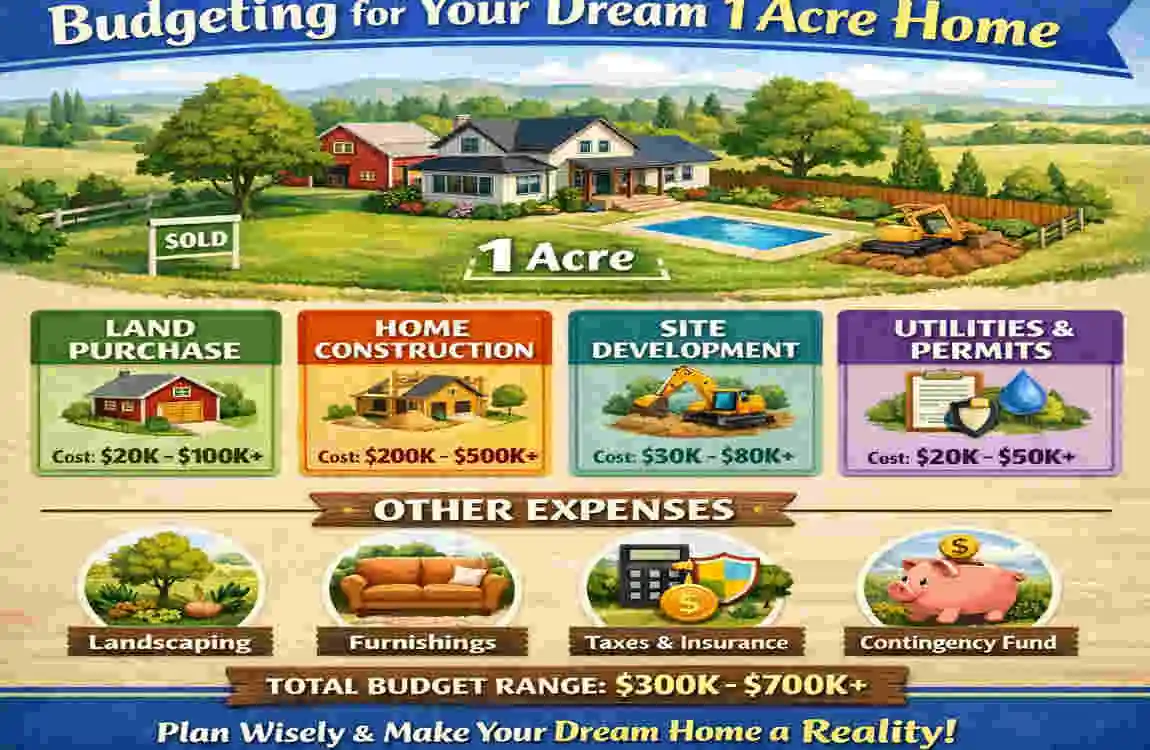
A beautiful home on one acre is exciting, but the budget needs careful attention. A good plan helps you avoid stress and surprises later.
Land Preparation Costs
Before construction begins, the land may need work.
You may need to pay for:
- Clearing trees or brush
- Grading the land
- Soil testing
- Drainage adjustments
- Site access preparation
These early steps are easy to ignore, but they can affect the entire project. If the land is uneven or has poor drainage, the cost of fixing it may be significant.
Construction Costs
Construction is usually the biggest expense in a 1 acre home project.
You will need to budget for:
- Materials
- Labor
- Design fees
- Permits
- Foundation work
- Roofing
- Interior finishes
Costs vary widely depending on size, style, and location. A simple layout will usually cost less than a highly customized estate home. Even so, it is wise to plan for flexibility. Material prices and labor needs can change.
Landscaping Expenses
People often spend heavily on the house and then run out of money for the land. That is a mistake. Outdoor design is a major part of a 1 acre home.
Landscaping costs may include:
- Hardscaping
- Irrigation systems
- Driveways
- Fencing
- Pool installation
- Garden beds
- Lighting
If your dream property includes a full backyard retreat, make sure those costs are part of the plan from the beginning.
Hidden Costs to Consider
Some costs do not seem urgent at first, but they matter a lot over time.
Watch for:
- Property taxes
- Utility bills
- Maintenance
- HOA fees, if applicable
- Repairs
- Equipment upkeep
A larger property usually means more responsibility. A 1-acre home can be amazing, but it also requires regular care. Budget for the long term, not just the build.
Common Mistakes to Avoid When Designing a 1 Acre Home
Even with a large lot, costly mistakes are still possible. Good planning helps you avoid problems that can affect comfort, beauty, and resale value.
Overbuilding the Lot
One of the biggest mistakes is building a house that is too large for the land. If the home takes up too much space, you lose the outdoor freedom that makes a 1 acre home so appealing.
Always leave room for yards, walkways, privacy buffers, and future needs. Bigger is not always better.
Poor Drainage Planning
Drainage problems can create damage and frustration. Water should move away from the house and not collect in low spots.
If drainage is ignored, you may face soggy lawns, foundation issues, or landscape damage. This is one of those things that should be solved before it becomes visible.
Ignoring Future Expansion
Your life may change. A room that feels optional now may become essential later. If you do not leave space for future expansion, you may limit your options.
A smart 1-acre home plan should allow for possible additions, such as a guest suite, workshop, patio extension, or pool area.
Neglecting Outdoor Flow
A property should feel easy to move through. The house, driveway, yard, and recreation areas should flow naturally together.
If outdoor flow is weak, the land may feel disconnected or awkward. Think about how people will walk, gather, park, and relax.
Weak Privacy Planning
A large lot can still feel exposed if privacy is not planned well. Fences, trees, and landscaping should be part of the design from the start.
The goal is to make your 1 acre home feel calm, protected, and personal.
Underestimating Maintenance Costs
A bigger property usually means more upkeep. Grass must be cut. Plants must be trimmed. Driveways must be maintained. Pools and systems need care.
When planning your 1 acre home, be honest about how much time and money you want to spend maintaining it.
Creative Dream 1 Acre Home Ideas
If you are still shaping your vision, it helps to look at the kind of lifestyle you want to create. A 1-acre home can be designed in many ways.
Luxury Backyard Retreat
This idea focuses on comfort and relaxation. The backyard becomes the star of the property.
You might include a pool, lounge seating, a fire pit, outdoor dining, and soft landscaping. The home itself opens up to the yard, making indoor and outdoor life feel connected.
Modern Farmhouse Layout
A modern farmhouse works beautifully on one acre because it blends charm and practicality. You can use a welcoming front porch, open living areas, clean exterior lines, and warm natural materials.
This style feels timeless and friendly while still looking fresh.
Family-Centered Outdoor Oasis
This idea is great for families with children. The home may include a large kitchen, open family room, and backyard zones for play, sports, and gatherings.
A 1 acre home like this can be both active and peaceful. Everyone gets room to enjoy the property in their own way.
Self-Sufficient Homestead
If you love gardening, sustainability, and simple living, you can turn your land into a more self-reliant property.
Add vegetable beds, fruit trees, composting, rainwater systems, and maybe a greenhouse. This style of 1 acre home feels practical and rewarding.
Guest House + Main Home Concept
A guest house can be a smart addition if you host often or want private space for family members.
This setup creates flexibility. It can also support rental income or multi-generational living. On a one-acre lot, this kind of design can work very well if planned carefully.
Indoor-Outdoor Resort Style Living
If you want the feeling of a vacation property, this is a strong direction. The house should open to the landscape in a smooth, elegant way.
Think large doors, shaded patios, water features, cozy seating areas, and simple but polished landscaping. A 1-acre home can easily feel like a private resort when well-designed.
Frequently Asked Questions About 1 Acre Homes
Is 1 acre enough for a large house?
Yes, one acre is usually enough for a large house, depending on local building rules and setbacks. It can often support a spacious home, driveway, garage, and outdoor features while still leaving room for landscaping.
How much can you build on a 1 acre property?
That depends on zoning laws, setbacks, and local regulations. In many places, you can build a sizable home along with outdoor structures, but the exact amount varies. Always check the rules before designing your 1 acre home.
What is the best layout for a 1 acre home?
The best layout depends on your lifestyle. Some people prefer a centrally located home with a balanced front and back yard. Others prefer a backyard-focused design for more privacy. The best 1 acre house layout is the one that fits your daily routine and long-term goals.
Can you have a pool and garden on 1 acre land?
Yes, absolutely. One acre gives you enough room for both a pool and a garden if the property is planned well. Many 1-acre home designs include features such as patios, lawns, and seating areas.
Is a 1 acre home expensive to maintain?
It can be more expensive than a smaller property because of lawn care, landscaping, utilities, and general upkeep. That said, the maintenance level depends on how much of the acre you develop. A simple, thoughtful design can keep costs more manageable.