
Have you ever been halfway through your weekend cleaning and wondered if there’s a better way?
What if cleaning the bathroom or wiping down the kitchen bench actually felt pleasant? Essential oils can make that possible. They transform an ordinary cleaning routine into a gentle aromatherapy experience while providing real cleaning power.
If you’re ready to make your cleaning sessions more enjoyable, read on.
Why Use Essential Oils?
At first glance, essential oils don’t look like a practical purchase. They come in small bottles at a noticeable price. It’s an easy one to put back on the shelf.
But they’re used in drops, not capfuls. One bottle tends to last far longer than expected, especially once you settle into a routine. Over time, it often replaces several different cleaning products rather than adding to them.
If you keep an eye on offers at Woolworths or Coles, or browse the Chemist Warehouse range, it becomes even easier to build a reliable collection without overspending.
More importantly, you know exactly what you’re using—no long ingredient lists, no overly strong synthetic scents—just a few well-chosen oils.
And if you’d rather not mix anything yourself, many regular home cleaning services across Australia are happy to use essential oil–based products on request. It’s a simple way to get the benefits without changing your routine too much.
DIY Your Own Cleaning Solutions
Making your own cleaning products has a reputation for being fiddly. In reality, it’s mostly a matter of combining a few ingredients you already have and giving them a quick shake.
Once you’ve done it once or twice, it becomes second nature—and you’ll likely find yourself reaching for these mixes without thinking.
Each essential oil brings something slightly different, so it helps to match the oil to the task.
Tea tree oil is particularly useful in damp areas. It handles the sort of buildup you tend to find in bathrooms and laundries with very little fuss. Lemon oil is better suited to kitchens. It cuts through grease easily and leaves a zesty scent.
Lavender is a quieter option. It’s often chosen for its scent, but it also has antibacterial properties, making it a good all-rounder for general cleaning.
The choice isn’t just practical, though. Scent plays a role in how a space feels once you’re done. Some prefer something light and calming, others lean towards fresher, brighter notes. There’s no real right answer—just what suits your home.
It’s also worth choosing good-quality oils. The difference isn’t dramatic at first, but over time, consistency and effectiveness become more noticeable.
Build a Cleaner That Actually Works for You
Most DIY cleaners follow a simple pattern: a base, usually water and vinegar, and a few drops of essential oil. It’s less of a strict recipe and more of a flexible system you can adjust depending on what is in front of you.
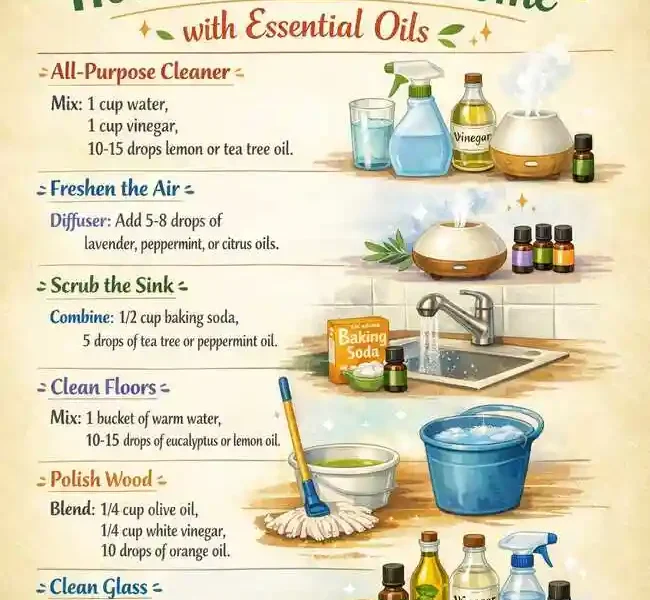
Mix an All-Purpose Spray
This versatile spray is ideal for daily cleaning. In a spray bottle, combine equal parts water and white vinegar.
Add 15 drops of lavender essential oil for its calming scent and antibacterial properties, and 10 drops of tea tree oil for extra germ-fighting strength. For a brighter aroma, you can replace the lavender with lemon or add 5 drops of lemon myrtle.
Shake the bottle thoroughly before each use. Spray onto kitchen benches, sinks, benchtops, bathroom surfaces, or doorknobs, then wipe clean with a microfibre cloth.
It effectively removes light grease, fingerprints, and everyday spills while leaving a fresh, natural scent. Avoid using it on unsealed wood or natural stone surfaces, as the vinegar may affect the finish.
Prepare a Special Cleaner for the Kitchen
Kitchens tend to collect more than just crumbs. Grease builds up gradually, and not every cleaner handles it well.
That’s where lemon oil comes in. Adding a few drops gives your mixture extra strength, especially on stovetops and splashbacks. Surfaces don’t just look clean—they feel clean.
For tougher spots, let the spray sit for a minute or two before wiping. It’s a small pause that often saves you from scrubbing altogether.
Add Extra Strength to the Floor Cleaner
For floors, you will need a slightly different approach to ensure even coverage and effective dirt removal.
Fill a bucket or cleaning container with hot water and add one cup of white vinegar. Stir in 15–20 drops of lemon or eucalyptus essential oil. Lemon provides a lively citrus fragrance, while eucalyptus delivers a clean, refreshing Australian scent that many households love.
Mop your tile, vinyl, or sealed hardwood floors as usual. The mixture lifts dirt and grime without leaving a sticky residue, and the added oils help sanitise the surface. Once dry, the room will have a pleasant, light aroma.
For extra mould protection in bathrooms or laundries — common in Australia’s humid regions — add a few extra drops of tea tree oil to the mix. This simple tweak can make a noticeable difference in preventing mould regrowth.
Freshen the Air Without Overdoing It
Air fresheners tend to make an entrance. Essential oils, on the other hand, settle in more quietly. The effect is less immediate, but far more balanced.
A simple spray made with water, a little witch hazel, and your preferred oil blend can freshen a space without taking it over. A few sprays are usually enough. The scent sits lightly in the background rather than competing with everything else in the room.
Diffusers offer a slightly more consistent approach. A few drops of eucalyptus or tea tree oil can make a room feel noticeably fresher, especially in spaces that don’t get much airflow.
For living areas or bedrooms, softer options like lemongrass or geranium create a more relaxed atmosphere without drawing too much attention to themselves. And that’s really the point. A clean home doesn’t need to announce itself. It should simply feel right when you walk in.
Handle and Store Your Oils Safely
Although essential oils are natural, they are highly concentrated and should be handled with care. Always dilute them properly, and never apply them undiluted to surfaces or skin, as this can cause irritation or damage finishes.
It’s also sensible to test a new mixture on a small, less visible area first, particularly on delicate materials. It only takes a moment and avoids unnecessary damage.
Storage matters as well. Heat and light can affect the quality of the oils, which is why they’re typically sold in dark glass bottles.
Keeping them in a cool, shaded spot helps them last longer, which is something to keep in mind during our warmer Australian months. Plus, this way, you wouldn’t have to pay extra money for new bottles every other month.
And, as with most household products, they’re best kept out of reach of children and pets.
Conclusion
Cleaning with essential oils doesn’t change what needs to be done. It simply changes how it feels while you’re doing it, and how your home feels afterwards.
With a few small adjustments, you can move away from overly complicated products and towards something simpler, more consistent, and easier to live with.
It’s a small change, but it makes a big difference.