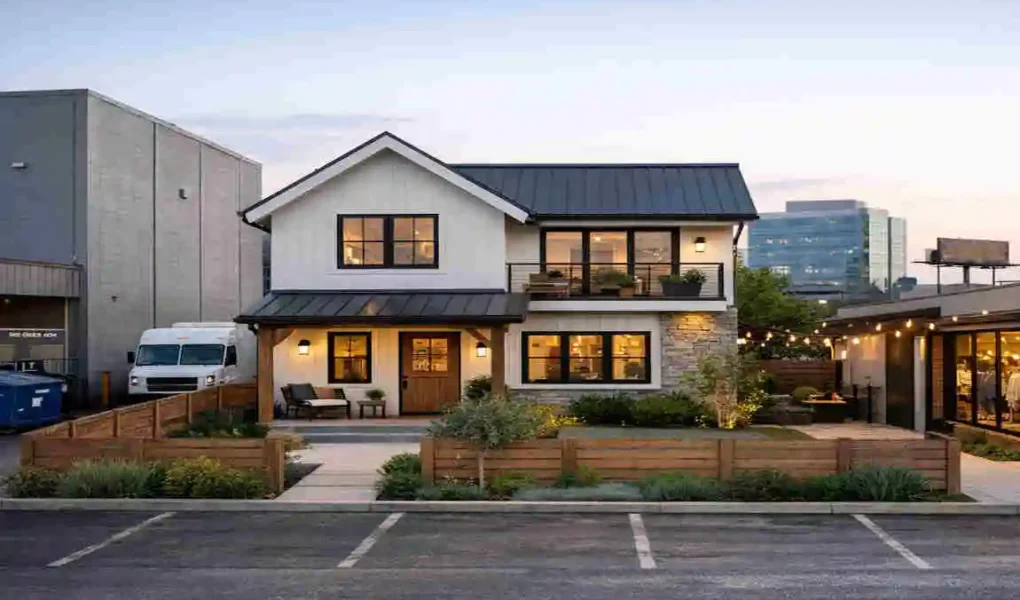
Imagine for a moment that you have found the perfect piece of land. It is located in a vibrant part of town, close to the best coffee shops, and it is priced significantly lower than the residential lots just a few blocks away. You start dreaming of your modern, custom-built home standing tall on that corner. But then, you hit a wall. You realise the land is zoned as commercial.
The big question immediately pops up: Can you build a house in a commercial zone?
The short answer is: No, typically not without special approvals, but there are definitely loopholes and clever ways to make it happen.
In most cities, land is divided into specific “zones” to keep things organised. You have places for factories, places for shops, and places for families to sleep. When you try to mix a single-family home into a business district, local governments often push back. However, as our cities grow and the way we work changes, these rigid lines are blurring. In fact, nearly 70% of cities in the United States have updated their rules to allow for more mixed-use living.
Understanding the Core Zoning Rules
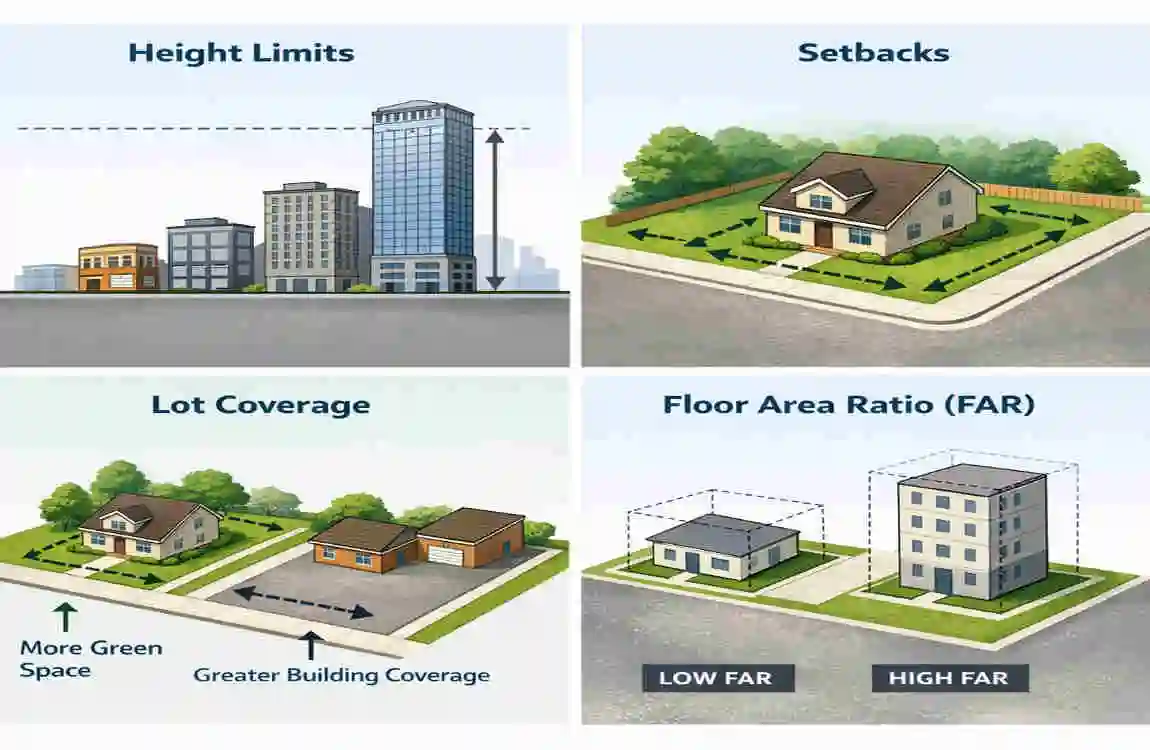
Before you pick out the floor plans for your new home, you need to understand what you are up against. Zoning is the tool that local governments use to manage how land is used. It prevents a noisy nightclub from opening up right next to a quiet nursery, and it prevents a massive skyscraper from blocking the sun in a suburban neighbourhood.
What Defines Commercial Zoning
Commercial zoning is designed specifically for business activities. These zones are usually categorised into levels, often labelled C-1 through C-4. Each level has its own set of rules regarding what can be built, how tall the buildings can be, and how much traffic they are expected to generate.
- (Neighbourhood Commercial): These are small areas meant for local shops like bakeries or small convenience stores. They are usually tucked near residential areas to serve the local community.
- (General Commercial): This is where you find office buildings, restaurants, and larger retail stores. These areas handle more traffic and have more paved surfaces.
- (Downtown/High-Density): Think of the city centre. This zone allows for massive skyscrapers and high-density business activity.
- (Highway/Heavy Business): These zones are often located near major roads and include gas stations, hotels, and large-scale distribution centres.
The primary goal of these zones is to prioritise commerce, traffic flow, and safety. Because businesses generate tax revenue and provide jobs, cities want to protect these spaces from being “watered down” by residential houses that don’t contribute as much to the local economy.
Zone Type: Typical Allowed Uses: Residential Ban Reason
Neighbourhood Small retail, salons , preserving low traffic and local service
General Offices, restaurants , managing high foot traffic and noise
Downtown Skyscrapers, retail hubs , Prioritising high-density urban growth
Highway Hotels, gas stations , Safety concerns due to heavy vehicle access
Why Houses Are Restricted in These Areas
You might wonder why a city would care if you want to live in a quiet office park. The reasons are ably practical. First, there is the issue of livability. Commercial zones are often loud, brightly lit at night, and may have higher levels of pollution or traffic. Cities don’t want residents complaining about the noise of a delivery truck at 4:00 AM.
Second, there is the financial aspect. Commercial land usually pays higher property taxes than residential land. If everyone started building houses on commercial lots, the city’s budget might take a hit. Finally, fire and safety codes for commercial buildings are much stricter than for houses. Mixing the two can create a headache for emergency services and building inspectors.
How to Check Your Local Rules
Every city has its own “playbook” for land use. In the United States, you can usually find this by visiting your local Planning and Development Department website. Many cities now offer GIS (Geographic Information System) portals, which are interactive maps that show you exactly how every inch of the city is zoned.
If you are looking at land in other regions, such as Pakistan, you would look toward authorities like the LDA (Lahore Development Authority) or PHATA (Punjab Housing and Town Planning Agency). These agencies have particular “Amended Building Regulations” that dictate how much of a commercial plot can be used for living quarters. Always start by getting a zoning report; it is the only way to know for sure what is allowed before you spend a single dollar.
Loopholes and Legal Exceptions
Now, let’s get to the part you’ve been waiting for. Just because a sign says “Commercial Only” doesn’t mean your dream is dead. Several legal “loopholes” or pathways can turn a commercial lot into a residential one.
Applying for a Zoning Variance
A variance is essentially a request for the city to “bend the rules” just for you. To get one, you usually have to prove a hardship. This means you must show that the land is somehow unique or that the existing rules make it impossible to use the land for its intended purpose.
For example, if your commercial lot is shaped like a weird triangle and is too small for a standard retail store, you might argue that building a small house is the only way to make the land useful. The success rate for variances is generally between 40% and 60%, depending on how well you present your case and whether your neighbours object.
The Rise of Mixed-Use Developments
This is the most common and successful way to live in a commercial zone today. Mixed-use zoning allows a combination of business and residential uses within the same building. You see this all the time in modern urban areas: a trendy coffee shop on the ground floor and luxury apartments on the floors above.
In many jurisdictions, you can build a structure where the ground floor is technically a “business” (even if it’s just a small home office or a studio), while the rest of the building is your home. This is often called ancillary use. It satisfies the city’s requirement for commercial activity while giving you the home you want.
The Rezoning Process
If a variance or mixed-use approach won’t work, you can try to rezone the land entirely. This is the most expensive and challenging path. It involves submitting a formal application to the city council, attending public hearings, and often paying thousands of dollars in fees.
Rezoning can take anywhere from 6 to 12 months. During this time, your neighbours will have the chance to speak up and support or oppose your project. If you choose this route, it is vital to build relationships with local officials and show them how your new home will actually improve the neighbourhood.
Loophole: The Good Stuff (Pros)The Challenges (Cons)Odds of Success
Variance allows for custom home designs, requires a public hearing, and is medium.
Mixed-Use: You can earn income from the business. Strict design and parking rules. High
Rezoning converts the land to 100% residential use. Very slow and expensive. Low
A Step-by-Step Guide to the Application Process
If you have decided to move forward, you need a plan of attack. You cannot just start digging a foundation and hope for the best. Following the proper legal steps is the only way to ensure your home isn’t ordered demolished later.
Verify the Current Zoning
Don’t take the seller’s word for it. Go to the city’s online zoning map and look up the property’s parcel number. Read the specific “allowable uses” for that zone. Look for words like “permitted,” “conditional,” or “prohibited.”
Consult with a Professional
This is where you should bring in an architect or a zoning consultant. These experts speak the language of the city planners. They can tell you if your idea has a chance of passing or if you are wasting your time. They will help you create a site plan showing how your house fits into the commercial landscape.
Prepare and Submit Your Plans
You will need detailed drawings of the house, including its height, the distance from the street (setbacks), and how you will handle parking. If you are going for a mixed-use permit, you must clearly show which parts of the building are for “business” and which are for “living.”
Public Notice and Hearings
In many cases, the city will require you to post a sign on the property notifying the public of your request. There will likely be a public hearing where a board of officials will review your case. Be prepared to explain why your house won’t cause traffic jams or lower the property values of the surrounding businesses.
Secure the Building Permit
Once the zoning hurdle is cleared, you still need a standard building permit. This ensures that your house meets all the safety, electrical, and plumbing codes. In commercial zones, these codes might be more “industrial” in nature, so your construction costs might be slightly higher than those of a typical house.
Step 6: Construction and Final Inspections
As you build, inspectors will visit the site at various stages. Once the house is finished, you will receive a Certificate of Occupancy. This is the golden ticket that legally allows you to move in and start living your life.
Risks and Common Pitfalls to Avoid
Building a house in a commercial zone is not without its dangers. If you try to cut corners, you could end up in a financial nightmare.
One of the most significant risks is illegal occupancy. Some people try to “sneak” into a commercial building and live there without permission. If the city finds out, they can hit you with fines exceeding $10,000 and issue a “vacate order,” meaning you have to leave immediately.
Another significant issue is financing. Most traditional banks are very hesitant to grant a residential mortgage for a property zoned commercial. They see it as a high-risk investment. You might find yourself needing a commercial loan, which usually requires a larger down payment (often 20-30%) and comes with higher interest rates.
Finally, consider the resale value. While you might love living in the middle of a business district, many future buyers might be scared away by the zoning. This could cause your property value to drop by 20% or more compared to a similar house in a residential neighbourhood. Always get a professional zoning report before you sign any purchase agreement.
Current Trends in Mixed-Use Living
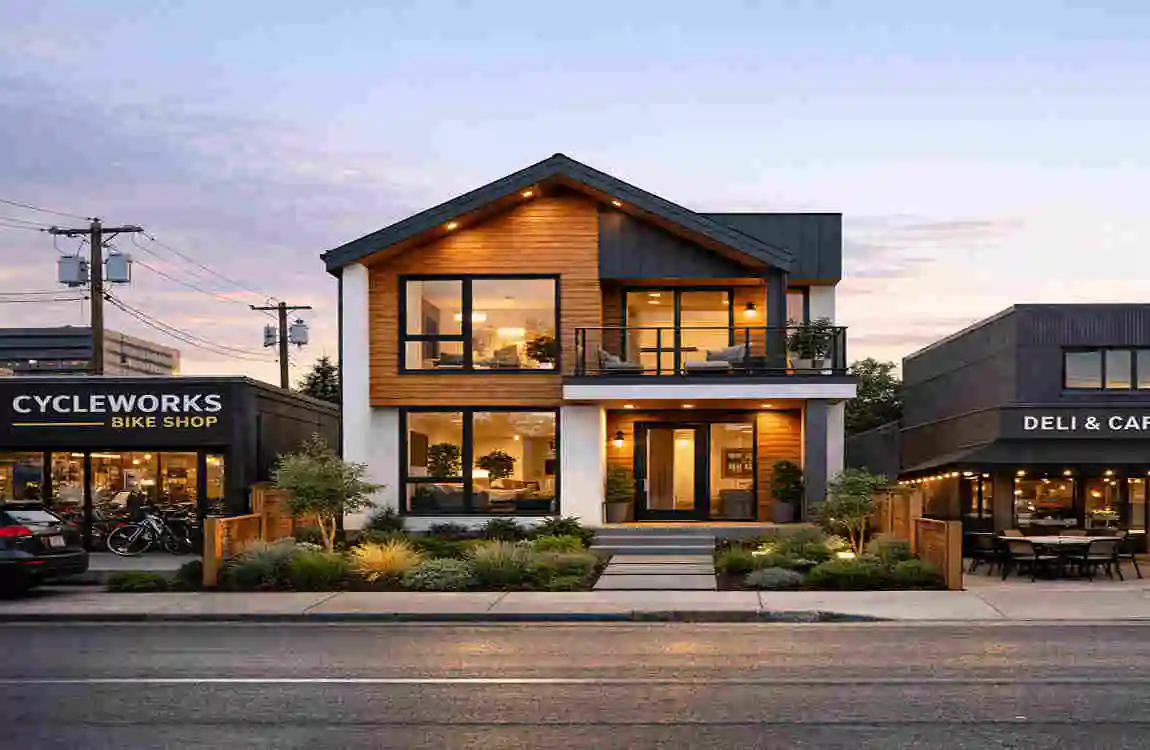
The world is changing, and zoning laws are finally catching up. As we move further into the 2020s, several trends are making it easier to build homes in commercial areas.
The Remote Work Revolution
Since the shift toward remote work, many office buildings are sitting empty. Cities are desperate to fill these spaces, and they are increasingly open to residential conversions. In many suburbs, what used to be strict office zones are being “re-imagined” as vibrant neighbourhoods where people live, work, and play in the same square mile.
Sustainability and “15-Minute Cities”
Urban planners are pushing for the concept of the 15-minute city, where everything you need (groceries, work, healthcare) is within a 15-minute walk. This naturally requires mixing houses into commercial zones. Many cities are now offering incentives or “fast-track” approvals for developers who build green, mixed-use buildings.
AI and Modern Zoning Tools
In the near future, AI-driven tools will help city planners predict how a new house in a commercial zone will impact traffic and noise. This data-driven approach will likely lead to looser rules, as planners can see that a single house won’t actually “ruin” a street’s commercial potential.
Trend: How It Impacts Your Home Build
Mixed-Use Rise Makes it much easier to get upper-floor residential permits
Remote Work Cities are more likely to approve conversions of old offices
Urban Sprawl Leads to more variances being granted in “fringe” commercial areas
Frequently Asked Questions (FAQs)
Can I build a house on a commercial lot if I also run a business there? Yes, this is often the easiest way to get approval. It is called “live-work” zoning. As long as a portion of the building is dedicated to a legitimate business, many cities will allow the rest to be used as a primary residence.
Will I have trouble getting homeowners’ insurance? It can be tricky. Standard insurance companies might not cover a house in a commercial zone. You may need a specialised policy that covers both residential and commercial risks, which can be more expensive.
What happens if the city changes the zoning after I build? Usually, you are “grandfathered in.” This means that as long as your house was legal when you built it, you can keep living room there even if the rules change. However, if the home is destroyed (by fire, for example), you might not be allowed to rebuild it under the new regulations.
How much does the approval process cost? Between application fees, architect drawings, and legal consultations, you should budget anywhere from $10,000 to $50,000 just for the approvals. This is in addition to your actual construction costs.