

Yes, adding a basement to a manufactured home is feasible but complex, requiring structural checks, permits, and professional expertise rather than full DIY. Costs typically range from $20,000 to $50,000, influenced by location, size, and local codes. Success depends on your home’s design compatibility and compliance with regulations like HUD standards.
Feasibility Check: Can Manufactured Homes Support Basements?
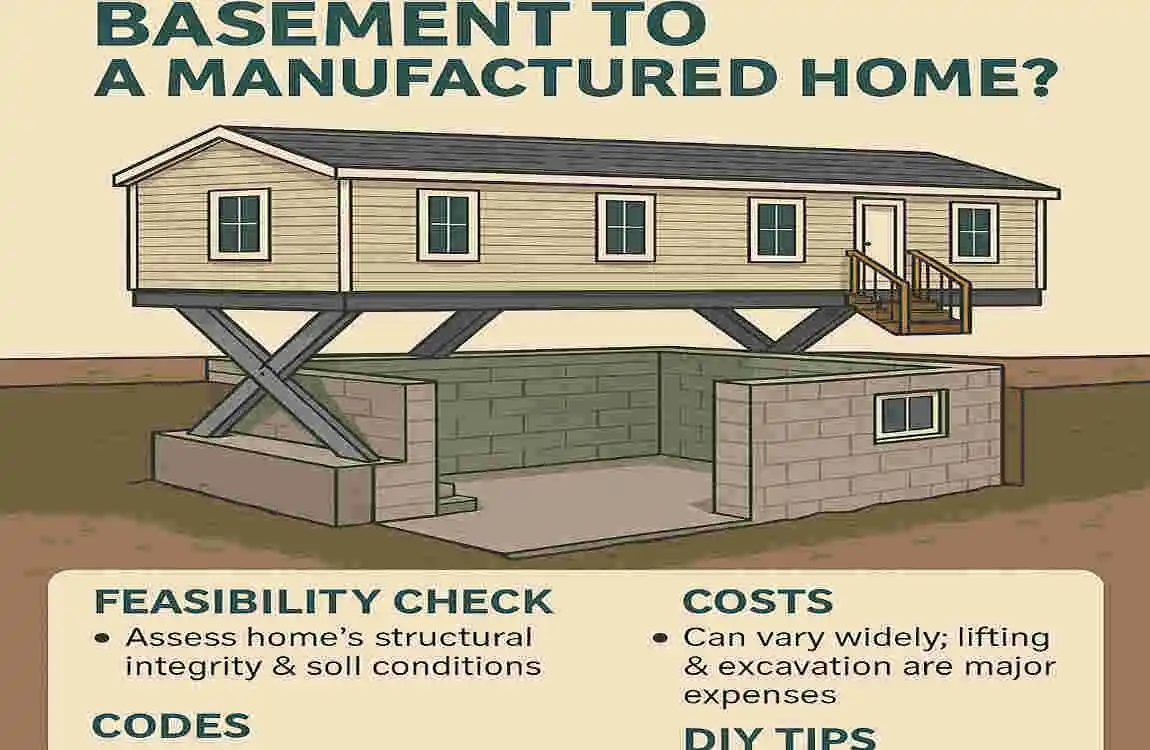
Before diving into costs and construction, it’s crucial to determine whether your manufactured home can support a basement addition.
Structural Considerations
Manufactured homes are built with lightweight frames and transported to the site. Unlike traditional homes, they are not typically designed to sit on full basements. Adding one means the house must be:
- Supported by a permanent foundation that can bear the extra load.
- Engineered to handle stresses during lifting and placement on the basement walls.
- Checked for compliance with HUD (Housing and Urban Development) standards, which govern manufactured housing.
Which Models Qualify?
Not every manufactured home is suitable for a basement. The manufacturer’s manual and HUD standards will indicate if your home’s frame and design allow for basement installation. A structural engineer’s assessment is highly recommended to confirm compatibility.
Pros and Cons of Adding a Basement Under Manufactured Homes
Understanding the upsides and downsides helps you make an informed decision.
Pros Cons
Adds hundreds of square feet for storage or living space. High costs if the home is already sited in place
Acts as a storm shelter, enhancing safety . Soil and moisture problems in some regions (e.g., clay soils in Texas)
Increases energy efficiency through earth insulation. Risk of structural incompatibility if not engineered properly
Permanent foundation status, which aids financing and resale, requires professional input and permits.
Takeaway
If your manufactured home passes structural checks and local soil conditions are favourable, a basement can truly transform your property. However, neglecting these aspects can lead to costly issues down the road.
Cost Breakdown: What Are the Costs to Add a Basement to a Manufactured Home?
Now let’s talk money—an important factor in any home improvement.
Typical Price Range
Adding a basement to a manufactured home generally falls between $12,000 and $50,000, with an average of around $20,000 to $30,000 for an 800-square-foot space.
What Drives the Cost?
Cost Factor Price Range Notes
Excavation and Foundation $10,000-$30,000. Depends on soil type and site conditions.
Engineering and Permits $2,000-$5,000 Includes structural inspection and paperwork.
Waterproofing and Utilities $5,000-$10,000 Critical for moisture prevention and hookups
Finishing (walls, floors): $5,000+. DIY can save money.
Factors Influencing Cost
- Location: Urban sites may cost more due to labour and permit fees.
- Basement Size: Larger basements require more materials and labour.
- Waterproofing: Essential in humid or rainy climates to avoid mould and damage.
- Type of access: Walk-out basements or those with stairs add complexity.
Return on Investment (ROI)
Basements can recoup 70-90% of their cost upon resale, especially when done professionally and up to code.
Building Codes Guide: Navigating Codes for Basements in Manufactured Homes
Building a basement isn’t just about digging a hole and pouring concrete. You must comply with local and federal building codes.
Key Code Requirements
- HUD Permanent Foundation Rules: The basement must meet HUD’s permanent foundation standards, often referenced by NFPA 225.
- Minimum Ceiling Height: Usually at least 7 feet.
- Minimum Habitable Room Size: 70 square feet is standard.
- Window Requirements: Basements with bedrooms must have escape windows with at least 8% glass area for egress.
- Soil Reports: An engineered soil report is often required to ensure the ground can support the basement.
Regional Variations
- States like Texas emphasise storm safety so that basements may need reinforced walls.
- Local zoning ordinances may limit basement depths or sizes.
Step-by-Step Guide: How to Add a Basement to a Manufactured Home
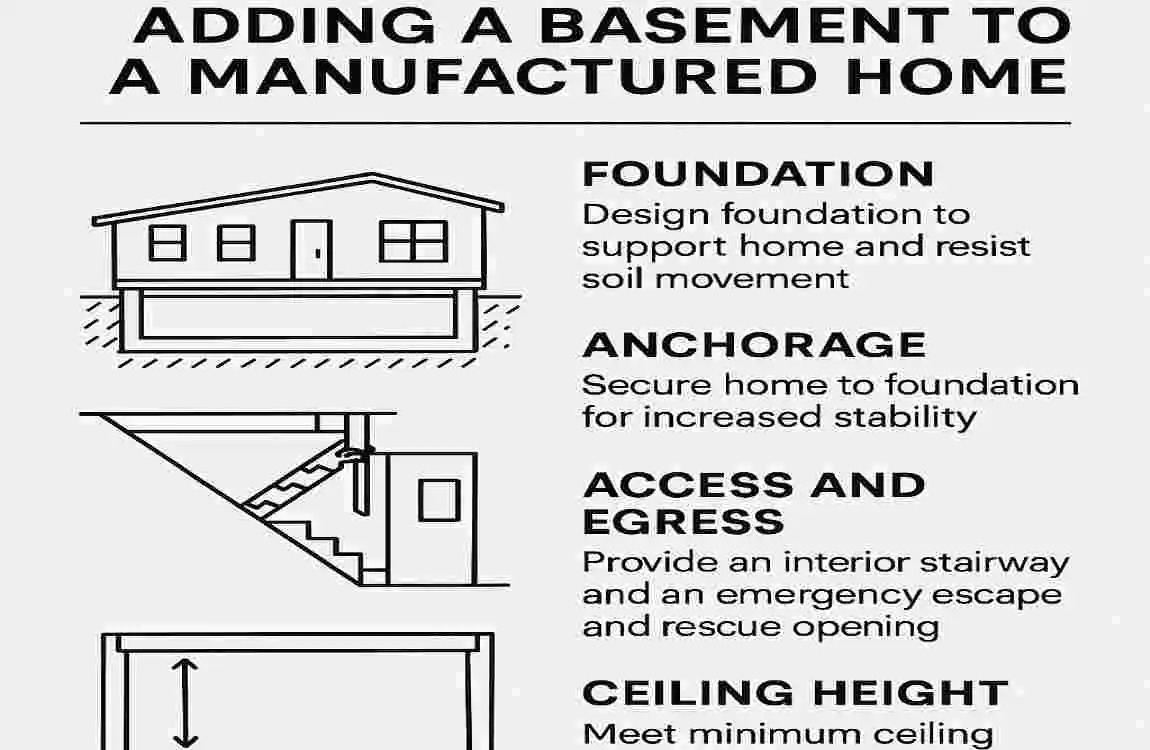
Adding a basement is complex, so here’s a clear roadmap.
Professional Route (Recommended)
- Engineer Assessment: Hire a structural engineer to check the home’s frame and soil stability.
- Permits & Excavation: Obtain all necessary licenses and excavate the site to basement depth.
- Concrete Work: Pour basement walls and floors with proper reinforcements.
- Home Placement: Use cranes to lift and place the manufactured home onto the new basement foundation.
- Securing the Home: Anchor the home to the foundation with piers and bolts for stability.
DIY Tips (for Finishing Only)
While foundation work should always be done professionally, you can save money on finishing:
- Use steel or wood studs for framing walls.
- Install moisture-resistant drywall to prevent mould.
- Secure walls to the concrete slab with Tapcon anchor plates.
- Add electrical outlets every 6 feet for convenience.
Alternatives & Financing Options
If a basement addition isn’t feasible or affordable, consider these alternatives:
Alternatives
- Raised Platforms or Crawlspaces: Cheaper and easier to install.
- Insulated Skirting: Improves energy efficiency without excavation.
- Above-Ground Additions: Expand living space without structural risks.
- Concrete Slab: Costs $10,000-$30,000, offers stability without basement complexity.
Financing Your Basement Addition
- FHA/VA Loans: Low down payments (around 3.5%).
- Fannie Mae MH Advantage: Specialised manufactured home mortgages with as low as 3% down.
- Personal Loans: For smaller projects or finishing work.
Shop around with lenders experienced in manufactured home financing to get the best rates.