When you’re planning to build or renovate a home, one of the most crucial aspects to consider is the electrical wiring. Residential electrical wiring is the backbone of your home’s power system, ensuring that every room and appliance has the electricity it needs to function correctly. But have you ever wondered, “How much wire to wire a 1,500 sq ft house”?
Understanding Wiring Basics for a 1,500 Sq Ft House

Before we dive into the specifics of how much wire you’ll need, let’s take a moment to understand what wiring a house entails.
What Does Wiring a House Entail?
Wiring a house involves setting up a network of electrical circuits that distribute power throughout the home. This includes:
- Circuits: These are the paths that electricity takes to reach different parts of your home.
- Outlets: These are the points where you can plug in your appliances and devices.
- Lighting: This includes the wiring for all your light fixtures, switches, and dimmers.
- Main Panel: This is the central hub where your home’s electrical system connects to the power grid.
Key Components Wired
When wiring a 1,500 sq ft house, you’ll need to focus on the following key components:
- Outlets: Essential for powering your appliances, charging devices, and running your electronics.
- Switches: These control the flow of electricity to your lights and other devices.
- Lighting Fixtures: These provide illumination throughout your home.
- Appliance Circuits: Dedicated circuits for high-power appliances such as your oven, HVAC system, and water heater.
General Electrical Requirements
For a typical 1,500 sq ft home, you can expect to have a basic electrical load of around 100 to 200 amps. This will depend on the number and type of appliances you have, as well as your overall energy consumption.
Types of Wire Commonly Used
When it comes to residential wiring, there are several types of wire that you’ll commonly use:
- NM-B Wire: This is the most common type of wire used for general circuits in residential settings. It comes in various gauges, such as 14/2 and 12/2.
- THHN Wire: This type of wire is often used for individual conductors in conduit systems.
- UF-B Wire: This is a type of wire that’s suitable for underground use, such as for outdoor lighting or pool equipment.
How Much Wire to Wire a 1,500 Sq Ft House?
Now that we’ve covered the basics, let’s dive into the central question: “How much wire to wire a 1,500 sq ft house”? The answer to this question depends on several factors, including your home’s layout, the number of rooms, and the number of circuits you’ll need.
Factors Influencing Wire Length
When estimating the amount of wire you’ll need, consider the following factors:
- Home Layout: The layout of your home will determine the distance between your main panel and the various rooms and appliances.
- Number of Rooms: The more rooms you have, the more wire you’ll need to run to each one.
- Number of Circuits: The more circuits you have, the more wire you’ll need to distribute power throughout your home.
Average Wire Length Needed
To give you a better idea of how much wire you’ll need, let’s break it down by room type:
- Bedrooms: On average, you’ll need around 50 to 75 feet of wire per bedroom for outlets and lighting.
- Kitchen: The kitchen typically requires around 100 to 150 feet of wire for outlets, lighting, and appliance circuits.
- Bathroom: Bathrooms usually need around 50 to 75 feet of wire for outlets, lighting, and ventilation fans.
- Living Areas: Living areas, such as living rooms and dining rooms, typically require around 75 to 100 feet of wire for outlets and lighting.
Estimated Total Feet of Wire Required
Based on the average wire lengths needed for each room type, you can estimate the total feet of wire required for your 1,500 sq ft home:
- Power Outlets: Around 500 to 750 feet of wire
- Lighting Circuits: Around 300 to 500 feet of wire
- Dedicated Appliance Circuits: Around 100 to 200 feet of wire
- Main Service Panel to Rooms Distribution: Around 200 to 300 feet of wire
Example Wiring Calculation Breakdown
To give you a better idea of how to calculate your wire needs, let’s look at an example breakdown for a 1,500 sq ft home:
Room Type Wire Length (feet)
Bedroom 1 60
Bedroom 2 60
Bedroom 3 60
Kitchen 120
Bathroom 1 60
Bathroom 2 60
Living Room 80
Dining Room 80
Laundry Room 50
Total 630
As you can see, the total wire length needed for this example home is around 630 feet. However, this is just an estimate, and your actual wire needs may vary depending on your specific layout and requirements.
Types of Wire Needed and Their Costs
Now that we’ve covered how much house wire you’ll need, let’s take a closer look at the different types of wire you’ll use and their associated costs.
Description of Common Wiring Types
For residential use, you’ll commonly use the following types of wire:
- 14/2 NM-B Wire: This is the most common type of wire used for general circuits in residential settings. It’s suitable for lighting and outlet circuits and typically costs around $0.20 to $0.30 per foot.
- 12/2 NM-B Wire: This type of wire is similar to 14/2 NM-B wire but has a larger gauge, making it suitable for higher-power applications. It typically costs around $0.30 to $0.40 per foot.
- 10/3 Wire: This type of wire is used for dedicated appliance circuits, such as for your oven or HVAC system. It typically costs around $0.50 to $0.70 per foot.
- Grounding Wire: This type of wire is used to provide a safe path for electrical current in case of a fault. It typically costs around $0.10 to $0.20 per foot.
Cost per Foot Estimates
To help you budget for your wiring project, here are some average cost per foot estimates for each type of wire:
- 14/2 NM-B Wire: $0.20 to $0.30 per foot
- 12/2 NM-B Wire: $0.30 to $0.40 per foot
- 10/3 Wire: $0.50 to $0.70 per foot
- Grounding Wire: $0.10 to $0.20 per foot
How Wire Gauge Affects Cable Amount and Wire Length Needed
The wire gauge you use can affect the amount of wire you need and the length of runs you can make. Thicker wire, such as 12/2 NM-B, can handle more power and longer runs than thinner wire, such as 14/2 NM-B. However, thicker wire is also more expensive, so you’ll need to balance your needs with your budget.
Additional Materials and Tools Required
In addition to the wire itself, you’ll need to factor in the cost of additional materials and tools for your wiring project.
Importance of Including Materials Besides Wire
When budgeting for your wiring project, don’t forget to include the cost of materials besides wire, such as:
- Outlets: Essential for powering your appliances and devices.
- Breakers: These protect your circuits from overload and short circuits.
- Junction Boxes: These provide a safe and secure way to connect wires and make splices.
Estimated Quantities and Costs of Supplementary Materials
To help you estimate the cost of these supplementary materials, here are some average quantities and expenses:
- Outlets: Around 20 to 30 outlets at $2 to $5 each
- Breakers: Around 10 to 20 breakers at $5 to $10 each
- Junction Boxes: Around 5 to 10 junction boxes at $2 to $5 each
Tools Needed for Installation
To install your wiring, you’ll need a variety of tools, including:
- Wire Strippers: Essential for stripping insulation from the ends of your wires.
- Conduit: This protects your wires and makes them easier to run through walls and ceilings.
- Fish Tape: This is a flexible rod used to pull wires through conduit and tight spaces.
Estimated Total Cost to Wire a 1,500 Sq Ft House
Now that we’ve covered the cost of the wire and supplementary materials, let’s look at the estimated total cost to wire a 1,500 sq ft house.
Labor vs Material Cost Breakdown
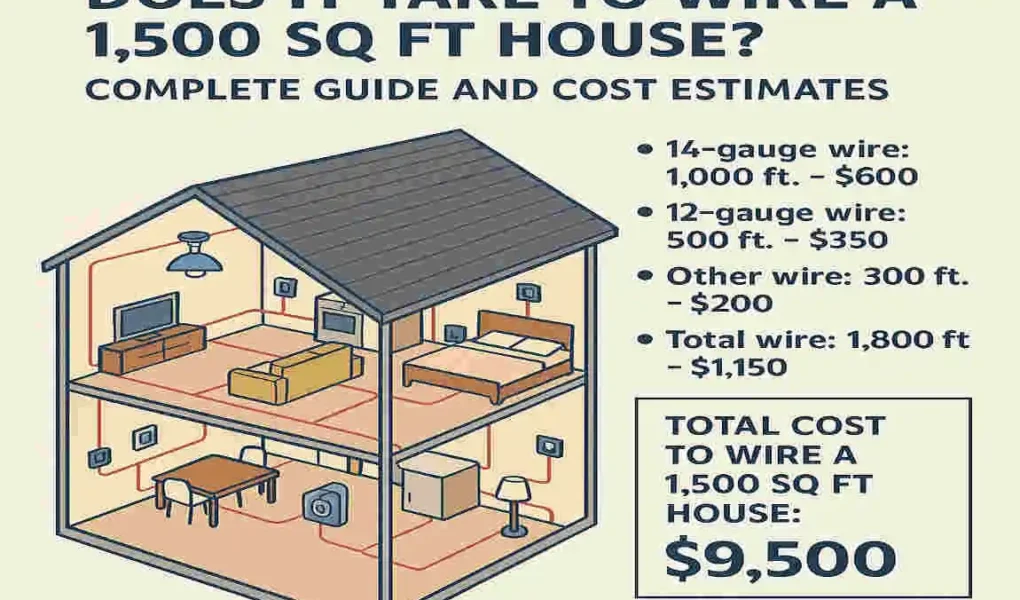
When budgeting for your wiring project, you’ll need to consider both material and labor costs. On average, materials account for around 30% to 50% of the total price, while labor accounts for the remaining 50% to 70%.
Average Price Range for Wire Purchase
Based on the estimated wire lengths and costs we discussed earlier, you can expect to spend around $150 to $300 on wire for your 1,500 sq ft home.
Typical Electrician Hourly Rates and Labor Time
The cost of labor will depend on the electrician’s hourly rate and the time required to complete the job. On average, electricians charge between $50 $100 per hour, and it can take around 40 to 80 hours to wire a 1,500 sq ft home.
Sample Cost: Full Wiring for a 1,500 Sq Ft Average House
To give you a better idea of the total cost, let’s look at a sample cost breakdown for a 1,500 sq ft average house:
- Wire: $200
- Supplementary Materials: $150
- Labor: $2,000 to $4,000
- Total: $2,350 to $4,350
As you can see, the total cost to wire a 1,500 sq ft house can range from around $2,350 to $4,350, depending on the specific materials and labor costs in your area.
How to Budget for Surprises and Excess Wiring Needs
When budgeting for your wiring project, it’s a good idea to include a buffer to account for surprises and excess wiring. A good rule of thumb is to add around 10% to 20% to your total budget to account for any unexpected expenses or changes to your plan.
Tips to Optimize Wiring Length and Costs

Now that we’ve covered the basics of wiring a 1,500 sq ft house, let’s look at some tips to help you optimize your wiring length and costs.
Planning Wiring Routes Efficiently
One of the best ways to save on wiring costs is to plan your wiring routes efficiently. This means running your wires in the most direct paths possible and avoiding unnecessary bends and turns.
Choosing Wire Types Suitable for Longer Runs or Higher Load
Another way to optimize your wiring is to choose wire types suited to longer runs or higher loads. For example, if you have a long run from your main panel to a distant room, use a thicker gauge wire to minimize voltage drop.
Avoiding Over-Estimation or Under-Estimation for Wire Quantities
When estimating your wire quantities, it’s essential to strike a balance between over-estimation and under-estimation. Over-estimating can lead to wasted materials and higher costs, while under-estimating can lead to shortfalls and delays.
When to Consult with a Professional Electrician
Finally, don’t hesitate to consult with a professional electrician if you’re unsure about any aspect of your wiring project. An experienced electrician can help you plan your wiring routes, select the right wire types, and ensure your project is completed safely and in compliance with code.
Common Wiring Challenges and How to Avoid Them
Wiring a house can be a complex task, and there are several common challenges that you may encounter along the way. Here are some tips to help you avoid these challenges and keep your project on track.
Issues Like Wire Shortages or Excess Wires
One of the most common challenges is dealing with wire shortages or excess wires. To avoid this, carefully estimate your wire quantities and plan your wiring routes in advance.
Compliance with Electrical Code and Safety Standards
Another critical challenge is ensuring compliance with electrical code and safety standards. To avoid this, familiarize yourself with the relevant codes and standards in your area and follow them closely.
Troubleshooting for Correct Wire Lengths During Installation
During installation, you may encounter issues with wire lengths that are too short or too long. To troubleshoot this, measure your wire runs carefully and use wire connectors and junction boxes to make any necessary adjustments.
DIY Wiring vs Hiring a Professional: What You Should Know
When it comes to wiring your 1,500 sq ft house, you may be wondering whether to tackle the project yourself or hire a professional electrician. Here are some pros and cons to consider.
Risks and Regulations Involved in Electrical Wiring Projects
Electrical wiring projects can be risky because they involve working with high voltages and potentially hazardous materials. Additionally, there are strict regulations and codes governing electrical work, and failing to comply can result in fines or even legal action.
Pros and Cons of DIY Wiring for a 1,500 Sq Ft Home
If you’re considering DIY wiring for your 1,500 sq ft home, here are some pros and cons to keep in mind:
- Pros:
- Potentially lower costs
- Greater control over the project
- A sense of accomplishment
- Cons:
- Higher risk of errors and safety issues
- Potential non-compliance with codes and regulations
- Longer project timeline
When to Outsource Wiring to Ensure Code Compliance and Safety
If you’re unsure about your ability to complete the wiring project safely and to code, it’s best to outsource the work to a professional electrician. An experienced electrician can ensure your wiring is done correctly and safely and help you navigate complex regulations or codes.