
If you own property in a shared building or rent out a home, you may hear the terms “body corporate manager” and “property manager“. They sound similar, but they do very different jobs.
Understanding the difference can save you time, money, and stress. It also helps you choose the right support for your property.
A body corporate manager handles shared property and owner group matters. A property manager handles rental property and tenants.
If you choose the wrong service, you may end up paying for help you do not need. Worse, important tasks may be missed.
What Is a Body Corporate Manager?

A body corporate manager helps manage properties owned by multiple people that share common spaces. This is common in apartments, townhouses, strata buildings, and condo-style communities.
Their main job is to support the owners corporation or body corporate in handling shared responsibilities.
Responsibilities
Managing common property
This includes areas like hallways, driveways, gardens, lifts, roofs, and shared parking spaces.
The manager helps ensure these areas are maintained and repaired as needed.
Organizing meetings
Body corporate managers often arrange meetings for owners. These meetings help owners make decisions about budgets, repairs, rules, and plans.
Financial administration
They help manage accounts, collect fees, and prepare budgets for the building or community.
This is important because shared properties need steady funding for repairs and ongoing care.
Legal compliance
A body corporate manager helps owners comply with strata laws and building rules.
This can reduce mistakes and help avoid legal trouble.
Maintenance coordination
They may arrange cleaning, repairs, insurance matters, and work with contractors when common areas need attention.
Who needs a body corporate manager?
You may need one if you live in or own part of:
- Apartment buildings
- Townhouse communities
- Strata properties
- Condominium complexes
If the property has shared spaces and multiple owners, this role becomes very important.
What Is Property Management?
A property manager looks after rental properties on behalf of the owner. Their focus is on tenants, leases, rent, and day-to-day rental issues.
If you rent out a house, unit, or commercial space, this is the service you usually need.
Main responsibilities
Tenant screening
Property managers help find suitable tenants. They review applications, check background details, and reduce the risk of placing the wrong tenant.
Rent collection
They collect rent, track payments, and follow up if rent is late.
This helps owners maintain steady cash flow.
Lease management
Property managers prepare and manage lease agreements. They also handle renewals, notices, and end-of-lease steps.
Property inspections
They inspect the property before, during, and after tenancies. This helps protect the owner’s investment and catch damage early.
Maintenance coordination
If something breaks or needs repair, the property manager arranges the work and communicates with the tenant and owner.
Who uses property management services?
Property management is useful for:
- Residential landlords
- Commercial property owners
- Real estate investors
If you own a rental property and want help managing tenants and income, this service is usually the better fit.
Body Corporate Manager vs Property Management: Key Differences
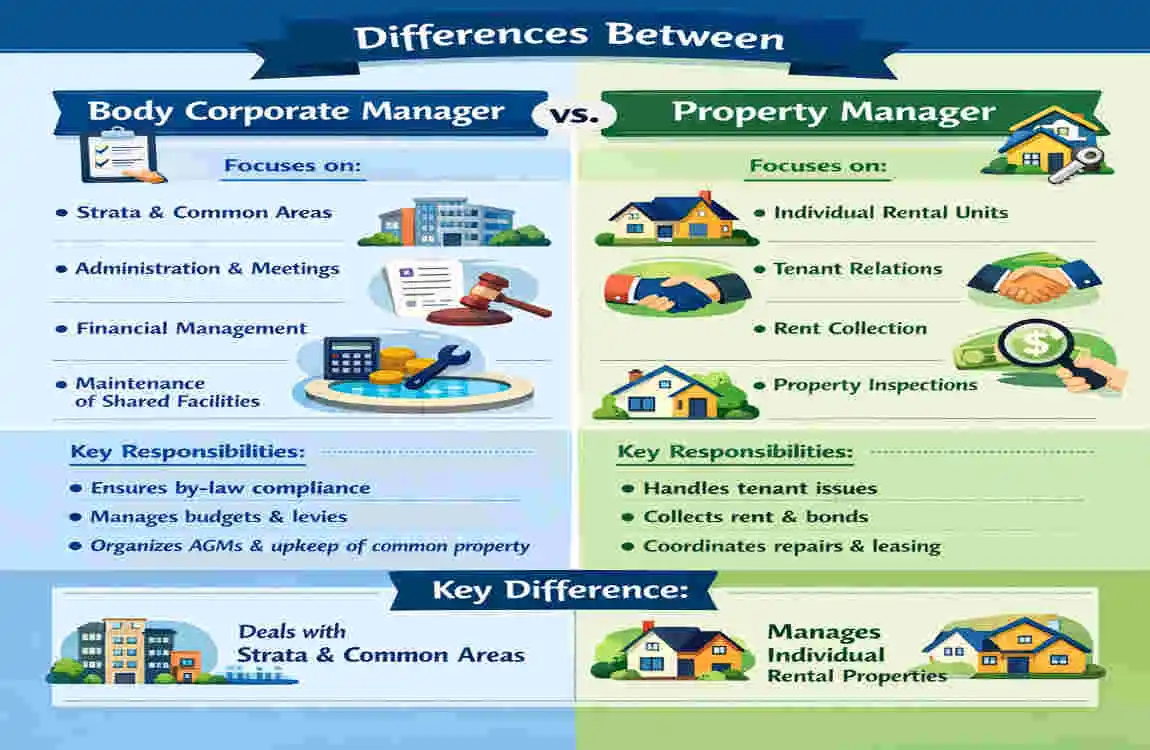
Here is a simple comparison to clearly show the difference.
Feature Body Corporate Manager Property Management
Main Focus Common property and owners Individual rental property
Works For Owners corporation Property owner
Handles Tenants No Yes
Collects Rent No Yes
Organises Meetings Yes No
Legal Compliance Strata laws Rental laws
What this means in real life
A body corporate manager works for the shared property group. A property manager works for the landlord.
That difference is the heart of the issue.
If you own an apartment in a strata building and you rent it out, you may need both services. One handles the building. The other handles the tenant.
Roles and Responsibilities Compared
Body corporate manager duties
A body corporate manager often handles:
- Budget preparation
- Insurance management
- Vendor coordination
- Record keeping
- Annual meetings
These tasks help the building run smoothly and fairly for all owners.
Property manager duties
A property manager usually handles:
- Advertising rentals
- Managing tenants
- Rent collection
- Maintenance requests
- Lease renewals
These tasks help protect the owner’s income and keep the rental occupied.
Benefits of Hiring a Body Corporate Manager
Professional administration
A body corporate manager brings structure and order to shared property management. This is helpful when many owners have different opinions.
Better financial management
Shared properties need proper budgets, fees, and records. A manager helps keep the numbers organised.
Legal compliance
Strata rules can be confusing. A professional manager helps reduce legal mistakes.
Improved maintenance
Common areas are easier to care for when someone is actively tracking repairs and schedules.
Reduced disputes
A neutral manager can help owners handle problems more calmly and fairly.
Benefits of Hiring a Property Manager

Higher occupancy rates
A property manager helps market the property and find tenants faster.
Better tenant management
They handle tenant concerns, follow up on issues, and manage lease terms.
Reduced landlord stress
If you do not want to deal with calls, repairs, or late rent, a property manager can take over those tasks.
Timely rent collection
A manager helps track payments and follows up as needed.
Property value protection
Regular inspections and fast maintenance help prevent small issues from becoming bigger problems.
Common Mistakes to Avoid
Many property owners make simple mistakes when choosing a manager.
Here are the most common ones:
- Assuming both roles are identical
- Hiring the wrong service
- Ignoring legal responsibilities
- Not reviewing management agreements
- Choosing solely based on price
Why these mistakes matter
If you hire a property manager when you actually need a body corporate manager, shared property issues may not be handled properly.
If you hire a body corporate manager for a rental property, tenant and lease-related tasks may go unmanaged.
Tips for Choosing the Right Manager
Check qualifications
Make sure the manager has the right experience and understands the type of property you own.
Compare experience
Not all managers handle the same kinds of properties. A strong track record matters.
Read client reviews
Reviews can tell you a lot about communication, reliability, and problem-solving.
Understand fee structures
Ask exactly what is included and what costs extra.
Evaluate communication skills
A good manager should respond clearly and keep you informed.
Frequently Asked Questions
What is the difference between a body corporate manager and a property manager?
A body corporate manager oversees shared property and owners corporation matters, while a property manager handles rental properties, tenants, and lease agreements.
Can one company provide both services?
Yes. Many real estate firms offer both body corporate management and property management services.
Who pays a body corporate manager?
The owners corporation pays the manager through contributions collected from property owners.
Does a property manager attend body corporate meetings?
Usually no. However, they may attend if they are representing the property owner or if they are invited.
| Feature | Body Corporate Manager | Property Manager |
|---|---|---|
| Primary Role | Manages shared/common property for owners’ associations or strata schemes. | Manages individual rental properties on behalf of property owners. |
| Who They Represent | Body corporate, homeowners association (HOA), or owners corporation. | Individual landlord or property investor. |
| Main Responsibilities | Oversees common areas, budgets, meetings, maintenance, insurance, and compliance. | Handles tenant screening, rent collection, maintenance, inspections, and lease management. |
| Property Type | Apartments, condominiums, townhouses, and strata communities. | Single-family homes, apartments, condos, and commercial rentals. |
| Tenant Management | No direct responsibility for tenants. | Directly communicates with tenants and resolves rental issues. |
| Financial Duties | Manages shared funds, levies, and community budgets. | Collects rent, pays property expenses, and prepares owner statements. |
| Maintenance Focus | Common facilities such as roofs, gardens, elevators, parking areas, and pools. | Individual rental unit repairs and maintenance. |
| Legal Compliance | Ensures compliance with strata or body corporate regulations. | Ensures compliance with landlord-tenant laws and lease agreements. |
| Income Responsibility | Does not generate rental income. | Maximizes rental income and occupancy for the owner. |
| Best For | Multi-unit residential communities with shared ownership. | Property owners renting out residential or commercial properties. |